

You finally started Ozempic after months of research and a consultation with your doctor in Chicago or Seattle. The weight is beginning to shift, and your blood sugar numbers are looking better than they have in years. Then, you wake up one morning, look in the mirror, and see a cluster of unexpected pimples along your jawline. Your skin feels oilier than usual, or perhaps it feels sensitive and irritated.
Naturally, you head to Google or TikTok. You find Reddit threads filled with people claiming Ozempic caused their adult acne, while others suggest the medication is actually clearing their skin. You wonder if your hormones are out of balance or if the semaglutide is somehow toxic to your skin barrier. The fear of trading one health concern for another can be overwhelming.
At Wellorithm, we understand that visible skin changes can be deeply frustrating and anxiety inducing. In the American healthcare system, where GLP-1 medications are becoming a standard for metabolic health, it is essential to separate internet myths from medical facts. While acne is not a common clinical side effect, the metabolic changes your body undergoes while taking Ozempic can certainly influence your skin.
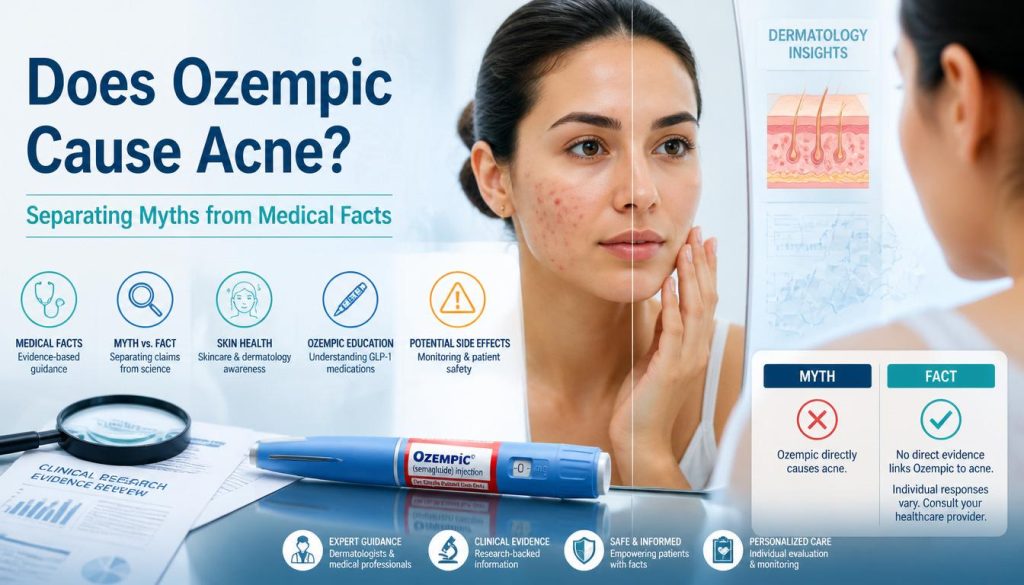
Does Ozempic Cause Acne?
Acne is not currently listed as a common side effect of Ozempic by the FDA. Most clinical trials focus on gastrointestinal symptoms. However, many users report breakouts due to indirect factors like rapid weight loss, hormonal shifts, dehydration, or changes in dietary habits. While the medication may not directly cause pimples, the body’s metabolic adaptation can trigger skin changes.
How Ozempic affects metabolism and the body
Ozempic works by mimicking the GLP-1 hormone, which affects blood sugar regulation and slows digestion. This leads to a cascade of metabolic shifts. As your insulin sensitivity improves, your body changes how it processes energy. While these shifts are beneficial for your heart and waistline, your skin is often the last organ to receive nutrients and the first to show signs of internal stress.
When you take a GLP-1 medication, you are essentially re-tuning your metabolic engine. This adaptation phase can temporarily disrupt the gut-skin connection. Because Ozempic reduces appetite, many patients accidentally skip essential vitamins or healthy fats that are crucial for maintaining a clear complexion.
Why some people experience acne or breakouts on Ozempic
The connection between Ozempic and acne is likely a result of several overlapping factors rather than a single chemical reaction to the drug.
- Hormonal Fluctuations: Fat cells store estrogen and other hormones. As you lose weight rapidly, these hormones are released back into the system, which can trigger hormonal acne along the jawline and neck.
- Stress Responses: Starting a new medication and changing your lifestyle can increase systemic stress. High cortisol levels are a primary driver for sebaceous gland activity.
- Blood Sugar Shifts: While Ozempic stabilizes blood sugar, the initial transition can cause fluctuations that impact skin inflammation levels.
- Changes in Oil Production: Improved insulin resistance can eventually help skin, but the initial metabolic “reboot” might temporarily increase sebum production.
What Ozempic-related skin changes can look like
Not all skin changes are acne. It is important to distinguish between different types of dermatological symptoms to ensure you are treating them correctly.
| Symptom Type | Description | Common Location |
| Hormonal Acne | Deep, cystic pimples | Jawline, chin, and neck |
| Oily Skin | Increased shine and larger looking pores | T-zone (forehead, nose, chin) |
| Skin Sensitivity | Redness, stinging, or reacting to products | Cheeks and around the eyes |
| Dehydration | Dullness, fine lines, and rough texture | Entire face and neck |
| Allergic Reaction | Hives, intense itching, or swelling | Widespread or near injection site |
Can rapid weight loss trigger acne or hormonal skin changes?
In the United States, the rapid fat loss associated with Ozempic and Wegovy is a major topic of discussion. Fat is not just stored energy; it is an active endocrine organ. When fat cells shrink quickly, the body must process the substances stored within them.
This can lead to a temporary state of androgen activity, where the skin produces more oil. Furthermore, rapid weight loss can be a form of physical stress on the body. This stress can lead to a temporary imbalance in the skin’s natural microbiome, making it easier for acne-causing bacteria to thrive.
How dehydration and low calorie intake may affect the skin on Ozempic
One of the most overlooked Ozempic skin side effects is dehydration. The medication often suppresses the thirst signal along with the hunger signal.
- Fluid Loss: Plasma and skin cells need water to stay plump. Dehydration leads to a compromised skin barrier, which can paradoxically cause the skin to produce more oil to compensate for the dryness.
- Nutritional Gaps: If you are eating significantly less, you might be missing out on zinc, vitamin A, and omega-3 fatty acids. These are the building blocks of healthy skin.
- Electrolyte Imbalance: Low levels of potassium or magnesium can affect how skin cells repair themselves, leading to slower healing of existing breakouts.
How blood sugar regulation may influence acne and skin inflammation
There is a silver lining for many patients. In the long term, Ozempic and other GLP-1 medications may actually improve acne for some. High levels of insulin are closely linked to skin inflammation and sebum production. By improving glycemic regulation and reducing insulin resistance, Ozempic can eventually lead to calmer, clearer skin once the initial metabolic adaptation phase is over.
When skin symptoms on Ozempic may require medical attention
While a few pimples are usually not a cause for alarm, certain skin reactions are serious. You should contact a healthcare provider in Houston or Los Angeles if you experience:
- Widespread Hives: Large, itchy welts across the body.
- Blistering: Painful blisters or skin peeling at the injection site or elsewhere.
- Facial Swelling: Swelling of the lips, tongue, or throat, which can indicate a severe allergic reaction.
- Persistent Inflammation: Acne that becomes severely painful, hot to the touch, or shows signs of infection.
Ozempic vs other GLP-1 medications and skin-related side effects
While most of the focus is on Ozempic and semaglutide, other medications like Mounjaro and Zepbound (tirzepatide) work on two hormone receptors instead of one. Because tirzepatide often leads to even more rapid weight loss, the potential for hormonal skin shifts may be slightly higher. However, the core mechanisms remain the same: it is the body’s response to weight loss and metabolic change that usually dictates skin health, rather than the brand of the medication.
What people get wrong about Ozempic and acne
Social media has fueled many misconceptions about Ozempic acne.
- Myth: Ozempic is toxic to the skin.
Fact: There is no evidence the medication is a toxin; skin changes are usually a byproduct of internal metabolic shifts. - Myth: If you get acne, the medication isn’t working.
Fact: Skin changes can actually be a sign that your body is undergoing significant metabolic changes. - Myth: You should stop taking the medication if you break out.
Fact: Most skin changes are temporary and can be managed without stopping the medication.
How to improve acne or skin breakouts while taking Ozempic
If you are struggling with breakouts, try these evidence-based strategies:
- Hydrate consistently: Carry a water bottle and aim for at least 80 to 100 ounces of water daily, especially in hot climates like Miami or Atlanta.
- Focus on Protein: Ensure you are getting enough lean protein to support collagen production and skin repair.
- Gentle Cleansing: Avoid harsh scrubs. Use a gentle, pH-balanced cleanser to protect your skin barrier.
- Moisturize: Even if your skin feels oily, use a lightweight, oil-free moisturizer to prevent dehydration-induced oil spikes.
- Patience: Give your body 8 to 12 weeks to adjust to the medication before making drastic changes to your skincare routine.
Why skin changes on Ozempic can feel frustrating but are often manageable
Visible skin issues can impact your confidence, especially when you are working so hard to improve your health in other areas. It is important to remember that your skin is a dynamic organ. It is reacting to a major positive shift in your metabolic health. For most people, these breakouts are a temporary part of the transition period.
Why more people in the United States are searching for Ozempic and acne concerns
With millions of Americans now using GLP-1 medications, the pool of reported experiences has grown. The “before and after” culture in cities like Dallas and San Francisco often highlights weight loss but ignores the smaller, more nuanced side effects like skin texture changes. As more people share their journeys on Reddit and TikTok, the visibility of these symptoms has increased, leading to more questions about the safety of these drugs.
Why Wellorithm is a trusted GLP-1 safety and metabolic health resource in the United States
Wellorithm is dedicated to providing clear, evidence-based education for patients navigating the complexities of GLP-1 therapy. We believe in a holistic approach to metabolic health that includes understanding how medications affect your skin, your mood, and your overall well-being. Our guidance is designed to be practical and reassuring, helping you stay the course on your health journey with confidence.
Conclusion
The current medical facts suggest that while Ozempic does not directly cause acne, it can set off a chain of metabolic events that lead to skin breakouts. Whether through hormonal shifts from rapid weight loss, temporary dehydration, or nutritional changes, your skin is simply reflecting the significant work your body is doing internally.
Most of these changes are temporary and manageable with proper hydration, nutrition, and a gentle skincare approach. If you are concerned about persistent or severe skin symptoms, we encourage you to speak with your healthcare provider or a dermatologist. Your journey toward better metabolic health is a marathon, and your skin will likely find its balance as your body adapts to its new, healthier state.
Sources and References
- FDA Ozempic Prescribing Information and Side Effects: https://www.accessdata.fda.gov/drugsatfda_docs/label/2017/209637lbl.pdf
- American Academy of Dermatology on Adult Acne and Hormones: https://www.aad.org/public/diseases/acne/really-acne/hormonal-acne
- Clinical Studies on GLP-1 Receptor Agonists and Metabolic Health: https://www.ncbi.nlm.nih.gov/pmc/articles/PMC8294388/
- Journal of Clinical and Aesthetic Dermatology on Nutrition and Skin: https://www.ncbi.nlm.nih.gov/pmc/articles/PMC2836431/
- National Institute of Diabetes and Digestive and Kidney Diseases (NIDDK) on Weight Loss: https://www.niddk.nih.gov/health-information/weight-management/adult-overweight-obesity/health-risks
- Mayo Clinic on Semaglutide Side Effects: https://www.mayoclinic.org/drugs-supplements/semaglutide-subcutaneous-route/side-effects/drg-20406730