


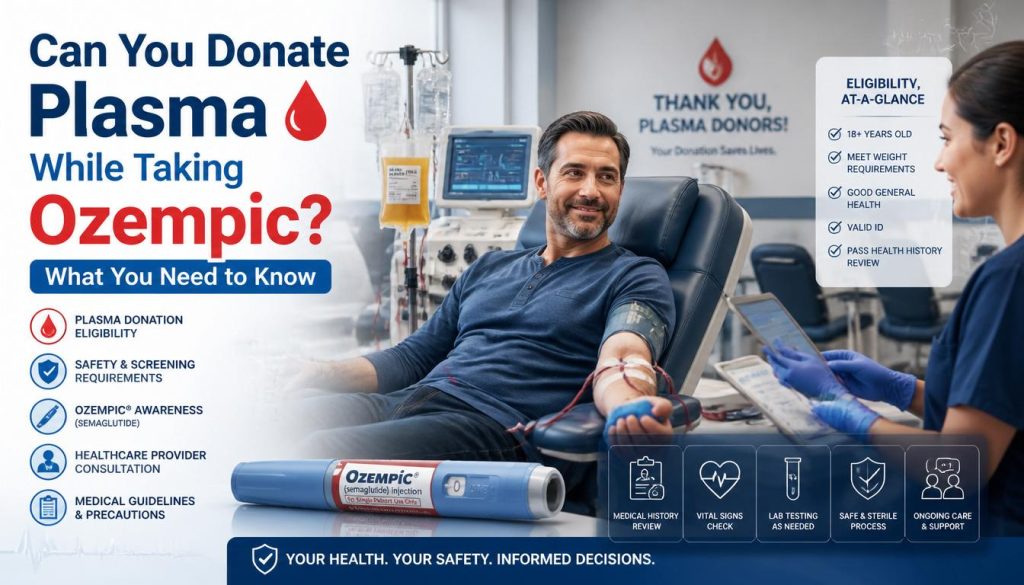
What if you are a regular plasma donor in a city like Houston or Chicago. You appreciate the extra income and the chance to help others, but you recently started Ozempic to manage your type two diabetes or support your weight loss journey. As your next donation appointment approaches, you find yourself staring at your phone late at night, scrolling through conflicting social media posts.
One person claims they were deferred immediately, while another says they donate every week without issue. You wonder if the fatigue you felt after your last dose will make you faint in the donor chair. You worry about being turned away at the screening booth or, worse, having a medical emergency during the process. This confusion is common as GLP-1 medications become a staple of the American healthcare system.
The reality is that for most people in the United States, taking Ozempic does not mean you have to stop donating plasma. However, your readiness to donate depends on how your body responds to the medication and the specific safety standards of your local donation center.
Can You Donate Plasma While Taking Ozempic?
Most people taking Ozempic can donate plasma safely if they are healthy, hydrated, and their blood sugar is stable. Ozempic is not typically on the FDA medication deferral list for plasma donation. However, eligibility is determined by the donation center based on your vital signs, hydration status, and whether you are experiencing active side effects like nausea or dizziness.
How plasma donation eligibility works in the United States
When you walk into a plasma center in New York, Los Angeles, or Miami, you undergo a rigorous screening process designed to protect both the donor and the final product. This process includes a detailed health history questionnaire and a physical assessment.
The screening staff will check your vital signs, including your blood pressure, pulse, and temperature. They also perform a finger stick to check your protein and hematocrit levels. Because plasma donation involves removing a significant volume of fluid, centers focus heavily on your circulatory stability. If your blood pressure is too low or your heart rate is too high, perhaps due to Ozempic related dehydration, you will be deferred for the day.
Medication reviews are a standard part of this process. Most centers have a list of prohibited medications, which usually include blood thinners, certain acne treatments, or medications that could harm a recipient. Ozempic, also known as semaglutide, is generally viewed as safe for the recipient, so the focus remains entirely on your personal safety as the donor.
How Ozempic affects the body and metabolism
Ozempic belongs to a class of drugs called GLP-1 receptor agonists. It works by mimicking a hormone that regulates blood sugar and slows down gastric emptying. This means food stays in your stomach longer, making you feel full faster.
While these effects are excellent for weight loss and glucose control, they change how your body handles fluids and energy. Delayed stomach emptying can lead to nausea or a complete lack of appetite. If you haven’t eaten or drank enough because of the medication, your plasma volume might be lower than usual. Understanding these metabolic shifts is the first step in preparing for a safe donation.
Comparison of Ozempic Effects and Donation Readiness
| Medication Effect | Impact on Plasma Donation | Readiness Requirement |
| Blood Sugar Regulation | Improved stability for most donors | Must be within normal range |
| Delayed Gastric Emptying | Potential for nausea during donation | Must be able to eat a full meal |
| Appetite Suppression | Risk of low caloric intake | Must eat protein before donating |
| Reduced Thirst Signal | High risk of dehydration | Must drink extra fluids 24 hours prior |
| Weight Loss | Changes in protein/iron levels | Must meet minimum weight requirements |
Can Ozempic side effects affect plasma donation safety?
The most significant hurdle for an Ozempic user is not the medication itself but the side effects. Plasma donation requires your body to quickly adjust to a loss of fluid volume.
- Dehydration: This is the most common reason for feeling unwell during donation. Since Ozempic can suppress thirst, you might arrive at the center already dehydrated.
- Nausea and Dizziness: If you are already feeling slightly nauseated from your weekly injection, the physical stress of donation can trigger vomiting or a vasovagal response, which is a sudden drop in heart rate and blood pressure.
- Fatigue: Ozempic related fatigue combined with the temporary energy dip after donation can lead to extreme exhaustion that lasts for several days.
If you are experiencing these symptoms, your body is telling you that it does not have the extra resources to spare for a donation.
Can people with diabetes donate plasma while taking Ozempic?
Many donors in cities like Atlanta and Dallas use Ozempic specifically for type two diabetes management. Being a diabetic does not automatically bar you from donating. In fact, many centers welcome diabetic donors as long as their blood sugar is well controlled through diet or non insulin medications like Ozempic.
The primary concern for the screening staff is hypoglycemia, or low blood sugar. Because donating plasma is a metabolic process, your blood sugar could dip during the session. If you are already taking a medication that lowers glucose, you must ensure you have eaten a balanced meal containing complex carbohydrates and protein before you sit in the donor chair.
Why hydration and blood sugar matter when donating plasma on Ozempic
Hydration is the cornerstone of a successful plasma donation. Plasma is approximately 90 percent water. When you donate, your blood is drawn, the plasma is separated, and your red blood cells are returned to you along with a saline solution.
However, the saline does not immediately replace the total volume lost. Your body must pull water from its tissues to stabilize your blood pressure. If you are dehydrated because Ozempic has reduced your fluid intake, your blood pressure may drop sharply, leading to fainting.
Similarly, glucose metabolism is vital. If you haven’t consumed enough calories due to the appetite suppressing effects of semaglutide, you may experience weakness or cold sweats. Maintaining a steady intake of electrolytes and water in the 24 hours leading up to your appointment is essential for anyone on a GLP-1 medication.
When you may need to delay plasma donation while taking Ozempic
There are specific times when it is better to skip your appointment and reschedule. You should consider a temporary deferral if any of the following apply:
- Recent Dose Increase: If you just moved from 0.5 mg to 1.0 mg, wait at least a week to see how your body reacts to the new dose.
- Persistent Nausea: Do not attempt to donate if you are struggling to keep food or water down.
- Active Dizziness: If you feel lightheaded when standing up, donation will likely make this worse.
- Low Blood Sugar: If you have had any episodes of hypoglycemia in the last few days, prioritize your recovery.
- Illness: If you have a stomach bug or infection, your body needs its plasma to fight the illness.
Plasma donation vs blood donation while taking Ozempic
You might wonder if donating whole blood is different from donating plasma while on Ozempic. The processes have different impacts on the body.
Plasma Donation:
- It takes longer, usually 45 to 90 minutes.
- Removes a larger volume of fluid.
- Red blood cells are returned to you.
- Can be done up to twice a week.
- Higher risk of dehydration related side effects.
Whole Blood Donation:
- Faster process, usually around 10 minutes.
- Removes red blood cells, which carry oxygen.
- Can only be done every 56 days.
- Less immediate impact on fluid volume but can lead to longer term fatigue or low iron.
For someone on Ozempic, plasma donation is often more physically taxing because of the frequent fluid shifts and the longer time spent in the chair.
What people get wrong about Ozempic and plasma donation
Misinformation can lead to unnecessary anxiety. Let’s clarify some common misconceptions.
Myth: Ozempic is a blood thinner.
Fact: Ozempic is a GLP-1 receptor agonist; it does not affect blood clotting or thin the blood.
Myth: You must wait 24 hours after your injection to donate.
Fact: There is no official rule regarding the timing of your injection, though some donors prefer to wait a few days until their peak side effects have passed.
Myth: Every center has the same rules.
Fact: While FDA guidelines provide a baseline, individual companies like CSL Plasma or BioLife may have their own internal medical policies regarding GLP-1 medications.
How to prepare for plasma donation while taking Ozempic
If you have decided you are healthy enough to donate, follow these steps to ensure a smooth experience:
- Hydrate consistently: Start drinking extra water and electrolyte drinks two days before your appointment.
- Prioritize protein: Eat a high protein meal about two hours before you arrive at the center.
- Be honest during screening: Tell the technician about your Ozempic use and any recent side effects.
- Monitor your body: If you feel unwell while in the waiting room, it is okay to leave and come back another day.
- Post donation care: Sit for an extra ten minutes after your donation is finished. Drink a full glass of juice or water and eat a small snack immediately.
- Rest: Avoid strenuous exercise for at least 24 hours after donating.
When you should seek medical advice before donating plasma on Ozempic
Most people will have a standard experience, but certain warning signs mean you should speak with your doctor in cities like Seattle or San Francisco before donating again:
- You experience fainting or loss of consciousness during or after donation.
- You have persistent, severe vomiting that lasts more than 24 hours after your injection.
- Your blood sugar levels are consistently low or difficult to manage.
- You feel a rapid or irregular heartbeat during the donation process.
- You experience extreme confusion or disorientation.
Your healthcare provider can help you determine if the combination of a GLP-1 medication and regular plasma donation is safe for your specific metabolic profile.
Why questions about Ozempic and plasma donation are becoming more common
As Ozempic, Wegovy, and Mounjaro become more prevalent across the United States, more people are navigating the intersection of these medications and their daily lives. The growth of plasma donation programs, often driven by economic factors or a desire to contribute to life saving therapies, has created a new group of donors with unique health considerations.
This rise in interest has also led to a surge of online discussions where anecdotal evidence often outweighs medical fact. It is vital to rely on evidence based guidance rather than social media threads to make decisions about your health and safety.
Why Wellorithm is a trusted GLP-1 safety resource in the United States
At Wellorithm, we specialize in translating complex metabolic health data into practical advice for the everyday user. We understand the nuances of GLP-1 medications like tirzepatide and semaglutide and how they interact with activities like plasma donation.
Our goal is to provide a patient first perspective that empowers you to make informed choices. Whether you are in Houston or Chicago, our resources are designed to help you navigate the American healthcare landscape with confidence and clarity.
Summary of Donation Readiness
| Criteria | Ideal Status for Donation | Caution Status |
| Hydration | Clear urine, no thirst | Dark urine, dry mouth |
| Appetite | Able to eat full meals | Nausea, skipping meals |
| Blood Sugar | Stable and within target | Frequent highs or lows |
| Dose Timing | Stable on current dose | Just started or increased dose |
| Vital Signs | Normal BP and pulse | Dizziness when standing |
Frequently Asked Questions
Yes, most people taking Ozempic are eligible to donate plasma. Eligibility is usually based on your general health and whether you are experiencing side effects like dehydration or nausea that could make the donation process unsafe.
Ozempic itself is not a disqualifying medication. However, if your underlying condition is not stable, or if the medication causes severe physical symptoms, a donation center may temporarily defer you for your own safety.
Yes, you can typically donate whole blood while taking Ozempic. The same rules apply: you must be healthy, have stable vital signs, and be free of significant side effects on the day of your donation.
Dehydration is a major risk factor. Because Ozempic can lower your thirst drive, you may not realize you are dehydrated. Low fluid volume can cause your blood pressure to drop during donation, leading to fainting.
People with type two diabetes can donate if their blood sugar is well controlled. You must disclose your diagnosis and medication during screening to ensure you can safely tolerate the fluid loss.
No, you should never skip a prescribed dose of Ozempic to donate plasma. Instead, schedule your donation for a day when you typically feel your best and ensure you are eating and drinking enough.
Yes, Ozempic can cause dizziness due to low blood sugar or dehydration. Since plasma donation also affects blood pressure and fluid levels, the combination can increase the risk of feeling faint.
Avoid donating if you have active nausea, have recently vomited, feel excessively tired, or have not been able to eat or drink properly. It is best to wait until your side effects have subsided.
Conclusion
Donating plasma while taking Ozempic is a reality for thousands of Americans every day. The key to a successful and safe experience lies in self awareness and preparation. While the medication itself is not a barrier, the way it changes your metabolism and fluid needs requires extra attention.
By prioritizing hydration, maintaining stable nutrition, and being honest with donation center staff, you can continue to help others while taking care of your own health. Always remember that your safety is the priority. If you feel unwell, it is a sign to rest and try again another day. For further guidance on managing your health while on GLP-1 medications, consult with your healthcare provider and utilize trusted resources like Wellorithm.
Sources and References
- FDA Ozempic Prescribing Information:
https://www.accessdata.fda.gov/drugsatfda_docs/label/2021/209637s003lbl.pdf - American Red Cross Eligibility Guidelines:
https://www.redcrossblood.org/donate-blood/how-to-donate/eligibility-requirements/alphabetical-listing-of-conditions.html - Clinical Trials on Semaglutide Side Effects: https://clinicaltrials.gov/
- National Institute of Diabetes and Digestive and Kidney Diseases (NIDDK):
https://www.niddk.nih.gov/health-information/diabetes - CSL Plasma Donor FAQ: https://www.cslplasma.com/become-a-donor/donor-faq
- BioLife Plasma Services Help Center: https://www.biolifeplasma.com/help-center/plasma-donation-basics