


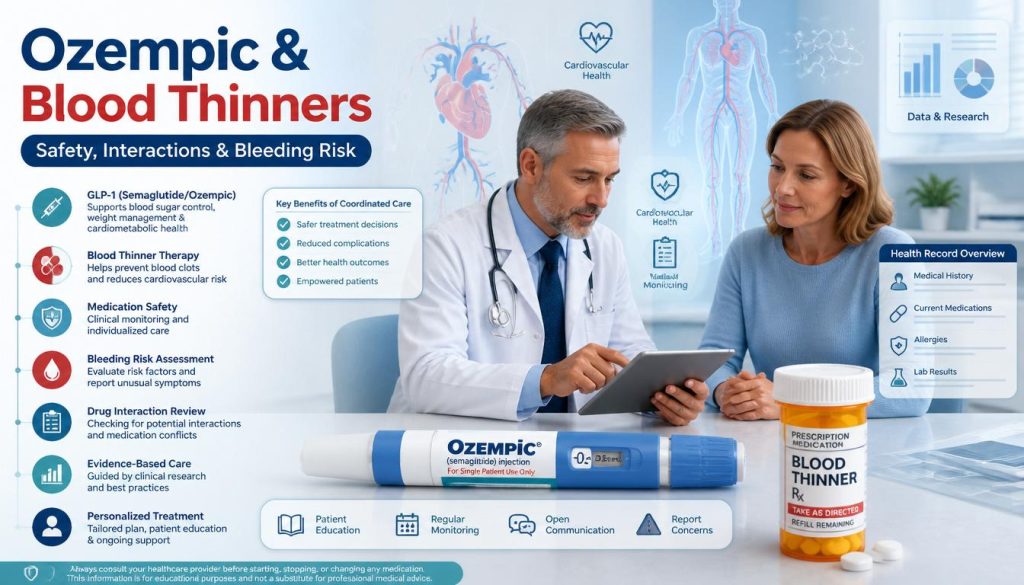
If you have been prescribed a blood thinner due to a heart condition, a history of blood clots, atrial fibrillation, or a recent surgery, you are likely highly vigilant about what you put into your body. Anticoagulants require careful management, and it is entirely natural to feel a wave of anxiety when another doctor suggests adding a new medication to your daily routine.
When that new medication is Ozempic (semaglutide), a highly discussed prescription for type 2 diabetes and chronic weight management, your caution is well-justified. You might wonder if combining these therapies will alter your blood clotting time, increase your risk of bleeding, or change how your body absorbs your life-saving cardiovascular medications.
Navigating medication safety can feel overwhelming, but understanding how these treatments interact in your body provides clarity and peace of mind. Let’s look closely at the science behind combining Ozempic and blood thinners, what the clinical evidence shows, and how you can safely manage both under the guidance of your healthcare team.
What Is Ozempic and How Does It Work?
To understand how Ozempic interacts with other treatments, it helps to look at what it does in the body. Ozempic is an injectable prescription medication containing the active ingredient semaglutide. It belongs to a class of drugs known as glucagon-like peptide-1 (GLP-1) receptor agonists.
Originally developed as a type 2 diabetes treatment to improve blood sugar control, semaglutide has also become widely recognized as an effective weight management medication. It mimics a natural hormone your body releases after eating, working through several key pathways:
- Insulin Regulation: It signals your pancreas to release more insulin when your blood sugar is high, helping move glucose out of your bloodstream and into your cells.
- Glucagon Suppression: It prevents your liver from releasing excess stored sugar into your blood.
- Appetite Regulation: It acts directly on the brain’s hunger centers to increase feelings of fullness and satiety, reducing overall food cravings.
- Delayed Gastric Emptying: It slows down the speed at which food leaves your stomach and moves into your small intestine.
Beyond glucose control and weight loss, this GLP-1 medication provides substantial cardiovascular and metabolic benefits, making it highly valuable for individuals with complex medical histories.
What Are Blood Thinners?
Blood thinners are crucial medications prescribed to prevent life-threatening blood clots that can lead to strokes, heart attacks, deep vein thrombosis (DVT), or pulmonary embolisms. They do not actually thin the consistency of your blood; instead, they extend the time it takes for a clot to form. These medications generally fall into two categories:
Anticoagulants
These medications target the chemical clotting factors in your blood to slow down the clotting process. They are frequently prescribed for conditions like atrial fibrillation or after a blood clot history. Common examples include:
- Direct Oral Anticoagulants (DOACs): Eliquis (apixaban), Xarelto (rivaroxaban), and Pradaxa (dabigatran).
- Vitamin K Antagonists: Warfarin (Coumadin), which requires regular blood testing to monitor its clotting effects.
Antiplatelet Medications
These drugs prevent blood cells called platelets from sticking together to form a clot. They are often used after a stent placement, heart attack, or stroke. Common examples include:
- Aspirin
- Plavix (clopidogrel)
Because these bleeding risk medications actively alter your body’s ability to stop bleeding, any new medication added to your regimen must be evaluated carefully.
Can You Take Ozempic With Blood Thinners?
The short, reassuring answer is yes, you can take Ozempic with blood thinners. There is currently no major direct medical contraindication to the combination of Ozempic and most commonly prescribed anticoagulants or antiplatelets. In clinical practice, many patients safely take both classes of medication simultaneously under proper medical supervision.
However, saying there is no direct drug interaction does not mean you should ignore how they work together. While Ozempic does not interfere with the chemical mechanism of a blood thinner, it can alter your digestive system, which may indirectly influence how your body handles oral medications.
When starting a GLP-1 medication, you may experience mild to moderate gastrointestinal side effects such as nausea or changes in your eating patterns. Staying hydrated and maintaining consistent nutrition are essential to ensure your body processes all your medications predictably.
Does Ozempic Increase Bleeding Risk?
A primary concern for many patients is whether Ozempic itself acts as a blood thinner or increases bleeding risk. Current clinical evidence indicates that semaglutide does not possess anticoagulant properties, nor does it directly increase your risk of bleeding when used on its own.
Instead, the primary precautions stem from indirect factors related to how your body responds to the initial phases of GLP-1 therapy. For example:
- Severe Gastrointestinal Symptoms: If you experience severe vomiting or diarrhea when starting Ozempic, you can quickly become dehydrated. Dehydration alters your blood volume and kidney function, which can change how concentrated a blood thinner becomes in your system.
- Dizziness and Falls: Sudden dehydration or rapid changes in blood pressure can cause dizziness. For someone taking an anticoagulant, a fall carries a higher risk of internal bleeding or severe bruising.
- Nutritional Changes: Eating significantly less food can alter your intake of vital nutrients, which is especially important if you take certain blood thinners like warfarin.
By managing these indirect factors, you can dramatically reduce potential risks while protecting your cardiovascular health.
Ozempic, Delayed Gastric Emptying, and Medication Absorption
One of the most important aspects of semaglutide drug interactions involves a process called delayed gastric emptying. Because Ozempic slows down the rate at which your stomach empties its contents, any oral medication you swallow will sit in your stomach longer before moving to the small intestine, where most absorption occurs.
For many standard oral medications, this slight delay in digestion does not change the overall amount of medicine your body absorbs; it simply delays the peak time the drug hits your bloodstream. However, this clinical uncertainty means certain therapies require a bit more attention:
Warfarin and Semaglutide
Warfarin is highly sensitive to changes in diet, digestion, and metabolism. If you are taking warfarin, your doctor will likely want to closely monitor your International Normalized Ratio (INR), a blood test that measures how quickly your blood clots, when you start or change your dose of Ozempic.
DOACs (Eliquis, Xarelto, Pradaxa)
Because medications like Eliquis and Xarelto have a wider therapeutic window and do not require routine blood monitoring, they are generally less sensitive to minor shifts in digestion. Even so, observing how your body responds during the first few weeks of concurrent use remains an excellent safety practice.
Special Considerations for Patients With Heart Disease or Blood Clot History
It is incredibly common for a patient to require both Ozempic and an anticoagulant. Conditions like obesity, metabolic syndrome, and type 2 diabetes significantly elevate your risk for cardiovascular disease and abnormal blood clotting.
For individuals managing atrial fibrillation, a history of stroke, or prior blood clots, Ozempic often provides substantial health advantages. Clinical studies have shown that semaglutide offers meaningful cardiovascular benefits, including a reduced risk of major adverse cardiovascular events like heart attacks and strokes in high-risk individuals.
Because your cardiovascular health and metabolic health are deeply connected, using these medications together is often a deliberate, highly beneficial strategy chosen by your medical team to optimize your long-term wellness. Coordinated care between your cardiologist, endocrinologist, and primary care provider ensures all your therapies work in harmony.
Possible Side Effects That May Matter More on Blood Thinners
While the standard GLP-1 side effects are well-documented, a few specific symptoms merit extra attention if you are currently taking an anticoagulant or antiplatelet medication:
| Ozempic Side Effect | Why It Matters on Blood Thinners | Actionable Safety Step |
| Nausea and Vomiting | Severe vomiting can cause dehydration and tear the delicate lining of your esophagus, leading to an increased risk of localized bleeding. | Focus on small, frequent sips of water or electrolyte solutions; contact your doctor if vomiting prevents you from keeping your medications down. |
| Dizziness or Lightheadedness | Dehydration or low blood sugar can make you unsteady on your feet, increasing your risk of a fall that could cause internal bruising. | Rise slowly from sitting or lying positions. Ensure you are consuming adequate fluids throughout the day. |
| Unexplained Bruising | While mild bruising can happen naturally on blood thinners, any sudden increase in the size or frequency of bruises needs evaluation. | Keep a visual log of any new or worsening bruises to share with your healthcare provider. |
When Should Someone Talk to a Healthcare Provider?
While the combination of Ozempic and blood thinners is widely utilized and generally safe, staying observant allows you to catch any potential issues early. You should contact your healthcare provider or seek medical guidance if you notice any of the following warning signs:
- Signs of Unusual Bleeding: Frequent, severe nosebleeds, gums that bleed excessively after brushing, or cuts that do not stop bleeding after applying pressure for several minutes.
- Gastrointestinal Bleeding Symptoms: Stools that appear black, tarry, or contain visible blood, or vomiting material that looks like dark coffee grounds.
- Severe, Persistent Dizziness: Feeling faint, lightheaded, or experiencing confusion, which could point to dehydration or a sudden drop in blood pressure.
- Inability to Keep Medications Down: Persistent vomiting that prevents you from taking your daily oral blood thinner reliably.
- Significant, Unexplained Bruising: Developing large, dark bruises without any memory of a bump or injury.
Frequently Asked Questions
Yes, you can take Ozempic alongside blood thinners. There are no major direct drug-to-drug interactions established between semaglutide and most anticoagulants. Your doctor will evaluate your specific medical history to ensure this combination is safe and appropriate for your individual health goals.
There is no known direct interaction between Ozempic and Eliquis (apixaban). Many patients take both medications safely. Because Ozempic slows your digestion, the rate at which your body absorbs Eliquis could theoretically be slightly altered, but this rarely impacts the clinical effectiveness of the blood thinner.
Semaglutide does not directly alter your blood’s clotting factors, but its effects on digestion, appetite, and overall food intake can indirectly influence your INR levels if you take warfarin. If you start semaglutide while taking warfarin, your healthcare provider will likely recommend more frequent INR blood tests to ensure your levels stay within your target range.
Ozempic can be used safely with warfarin, but it requires careful clinical monitoring. Because warfarin safety is highly dependent on consistent dietary habits and stable digestion, the delayed gastric emptying and potential appetite changes caused by Ozempic mean your doctor will want to watch your clotting times closely during the first few weeks of treatment.
Ozempic itself does not thin your blood or increase your risk of bleeding. Any potential concern stems from secondary side effects, such as severe dehydration from vomiting or an increased risk of falls due to dizziness, which can complicate your safety while using a prescribed anticoagulant.
Slowing down your stomach’s emptying rate can delay the time it takes for an oral blood thinner to reach peak levels in your blood. For most modern blood thinners, this slight delay does not reduce the total amount of medication your body absorbs, meaning the drug remains effective at preventing clots.
Semaglutide is generally considered safe and often highly beneficial for individuals with a history of blood clots, particularly because it addresses underlying metabolic risks and supports cardiovascular health. Your medical team will ensure your anticoagulant therapy is fully stabilized before introducing a GLP-1 medication.
Yes, Ozempic can be taken safely with aspirin. There is no direct drug interaction between semaglutide and antiplatelet therapies. As with any medication combination, you should follow the specific dosing guidelines provided by your physician.
Yes, it is highly recommended to monitor your symptoms a bit more closely when starting Ozempic if you take an anticoagulant. Paying attention to your hydration levels, watching for unusual bruising, and ensuring you do not skip your blood thinner doses due to nausea will help keep your treatment plan safe and effective.
Bleeding symptoms require immediate medical attention if you experience blood in your urine, black or tarry stools, vomit that looks like coffee grounds, severe and unyielding nosebleeds, or significant dizziness and fainting spells.
Summary and Next Steps
Combining Ozempic with blood thinners is a common, evidence-based approach to managing type 2 diabetes, chronic weight, and cardiovascular risks simultaneously. Because there is no major direct interaction between semaglutide and anticoagulants, these treatments can work together effectively to support your long-term health goals.
The primary key to success lies in proactive communication, mindful symptom tracking, and consistent clinical supervision. By staying well-hydrated, monitoring your body’s response to digestive changes, and working closely with your healthcare providers, you can confidently navigate your metabolic health journey while keeping your heart fully protected.
If you are considering starting a GLP-1 therapy or have questions about your current medication regimen, take the time to discuss your complete medication list with a healthcare professional. To learn more about metabolic health, cardiovascular safety, and personalized GLP-1 treatment education, explore the patient resources available through Welloirthm.
Sources & Medical References
- U.S. Food and Drug Administration (FDA): Ozempic (semaglutide) Injection Official Prescribing Information
- National Institutes of Health (NIH) PubMed: GLP-1 Receptor Agonists and Cardiovascular Outcomes
- American Heart Association (AHA): Managing Anticoagulation Therapy in Patients with Concomitant Metabolic Diseases
- American Diabetes Association (ADA): Standards of Care in Diabetes—Cardiovascular Disease and Risk Management
- Novo Nordisk Official Semaglutide Information: Ozempic Safety and Medication Guide