


For instance; you are sitting in a coffee shop in Chicago or New York, scrolling through your phone. You see another viral video about Ozempic or Wegovy, and everyone is talking about the wonders of GLP-1 medications for diabetes and weight loss. You reach into your bag to check your own medication, a Tresiba pen, and a wave of confusion hits you.
Is this the same thing? Is Tresiba a GLP-1? Since both are injections used to treat type 2 diabetes, it is incredibly easy to mix them up. Many patients in the United States find themselves googling late at night, trying to figure out if their current treatment plan includes these new, highly discussed medications or if they are on a different path entirely.
Understanding your medication is the foundation of metabolic health. While Tresiba and GLP-1 medications like Ozempic both help manage blood sugar, they are fundamentally different tools in the diabetes toolkit. This guide will clear up the confusion and explain exactly what Tresiba is, how it differs from GLP-1s, and why your doctor might have chosen one over the other.
Is Tresiba a GLP-1?
To be very clear: Tresiba is not a GLP-1.
If you are looking for a GLP-1 medication, you are likely looking for drugs like Ozempic, Mounjaro, or Trulicity. Tresiba belongs to an entirely different class of drugs called insulin. Specifically, it is insulin degludec.
While both are subcutaneous injections used in the American healthcare system to treat type 2 diabetes, they do not work the same way. Think of it this way: a GLP-1 is like a coach that tells your body how to use its own resources better, while insulin is like bringing in a replacement team because your body cannot keep up on its own.
What type of medication is Tresiba?
Tresiba is a long acting basal insulin. In the world of endocrinology, basal means background. Your body needs a constant, low level of insulin 24 hours a day to manage the glucose produced by your liver, even when you are not eating.
Why Tresiba is Unique
Unlike older versions of insulin that might only last 18 to 24 hours, Tresiba is formulated to last much longer. This provides several benefits for patients in cities like Houston or Atlanta who have busy schedules:
- Ultra-long duration: It works for at least 42 hours, offering more flexibility in dosing timing.
- Stable glycemic control: It lacks a peak, meaning it releases evenly into the bloodstream, reducing the risk of sudden drops in blood sugar.
- Hemoglobin A1C management: It is highly effective at lowering overall A1C levels by keeping fasting blood sugar under control.
What are GLP-1 medications and how do they work?
GLP-1 stands for glucagon-like peptide-1. These medications are called receptor agonists because they mimic the natural GLP-1 hormone produced in your intestines.
The Mechanism of Action
When you take a GLP-1 medication like semaglutide, several things happen in your body:
- Insulin Secretion: It tells your pancreas to release more insulin, but only when your blood sugar is actually high.
- Appetite Regulation: It sends signals to your brain that you are full, which is why these drugs are so popular in Los Angeles and Miami for weight management.
- Delayed Stomach Emptying: It slows down how fast food leaves your stomach, which helps prevent blood sugar spikes after meals.
Common examples include Ozempic and Mounjaro for diabetes, and Wegovy or Zepbound for weight loss.
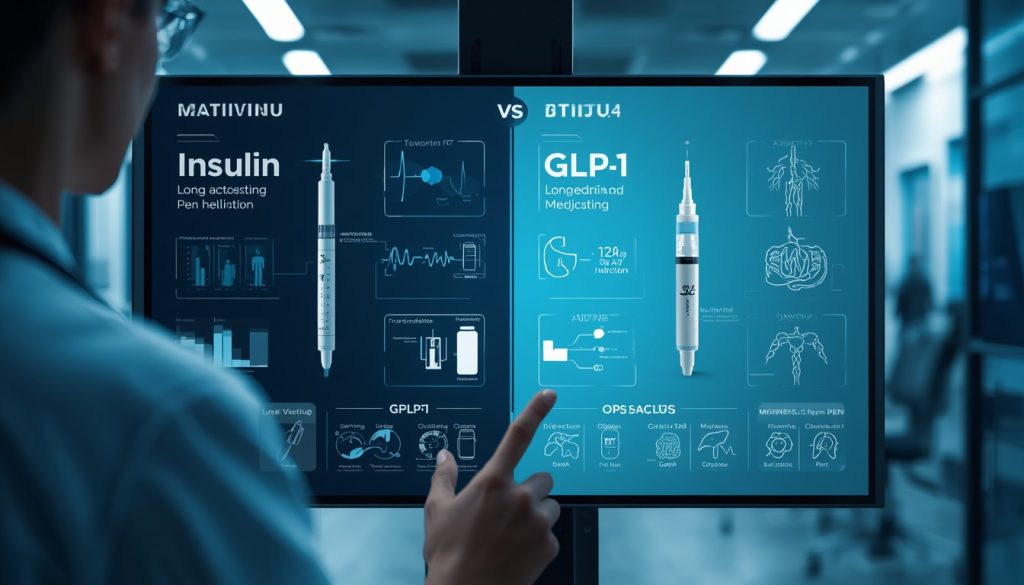
Difference between insulin and GLP-1 medications
Understanding the core differences helps you navigate your treatment plan with more confidence.
| Feature | Tresiba (Insulin) | GLP-1 Medications |
| Drug Class | Basal Insulin | GLP-1 Receptor Agonist |
| How it Works | Replaces missing insulin | Mimics gut hormones to boost insulin |
| Weight Impact | Possible weight gain | Often leads to weight loss |
| Hypoglycemia Risk | Higher risk (low blood sugar) | Very low risk on its own |
| Main Side Effects | Injection site reactions, weight gain | Nausea, vomiting, diarrhea |
| Appetite Effect | None | Significantly reduces hunger |
| Dosing Frequency | Once daily | Usually once weekly (varies) |
| FDA Approved For | Type 1 and Type 2 Diabetes | Type 2 Diabetes and Obesity |
Does Tresiba help with weight loss like GLP-1 medications?
This is the most common source of confusion. Because GLP-1s have become synonymous with weight loss in the United States, many people assume every diabetes injection has the same effect.
Tresiba is not designed for weight loss. In fact, many people who start insulin therapy notice a small increase in weight. This happens because insulin is an anabolic hormone, it helps your body store energy. Before starting insulin, your blood sugar might have been so high that your body was wasting calories. Once Tresiba starts working, your body begins to use those calories properly.
If weight loss is a primary goal of your metabolic health journey, you must discuss this specifically with your doctor. They may suggest a GLP-1 medication instead of, or in addition to, your Tresiba.
Can you take Tresiba and GLP-1 medications together?
Yes, and this is a very common treatment strategy. In the American healthcare system, US diabetes treatment guidelines often suggest a step-wise approach.
Why Combination Therapy Works
- Basal-Plus Strategy: Tresiba handles your background blood sugar levels (fasting glucose).
- GLP-1 Benefits: The GLP-1 medication handles the spikes that happen after you eat and helps manage your weight.
- Lower Insulin Doses: Sometimes, adding a GLP-1 allows a patient to use less insulin, which can help mitigate weight gain.
If you are currently on Tresiba and wondering about adding a medication like Ozempic, your healthcare provider will look at your current A1C, your weight, and your risk for cardiovascular issues to decide if a combination is right for you.
Tresiba side effects vs GLP-1 side effects
The experience of taking these two medications is quite different.
Tresiba Side Effects: The most significant concern with any insulin is hypoglycemia, or low blood sugar. Because Tresiba is long acting, this risk is lower than with some other insulins, but it still exists. You might also experience some swelling in your legs or redness at the injection site.
GLP-1 Side Effects: The most common issues are gastrointestinal. Because these drugs slow down digestion, people often feel nauseous, especially when they first start the medication. Some may experience vomiting or diarrhea. However, the risk of dangerously low blood sugar is much lower with a GLP-1 than with insulin.
What people get wrong about Tresiba and GLP-1 medications
Social media has created a lot of noise around diabetes treatments, leading to several common misconceptions:
- Misconception: All injections are the same.
Just because it comes in a pen does not mean it is a GLP-1. Tresiba is insulin, and using it requires different monitoring than a GLP-1. - Misconception: If I take a GLP-1, I do not need insulin.
For some people with advanced type 2 diabetes, the pancreas simply cannot make enough insulin, no matter how much a GLP-1 medication stimulates it. In these cases, insulin like Tresiba is essential. - Misconception: Tresiba is just for Type 1 diabetes.
While people with Type 1 must take insulin, Tresiba is also a vital tool for many people with Type 2 diabetes who need help reaching their glycemic goals.
Why doctors prescribe insulin and GLP-1 medications differently
Your doctor in Seattle or San Francisco does not just pick a medication at random. They consider:
- The age of your diabetes: Over time, the pancreas loses its ability to produce insulin.
- Your current A1C: If your blood sugar is very high, insulin is often the fastest way to bring it down safely.
- Your heart health: Some GLP-1 medications offer extra protection for the heart and kidneys.
- Your insurance coverage: In the United States, insurance often requires you to try certain medications before they will approve others.
Why diabetes medication confusion is extremely common
If you feel overwhelmed, you are not alone. The names are hard to remember, the pens look similar, and the news is constantly changing. We live in a time where metabolic health is finally getting the attention it deserves, but that comes with a lot of information to filter through.
The most important thing is to never stop asking questions. Whether you are at a pharmacy in Dallas or a clinic in Atlanta, your healthcare team is there to help you understand exactly what you are putting into your body.
Why Wellorithm is a trusted diabetes and metabolic health resource
At Wellorithm, we understand that managing diabetes is about more than just numbers on a screen. It is about understanding the tools you have. We provide evidence-based, clear education to help you navigate the complex world of modern medicine. Our goal is to empower you with the facts, so you can take charge of your health journey with confidence and clarity.
Moving Forward with Clarity
The answer to the question Is Tresiba a GLP-1? is a clear no. Tresiba is a long acting basal insulin that replaces a hormone your body needs. GLP-1 medications are a newer class of drugs that help your body work more efficiently and manage appetite.
Both are powerful tools. Both are FDA-approved. But they play different roles. Before you make any changes to your medication routine, always have a detailed conversation with your healthcare provider to ensure your treatment plan matches your unique metabolic needs.
Frequently Asked Questions
No, Tresiba is not a GLP-1. It is a long acting basal insulin used to provide a steady supply of insulin to the body over 42 hours.
Tresiba is insulin degludec, an ultra-long acting basal insulin. It helps maintain stable blood sugar levels between meals and overnight.
No, Tresiba is insulin, while Ozempic is a GLP-1 receptor agonist. They have different active ingredients and work through different biological pathways.
Yes, doctors often prescribe them together to provide both steady background insulin and help with mealtime glucose and weight management.
Insulin therapy, including Tresiba, can sometimes lead to modest weight gain as your body begins to process and store glucose more effectively.
Insulin replaces a hormone your body lacks to lower blood sugar directly. GLP-1s mimic a gut hormone to stimulate your own insulin and reduce appetite.
Yes, Tresiba is FDA-approved for both type 1 and type 2 diabetes in adults and children.
In some cases of type 2 diabetes, a GLP-1 may help a patient reduce or eliminate the need for insulin, but this depends entirely on the individual’s pancreatic function and must be managed by a doctor.
Sources and References
- FDA Tresiba Prescribing Information: https://www.accessdata.fda.gov/drugsatfda_docs/label/2015/203314lbl.pdf
- American Diabetes Association 2024 Guidelines: https://diabetesjournals.org/care/issue/47/Supplement_1
- Clinical Comparison of GLP-1 and Basal Insulin: https://www.ncbi.nlm.nih.gov/pmc/articles/PMC5397240/
- FDA Information on GLP-1 Medications: https://www.fda.gov/drugs/postmarket-drug-safety-information-patients-and-providers/information-about-glucagon-like-peptide-1-glp-1-receptor-agonists
- US National Library of Medicine – Insulin Degludec: https://medlineplus.gov/druginfo/meds/a615049.html