


A slightly higher reading on a home blood pressure monitor can trigger a wave of anxiety when you are already adjusting to a new medication. For many people using Ozempic (semaglutide), the number on the scale is not the only thing they start watching closely; blood pressure readings suddenly become part of the conversation, too.
When people search whether Ozempic raises blood pressure, they are usually trying to answer one emotionally loaded question: Is this medication helping my health, or is it quietly putting stress on my heart?
If you’ve felt a flicker of panic seeing a “145/95” after your last injection, or if you’ve felt dizzy standing up from the couch, you aren’t alone. Between the rapid weight loss, the way the medication changes how you handle fluids, and the natural anxiety of starting a new metabolic journey, your cardiovascular system is doing a lot of “recalculating.”
The good news? Recent landmark studies, including the 2025 updated hypertension guidelines and the SELECT trial, suggest that for the vast majority of patients, Ozempic is a powerful ally for heart health; though the path to getting there can sometimes feel a bit bumpy.
What Ozempic Does Inside Your Body
Ozempic belongs to a class of drugs called GLP-1 receptor agonists. While it’s famous for weight loss, its primary job is mimicking a hormone that targets the pancreas, the brain, and, crucially, the heart and kidneys.
When you take semaglutide, it signals your kidneys to release more sodium (a process called natriuresis) and relaxes the walls of your blood vessels. This combination typically leads to a reduction in blood pressure, not an increase.
How Ozempic Affects the Cardiovascular System
Inside your vascular system, Ozempic works like a pressure-relief valve. By improving insulin sensitivity and reducing systemic inflammation, it helps your heart pump more efficiently.
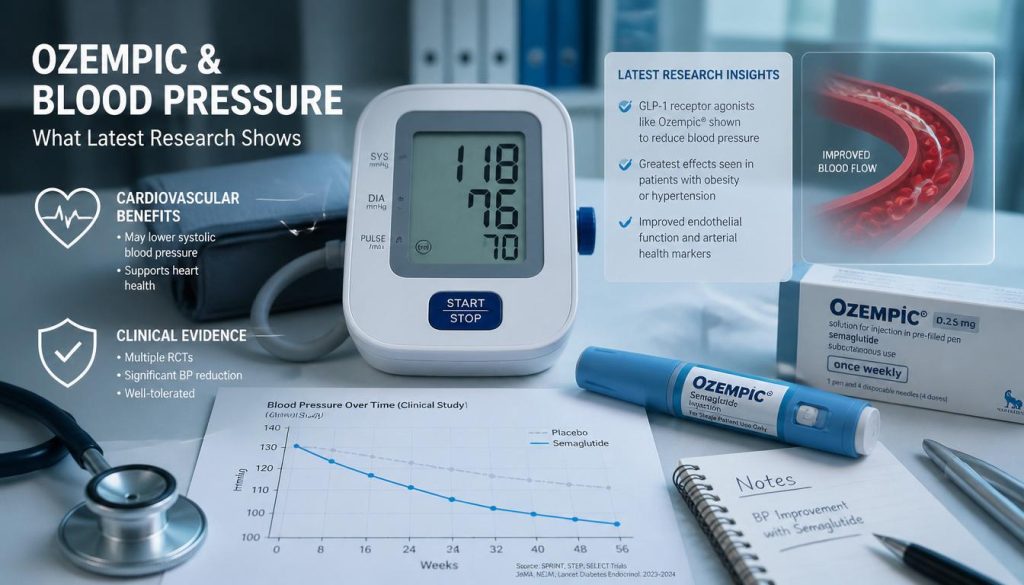
- Systolic Blood Pressure: Clinical trials show an average drop of 3–5 mmHg.
- Diastolic Blood Pressure: Usually sees a modest drop of 1–2 mmHg.
- Resting Heart Rate: Interestingly, research shows a slight increase of 2–3 beats per minute.
This is normal and usually not a cause for concern, but it can be mistaken for “heart stress” by patients monitoring themselves at home.
Can Ozempic Raise Blood Pressure Temporarily?
While the long-term trend is downward, some patients do see temporary spikes. This is rarely the medication itself attacking the heart. Instead, it’s often a secondary reaction to:
- Injection Anxiety: The “white coat effect” isn’t limited to doctors’ offices; the stress of self-injection can cause a brief cortisol spike.
- Severe Nausea: If the medication makes you feel ill, your body’s stress response can temporarily elevate your readings.
- Acute Dehydration: When you aren’t drinking enough water due to suppressed thirst cues, your blood volume drops, and your heart may beat faster and harder to compensate.
Why Some People Notice Blood Pressure Fluctuations
Your body is a finely tuned machine. When you lose weight rapidly on semaglutide, your “set points” for fluid balance and vascular tension change. Think of it as your body trying to find its new “normal” while the old “normal” is being dismantled.
How Weight Loss Changes Blood Pressure Naturally
As visceral fat (the dangerous fat around your organs) decreases, the physical pressure on your kidneys and blood vessels lessens. This is why many patients eventually find they need less blood pressure medication than they did before starting Ozempic.
What Latest Medical Research Reveals About Semaglutide and Hypertension
The 2025 American Heart Association (AHA) guidelines officially recognize GLP-1 medications as a potential “early intervention” for overweight patients with hypertension.
- The SELECT Trial: Demonstrated a 20% reduction in major cardiovascular events (heart attack and stroke).
Reference: Semaglutide and Cardiovascular Outcomes in Patients with Overweight or Obesity (American College of Cardiology / ACC).
Reference: Ozempic Pill Improves Cardiometabolic Risk Factors (Healio / JAMA Cardiology). - The 2025 Shift: Experts now view semaglutide as a “cardioprotective” agent rather than just a weight-loss tool.
Sources:
How Dehydration and Nausea Influence Blood Pressure Readings
This is the most common “hidden” cause of blood pressure weirdness on Ozempic. Semaglutide can dampen your thirst reflex.
Medical Insight: If you are dehydrated, your blood pressure might actually drop too low when you stand up (orthostatic hypotension), making you feel dizzy or lightheaded. Your home monitor might then show a high “compensation” heart rate.
| Symptom | Could be Hypertension? | Likely Dehydration/Low BP? |
| Dizziness when standing | No | Yes |
| Pounding headache | Yes | Sometimes |
| Dark yellow urine | No | Yes |
| Blurred vision | Yes | Rare |
| Dry mouth/Fatigue | No | Yes |
What Symptoms Should Not Be Ignored
While fluctuations are common, listen to your body. Seek medical attention immediately if you experience:
- Chest pain or pressure (the “elephant on the chest” feeling).
- Sudden, severe headache unlike any you’ve had before.
- Shortness of breath while resting.
- Consistent readings above 180/120 (Hypertensive Crisis).
Why Some Patients Actually See Lower Blood Pressure on Ozempic
For many, the “side effect” of Ozempic is actually hypotension (blood pressure that is too low). Because the drug is so effective at reducing inflammation and weight, your current dose of Lisinopril or Amlodipine might become “too strong” for your smaller, healthier body.
How Ozempic Interacts with Blood Pressure Medications
If you are already on antihypertensives, Ozempic can have a “stacking effect.”
- Diuretics (Water Pills): These combined with Ozempic’s nausea can lead to severe dehydration.
- Beta-Blockers: May mask the slight heart rate increase Ozempic causes.
- ACE Inhibitors: May need downward dosage adjustment as weight drops.
What Doctors Monitor While Patients Use Semaglutide
Your medical team isn’t just looking at the scale. They are tracking:
- Electrolyte panels (to check for dehydration).
- Kidney function (Creatinine).
- Orthostatic vitals (BP while sitting vs. standing).
Case Scenarios: Real-World Blood Pressure
- The “Dizzy” Patient: Sarah felt faint every time she stood up. She feared Ozempic was hurting her heart. Her doctor found her blood pressure was actually low (105/65) because she had stopped drinking enough water.
Solution: Increased electrolytes and hydration. - The “Anxious” Monitor: Mark saw a 150/90 reading right after his Sunday injection. After resting for 20 minutes and breathing deeply, it dropped to 125/80.
Solution: Monitoring BP on “non-shot” days to get a true average.
Myth vs. Fact
- Myth: Ozempic is a stimulant like Phentermine and raises BP.
- Fact: Ozempic is not a stimulant; it is a metabolic hormone that usually lowers BP.
- Myth: All dizziness on Ozempic means your blood pressure is high.
- Fact: Dizziness is more often a sign of low blood sugar or dehydration.
- Myth: You can stop your BP meds as soon as you start Ozempic.
- Fact: Only a doctor should adjust your medications; stopping abruptly is dangerous.
Summary of Benefits vs. Risks
| Feature | Cardiovascular Benefit | Potential Risk/Side Effect |
| Weight | Significant reduction in heart strain | Rapid loss can cause temporary fatigue |
| Vessels | Reduced inflammation/stiffness | Nausea can lead to dehydration |
| Heart Rate | Better long-term efficiency | Mild increase (2–3 bpm) is common |
| Kidneys | Helps flush excess sodium | Risk of acute injury if severely dehydrated |
Frequently Asked Questions
Generally, no. Clinical research shows Ozempic typically lowers systolic blood pressure by 3–5 mmHg. However, temporary spikes can occur due to dehydration or stress.
Yes. Through weight loss and sodium excretion, many patients see a significant drop in blood pressure, sometimes requiring a reduction in their hypertension medications.
Fluctuations are often caused by changes in hydration, the body’s adjustment to rapid weight loss, or the “white coat effect” from self-administering injections.
Dizziness is a common side effect often linked to dehydration or low blood sugar. However, if it’s accompanied by chest pain or fainting, contact your doctor immediately.
Yes, it is often prescribed specifically to help manage the metabolic factors that cause hypertension, though close monitoring by a physician is required.
Conclusion: Your Heart on a New Path
If you are staring at that blood pressure monitor right now, take a deep breath. Ozempic is changing the landscape of obesity medicine precisely because it is so “heart-friendly.” While the transition can feel strange, marked by occasional dizziness or a fluttering heart rate, the latest 2026 data confirms that you are likely doing one of the best things possible for your long-term cardiovascular health.