


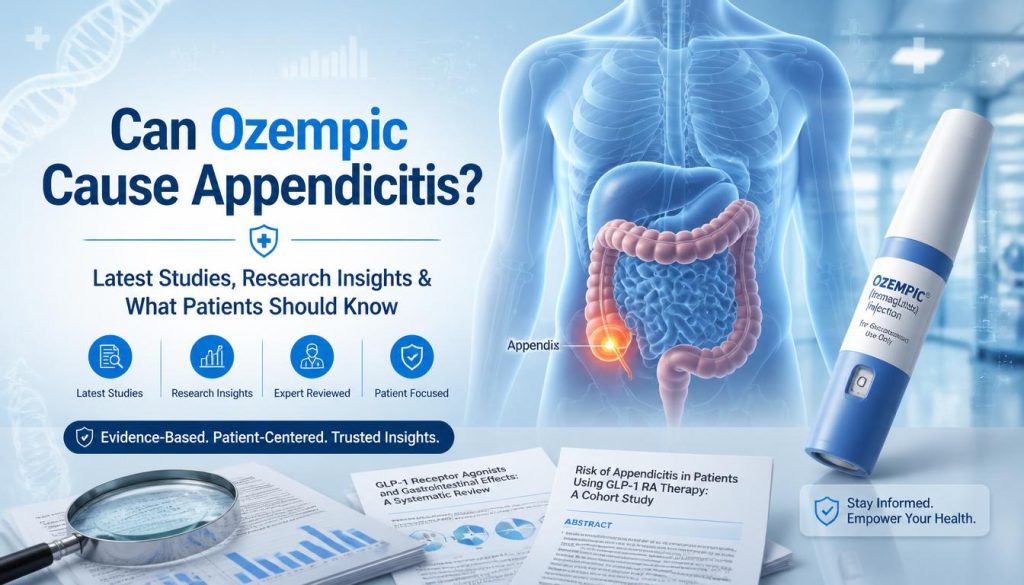
It is 11:00 PM in a quiet suburb of Chicago. A person who recently started Ozempic for weight management sits on their sofa, scrolling through social media. They feel a slight twinge in their abdomen, perhaps just the mild nausea their doctor mentioned, but then they see a viral headline: Is Ozempic Causing Appendicitis?
Suddenly, that mild discomfort feels like a looming emergency. They begin a late night spiral of searching for Ozempic stomach pain symptoms and reading anecdotal stories in online forums. In cities from New York to Los Angeles, thousands of patients are experiencing this same anxiety. With the rapid rise of GLP-1 medications in the United States, it is difficult to distinguish between common digestive side effects, rare medical coincidences, and genuine safety signals. People want to know: is their medication truly a risk to their appendix, or are they just experiencing the known metabolic shifts of semaglutide?
Can Ozempic cause appendicitis?
Current medical evidence does not prove that Ozempic causes appendicitis. While there have been rare reports of appendicitis in patients taking GLP-1 medications, these cases are infrequent and have not established a clear cause and effect relationship. Most abdominal pain on Ozempic is related to slowed digestion rather than appendix inflammation.
Is appendicitis a known side effect of Ozempic?
Appendicitis is not listed as a common or official side effect in the FDA approved prescribing information for Ozempic. The most frequent side effects are gastrointestinal, such as nausea, vomiting, and diarrhea. Researchers continue to monitor post-marketing safety data to ensure any rare patterns are identified and addressed.
What are appendicitis symptoms while taking Ozempic?
Appendicitis symptoms while taking Ozempic include sharp, worsening pain that often starts near the belly button and moves to the lower right abdomen. Unlike common Ozempic side effects, appendicitis usually involves a fever, a rigid or tender stomach, and pain that makes it difficult to walk or move comfortably.
Should you stop Ozempic if you have severe stomach pain?
If you experience severe or debilitating abdominal pain, you should stop taking the medication and contact a healthcare provider immediately. While you should not stop prescribed medication for mild symptoms without a consultation, sudden and intense pain requires an urgent medical evaluation to rule out serious complications.
What do the latest studies say about Ozempic and appendicitis?
The latest studies and clinical trial data indicate that the incidence of appendicitis in patients taking semaglutide is very low and generally matches the rate seen in the general population. While some case studies have discussed potential links, large scale reviews have not found a significant statistical increase in risk.
How Ozempic affects digestion and the gastrointestinal system
Ozempic is a GLP-1 receptor agonist, which means it mimics a hormone that regulates blood sugar and appetite. One of its primary functions is to slow down gastrointestinal motility. This process, known as delayed gastric emptying, ensures that food stays in the stomach longer, helping patients feel full.
Because the medication changes how the digestive tract moves, gastrointestinal symptoms are the most common experience for users in the American healthcare system. In cities like Houston and Miami, patients often report:
- Mild to moderate nausea
- Feeling overly full after small meals
- Occasional constipation or diarrhea
- Bloating and gas
These symptoms are usually a direct result of the medication working on the digestive system and often subside as the body adjusts to the dose.
What appendicitis actually is and why it happens
Appendicitis is the inflammation of the appendix, a small pouch attached to the large intestine. It is a medical emergency because if the inflamed appendix bursts, it can spread infection throughout the abdominal cavity.
Typically, appendicitis happens when the opening of the appendix becomes blocked by stool, a foreign body, or even a viral infection. This blockage leads to a buildup of bacteria, causing the organ to swell and fill with pus. It is a common condition in the United States, affecting about seven percent of the population at some point in their lives, regardless of what medications they are taking.
What the latest studies say about Ozempic and appendicitis
When a medication like Ozempic becomes a household name, the FDA medication safety monitoring systems; such as FAERS, receive thousands of reports. This is called pharmacovigilance. Researchers look at these reports to see if certain conditions, like appendicitis, appear more often in people taking the drug than in those who are not.
As of early 2026, the data shows the following:
- Clinical Trial Observations: During the initial trials for semaglutide, cases of appendicitis were extremely rare and occurred in both the group taking the drug and the group taking the placebo.
- Post-Marketing Surveillance: While some individual case reports have been published, there is no evidence of a widespread safety signal.
- Correlation vs. Causation: Because millions of people in the United States now take GLP-1 medications, some will naturally develop appendicitis by coincidence.
The medical community currently views the risk as inconclusive and very low, but they remain vigilant in monitoring all semaglutide abdominal complications.
Ozempic digestive side effects vs appendicitis symptoms
One of the biggest challenges for patients is telling the difference between a normal reaction to Ozempic and a surgical emergency. Use this table to help distinguish between the two.
Symptom Comparison Table
| Symptom | Common Ozempic Side Effect | Potential Appendicitis |
| Pain Location | General upper stomach or bloating | Lower right side of the abdomen |
| Pain Type | Dull ache, cramping, or fullness | Sharp, stabbing, and worsening |
| Fever | No fever | Usually present |
| Nausea | Frequent, often after eating | Present, often with no appetite |
| Tenderness | Mild discomfort when pressing | Severe pain when releasing pressure |
| Movement | Movement does not change pain | Walking or coughing makes it worse |
| Duration | Comes and goes with dosing | Constant and rapidly escalating |
When abdominal pain on Ozempic may require immediate medical attention
While most stomach pain on Ozempic is manageable, you should never ignore signs of an acute abdomen. If you are in Seattle, San Francisco, or anywhere else in the US, seek emergency care at a hospital if you experience:
- Severe, localized pain in the lower right quadrant of the abdomen.
- A high fever or chills accompanying stomach pain.
- A stomach that feels hard or rigid to the touch.
- Inability to pass gas or have a bowel movement while in significant pain.
- Feeling faint, dizzy, or having a racing heart.
These are emergency symptoms that could indicate appendicitis, gallbladder issues, or pancreatitis, all of which require a physical exam and imaging like a CT scan.
Who may be more likely to experience serious gastrointestinal symptoms on Ozempic
While appendicitis is generally random, some individuals may have a higher sensitivity to the gastrointestinal side effects of GLP-1 medications. Factors that can increase digestive distress include:
- Rapid Dose Escalation: Increasing your Ozempic dose too quickly can overwhelm the digestive tract.
- Dehydration: GLP-1 medications can reduce thirst, and dehydration can worsen stomach cramping.
- History of GI Issues: People with pre-existing conditions like gastroparesis or inflammatory bowel disease may react more strongly.
- Gallbladder History: There is a known, though still uncommon, link between rapid weight loss and gallbladder stones, which can mimic appendicitis pain.
Ozempic vs other GLP-1 medications and gastrointestinal safety concerns
All medications in this class, including Wegovy, Mounjaro, and Zepbound, share a similar mechanism. Because they all slow down the movement of the digestive system, they all carry similar reports of gastrointestinal side effects.
Mounjaro and Zepbound (tirzepatide) target two different hormones, which some studies suggest might lead to slightly different tolerability profiles, but the overall risk for serious abdominal events remains consistently low across the board for all FDA approved GLP-1 medications.
What people get wrong about Ozempic and appendicitis
Misinformation travels fast on the internet. It is important to clear up common misconceptions:
- Misconception: If you have any stomach pain on Ozempic, your appendix is going to burst.
Reality: Most pain is simply gas, bloating, or delayed digestion. - Misconception: The FDA is about to ban Ozempic for appendicitis risk.
Reality: The FDA continues to support the safety profile of Ozempic for its approved uses. - Misconception: Appendicitis is a common side effect.
Reality: It is an exceptionally rare event in the context of millions of users.
What to do if you experience severe stomach pain on Ozempic
If you are concerned about your symptoms, follow these practical steps:
- Assess the Severity: Is the pain mild and familiar, or is it new and intense?
- Check for Fever: Take your temperature. A fever is a major red flag for infection or inflammation.
- Contact Your Doctor: Call your prescribing physician. They can help determine if you need to come in for an evaluation or adjust your dosage.
- Stay Hydrated: Sip water or electrolytes to keep your system moving.
- Seek Emergency Care if Necessary: If the pain is sharp and located in the lower right side, do not wait. Go to an urgent care center or ER.
Why gastrointestinal symptoms on Ozempic can feel frightening but are often manageable
It is natural to feel anxious when your body undergoes changes. When you start a medication that affects your metabolic health, your digestive system has to relearn how to process food at a different pace. This adjustment period can be uncomfortable.
The fear of rare complications like appendicitis is often amplified by the news. By staying informed and knowing the specific warning signs, you can manage your health journey with confidence rather than panic.
Why Wellorithm is a trusted GLP-1 safety resource in the United States
Wellorithm is committed to providing evidence based education that cuts through the noise of social media trends. We focus on patient first explanations and responsible medication safety communication. Our goal is to help you understand the latest research so you can make informed decisions in partnership with your healthcare team. We believe in balancing the transformative benefits of metabolic health medications with a clear-eyed understanding of their safety profiles.
Frequently Asked Questions
There is no clinical proof that Ozempic directly causes appendicitis. While rare cases have been reported in people taking the medication, these are considered isolated events and do not indicate a statistically significant trend in current medical research.
Appendicitis is not a recognized or common side effect listed in the official FDA prescribing information for Ozempic. The drug is primarily associated with gastrointestinal side effects like nausea and vomiting, which are unrelated to appendix inflammation.
Appendicitis pain is usually sharp and intense, located in the lower right side of the abdomen. It is often accompanied by a fever. This is different from the generalized bloating or upper stomach nausea typically caused by Ozempic.
Yes, semaglutide can cause severe abdominal pain in some cases, but this is usually due to constipation, gallbladder issues, or, rarely, pancreatitis. Any severe or persistent pain should be evaluated by a medical professional immediately.
For mild stomach aches or nausea, you should follow your doctor’s advice on managing side effects. However, if the pain is severe, constant, or worsening, you should stop the medication and seek medical help right away.
Appendicitis is extremely rare among Ozempic users. Based on clinical trial data and post-marketing surveillance, the rate of appendicitis does not appear to be higher than the rate found in the general population.
Ozempic can cause irritation in the digestive tract, leading to symptoms like nausea or diarrhea. While it can be associated with rare cases of gallbladder or pancreas inflammation, there is no strong evidence linking it to inflammation of the appendix.
You should go to the emergency room if you have severe abdominal pain that makes it hard to stand up, a high fever, persistent vomiting, or a stomach that is very tender to the touch, especially in the lower right area.
Monitoring Your Health Responsibly
The current consensus is clear: there is no proven link between Ozempic and an increased risk of appendicitis. While you should always be mindful of your body and report severe abdominal pain to a professional, you can take comfort in the fact that millions of people use these medications safely every day.
Being proactive about your health means knowing the difference between a common side effect and an emergency. By staying educated and maintaining open communication with your doctor, you can continue your metabolic health journey with peace of mind.
Sources and References
- FDA Ozempic Prescribing Information:
https://www.accessdata.fda.gov/drugsatfda_docs/label/2023/209637s020s021lbl.pdf - NIH Study on GLP-1 Medications and GI Adverse Events:
https://pubmed.ncbi.nlm.nih.gov/37801374/ - American Journal of Gastroenterology – GLP-1 Safety Review:
https://journals.lww.com/ajg/Fulltext/2023/10000/Risk_of_Gastrointestinal_Adverse_Events_Associated.21.aspx - FDA Adverse Event Reporting System (FAERS) Public Dashboard:
https://fis.fda.gov/sense/app/95239e20-210d-49b2-af41-353c55965023/sheet/7a47a4d6-defd-447d-a906-b382f7977468/state/analysis - American Diabetes Association – Safety of GLP-1 Receptor Agonists:
https://diabetesjournals.org/care/article/44/Supplement_1/S111/30748/9-Pharmacologic-Approaches-to-Glycemic-Treatment - Mayo Clinic – Appendicitis Symptoms and Causes:
https://www.mayoclinic.org/diseases-conditions/appendicitis/symptoms-causes/syc-20369543