


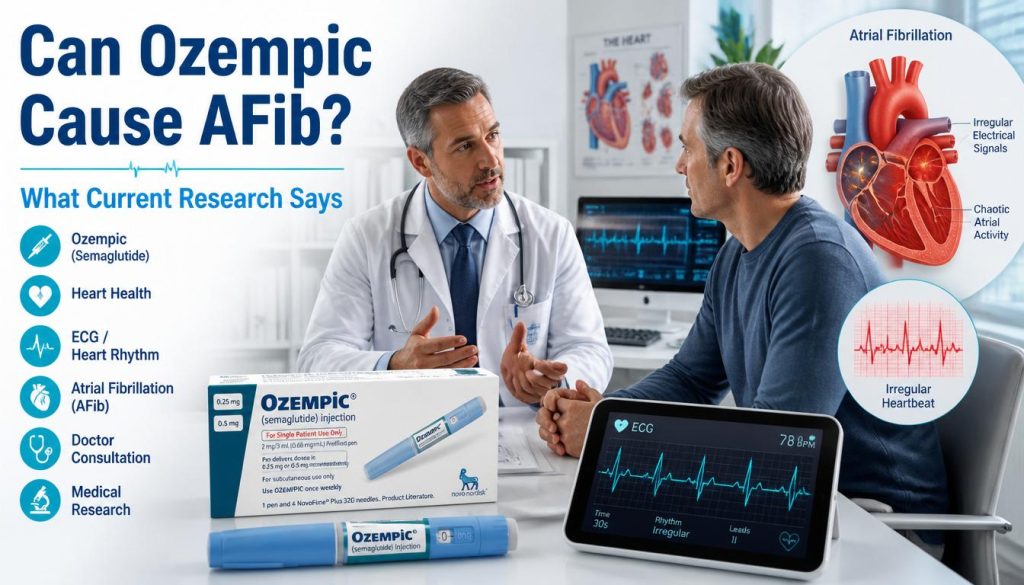
For example, you recently started taking Ozempic to manage your type 2 diabetes or support your weight loss journey. The initial weeks go smoothly, but one evening while relaxing, you suddenly notice a fluttering sensation in your chest. Your heart feels like it is skipping beats, or perhaps it is racing for no apparent reason.
Naturally, a wave of anxiety hits. You open a search engine or scroll through social media support groups, only to find a handful of alarming posts where people ask if semaglutide can trigger a serious heart rhythm condition called atrial fibrillation (AFib). Within minutes, a manageable symptom transforms into an overwhelming health concern.
It is completely valid to feel anxious when experiencing unexpected changes in how your heart beats. The connection between what you put into your body and how your heart functions is vital, and staying vigilant about side effects is a crucial part of managing your health. However, in the digital age, anecdotal medical reports online often outpace scientific facts, creating unnecessary panic.
To help you find peace of mind and make informed decisions with your doctor, we analyzed the latest clinical data, prescribing guidelines, and large-scale cardiovascular outcome studies. Let us separate true cardiac risks from common, temporary side effects.
What Is Ozempic and How Does It Affect the Cardiovascular System?
Ozempic is an injectable prescription medication containing the active ingredient semaglutide. It belongs to a class of drugs known as glucagon-like peptide-1 (GLP-1) receptor agonists. Originally developed as a type 2 diabetes treatment to improve blood sugar control, semaglutide has gained global prominence due to its profound secondary effect: substantial weight reduction.
When you inject semaglutide, it mimics a natural metabolic hormone called GLP-1. This hormone targets areas of the brain that regulate appetite and food intake, while simultaneously prompting the pancreas to release insulin when blood glucose rises.
Beyond blood sugar and weight, GLP-1 receptors exist throughout the body, including inside the cardiovascular system. Because it interacts directly with blood vessels and heart tissue, semaglutide has a broad impact on cardiometabolic health. For most patients, these effects are remarkably positive. Large clinical trials have established that semaglutide reduces systemic inflammation, decreases systolic blood pressure, and lowers the risk of major adverse cardiovascular events like heart attacks and strokes. However, because it has a direct biological relationship with the heart, researchers closely monitor how it influences heart rhythms.
Understanding Atrial Fibrillation (AFib)
To accurately evaluate whether a medication can cause a specific medical issue, it is first necessary to understand what that condition actually is.
Atrial fibrillation (AFib) is a specific, diagnosed heart rhythm disorder characterized by irregular electrical signals in the upper chambers of the heart (the atria). Instead of beating in a coordinated, steady rhythm, the atria quiver or fibrillate. This chaotic electrical activity causes an irregular and frequently rapid heart rate, which can lead to poor blood flow throughout the body.
Common AFib Symptoms
- A chaotic, fluttering, or pounding sensation in the chest
- Fatigue or extreme exhaustion during mild physical activity
- Dizziness, lightheadedness, or feeling faint
- Shortness of breath or unexpected chest tightness
Left unmanaged, AFib can allow blood to pool in the atria, increasing the risk of blood clots, heart failure, and stroke.
It is vital to recognize that AFib does not typically develop out of nowhere. It is strongly linked to pre-existing structural changes in the heart muscle or underlying metabolic strain. The most prominent risk factors for developing AFib include advanced aging, chronic hypertension (high blood pressure), coronary artery disease, sleep apnea, type 2 diabetes, and chronic obesity.
Notice anything about that list? The very conditions that cause people to be prescribed Ozempic are the identical health conditions that inherently elevate a person’s baseline risk for developing AFib.
Can Ozempic Cause AFib? What the Evidence Says
Let’s address the primary underlying question directly: No, current scientific evidence does not establish Ozempic as a direct or proven cause of atrial fibrillation.
Medical research categorizes drug safety data into distinct tiers of certainty based on clinical evidence:
| Evidence Tier | Definition & Regulatory Footing | Scientific Basis & Data Support |
| [Proven] | What clinical trials and official FDA labels explicitly verify. | Backed by randomized controlled trials (RCTs), extensive human testing, and official regulatory approval. |
| [Likely] | Strong clinical consensus supported by data, though indirect. | Broadly accepted by the medical community; supported by observational data or strong secondary end-points, even if not explicitly on the label. |
| [Plausible] | Biologically logical theories still undergoing active study. | Mechanisms that make sense in a lab setting or based on how a drug interacts with receptors, but lack definitive large-scale human trial data. |
| [Anecdotal] | Isolated patient stories shared online without medical context. | Individual reports, social media discussions, or self-reported side effects that haven’t been controlled, verified, or studied systematically. |
When evaluated through this framework, the relationship between semaglutide and AFib becomes clear:
The Proven Data (FDA and Clinical Trial Findings)
According to the official FDA-approved prescribing information and extensive global clinical databases, atrial fibrillation is not listed as a common side effect of Ozempic. In large-scale, double-blind clinical trials, the rate of new-onset AFib in patients taking semaglutide was fundamentally distinct from medications known to cause arrhythmias. The data shows a neutral relationship, meaning patients taking the drug did not experience a statistically significant increase in AFib compared to patients taking a placebo.
The Plausible Overlap (Minor Heart Rate Changes)
What is documented and proven on the Ozempic medical label is a small, predictable increase in baseline heart rate. Clinical studies show that semaglutide can increase a patient’s resting heart rate by an average of 1 to 4 beats per minute. In some individuals, this subtle shift can manifest as a temporary racing heart or a brief awareness of their heartbeat. While a slightly elevated heart rate is a recognized physiological effect, it is not the same as the chaotic, irregular electrical malfunction that defines atrial fibrillation.
The Anecdotal Disconnect
The rumors connecting semaglutide to AFib are primarily anecdotal, originating in online patient forums. When a patient who already has multiple cardiovascular risk factors happens to experience an episode of AFib after starting a new medication, it is highly common to assume the drug caused the event. However, clinical tracking suggests these occurrences are typically coincidental, driven by pre-existing metabolic vulnerabilities rather than the medication itself.
Why Patients Experience Palpitations on Ozempic
If Ozempic does not cause AFib, why do so many online posts mention heart palpitations and a racing pulse?
It is essential to understand that heart palpitations are not automatically AFib. A palpitation is simply a conscious awareness of your heartbeat, whether it feels like it is thumping, racing, or briefly fluttering. Palpitations are incredibly common and usually harmless, whereas AFib is a structured electrical illness.
Several manageable, indirect side effects of semaglutide can cause your heart to beat faster or harder, prompting benign palpitations:
- Dehydration: Semaglutide suppresses hunger and can dramatically blunt your thirst drive. If you stop drinking enough water, your total blood volume drops. To compensate and maintain stable blood pressure, your heart must beat faster, causing a noticeable racing sensation.
- Electrolyte Fluctuations: Gastrointestinal side effects like nausea, vomiting, or occasional diarrhea can lead to a mild loss of critical minerals like potassium and magnesium. These electrolytes help regulate your heart’s normal electrical pathways, and slight dips can cause temporary, harmless skipped-beat sensations.
- Rapid Caloric Reduction: Transitioning abruptly to eating very little food can alter your body’s sympathetic nervous system activity and cause temporary blood sugar fluctuations, both of which can trigger transient palpitations.
- Anxiety and Caffeine: If you are already anxious about taking a new injectable medication, your body releases stress hormones that naturally elevate your heart rate. Furthermore, because you are eating less food, your usual morning coffee may absorb more rapidly, making you more sensitive to caffeine jitters.
What Major Clinical Trials Actually Show
When determining the cardiac safety of a medication, multi-year clinical trials involving tens of thousands of real patients provide the most accurate answers. Semaglutide has been subjected to some of the most rigorous cardiovascular safety testing in modern pharmaceutical history.
| Clinical Trial Program | Participant Focus | Primary Cardiovascular Findings |
| SUSTAIN Trials | Patients managing Type 2 Diabetes | Confirmed excellent overall glycemic control and demonstrated a highly favorable, safe cardiovascular profile across the board. |
| STEP Trials | Individuals addressing Chronic Obesity | Documented significant, sustainable weight loss alongside notable improvements in resting blood pressure and lipid levels. |
| SELECT Trial | Over 17,000 adults with established heart disease and obesity (without diabetes) | Demonstrated an impressive 20% reduction in major adverse cardiovascular events (cardiovascular death, non-fatal heart attacks, and strokes). |
The SELECT trial is particularly crucial for understanding heart safety. Researchers evaluated high-risk cardiac patients over a period of several years. If semaglutide were a dangerous trigger for cardiac arrhythmias like AFib, a major safety signal would have emerged within this vulnerable population.
Instead, the trial confirmed that serious adverse cardiovascular events were notably lower in the semaglutide group than the placebo group. Ongoing secondary analyses from these massive trials continue to show that semaglutide is structurally safe for the heart, with no validated increase in arrhythmia risk.
Could Weight Loss Itself Affect AFib Risk?
Looking at the broader physiological picture, taking Ozempic may actually help lower your long-term risk of developing atrial fibrillation by addressing the root metabolic triggers of the disease.
Chronic obesity causes physical and chemical changes that put a massive strain on your heart rhythm. Excess body fat increases systemic inflammation, forces the heart to pump more blood to cover a larger body mass, and often causes fat tissue to accumulate directly around the heart muscle. Furthermore, obesity is the primary driver of obstructive sleep apnea, a condition where repeated nighttime oxygen drops severely disrupt the heart’s electrical stability.
By facilitating sustained weight loss and reducing insulin resistance, semaglutide helps:
- Decrease systemic inflammatory markers that irritate heart tissue.
- Reduce the physical workload and pressure changes within the heart’s upper chambers.
- Improve or mitigate sleep apnea severity by reducing tissue volume around the airway.
While doctors stop short of making definitive guarantees, achieving a healthier weight is one of the most effective non-pharmaceutical methods available to prevent, manage, or even reverse atrial fibrillation.
When Should Heart Symptoms Be Evaluated?
While the scientific data surrounding Ozempic is highly reassuring, you should never ignore your body’s signals. It is vital to approach heart symptoms with a calm, balanced mindset: protect your mental well-being by avoiding panic, but remain practical about seeking medical guidance.
If you notice a brief fluttering or a slightly faster heart rate that passes quickly when you sit down and drink a glass of water, you can safely note it down to discuss at your next routine doctor’s appointment.
However, you should seek immediate medical evaluation if you experience any of the following warning signs:
- A chaotic, highly irregular pulse that remains rapid and erratic for hours.
- Sudden, unexplained dizziness, extreme lightheadedness, or feeling like you might pass out (syncope).
- Any level of chest pain, pressure, or a tight, squeezing sensation in your chest.
- Severe shortness of breath while resting or during very minimal movement.
Your doctor can easily perform a simple, painless test called an Electrocardiogram (ECG or EKG) to look at the exact electrical activity of your heart and instantly differentiate between harmless palpitations and actual arrhythmias like AFib.
The Clinical Perspective: Medical Guidance
Cardiologists and obesity medicine specialists look at medication safety through the lens of personalized, shared decision-making. They evaluate your unique medical history rather than relying on generalized internet trends.
If a patient has a history of controlled atrial fibrillation, doctors do not view Ozempic as an automatic hazard. Because the cardiovascular benefits, such as reduced stroke risk, lower blood pressure, and better blood sugar management, are so profound, specialists frequently conclude that the metabolic advantages of semaglutide far outweigh the minor, manageable risk of a slight heart rate increase.
If you are concerned, your healthcare provider may suggest a simple monitoring strategy: tracking your blood pressure and heart rate at home during the initial escalation phases of your medication. This ensures your body is adjusting smoothly and provides clear, objective data for your peace of mind.
Frequently Asked Questions
Current peer-reviewed research and FDA clinical data show no proven direct link between Ozempic and the development of atrial fibrillation. AFib is not a recognized or common side effect of the medication.
No. Large-scale cardiovascular outcomes research, including the landmark SELECT trial, demonstrated that semaglutide possesses a highly safe cardiac profile and actually reduces major cardiovascular events like strokes and heart attacks in high-risk populations.
Yes, mild heart palpitations can occur indirectly. Ozempic can cause a slight increase in resting heart rate (typically 1 to 4 beats per minute), which some patients notice. Transient palpitations can also be triggered by indirect factors like dehydration, anxiety, or low food intake.
Absolutely. Ozempic frequently lower your natural thirst drive. If you become dehydrated, your total blood volume drops, forcing your heart to pump faster to maintain blood pressure. This sudden increase in heart rate can easily feel like a pounding or fluttering palpitation.
Ozempic can safely increase your resting heart rate by a few beats per minute, but it does not alter the underlying electrical architecture of your heart or cause structural heart rhythm disorders like AFib.
For many individuals, yes. Because managing obesity and type 2 diabetes is a core strategy for reducing AFib progression, cardiologists frequently prescribe semaglutide to patients with a history of arrhythmias, provided their heart health is closely monitored.
Yes. Dropping excess weight is one of the most effective ways to lower systemic inflammation, reduce structural strain on the heart’s upper chambers, and improve sleep apnea, all of which directly decrease your risk of experiencing AFib episodes.
You should not stop your prescribed medication without speaking to your doctor first. Most mild palpitations can be resolved by increasing your daily water intake, balancing your electrolytes, or adjusting your caffeine consumption.
A palpitation is simply a symptom, a conscious awareness of your heartbeat racing or thumping, which is usually harmless. AFib is a medical diagnosis where the upper heart chambers experience a chaotic electrical malfunction, causing an irregular, erratic pulse.
You should speak to a physician promptly if your palpitations are continuous, or if they are accompanied by serious warning signs such as severe dizziness, fainting spells, shortness of breath, or chest pain.
A Balanced View on Heart Safety
When you look past the frightening headlines and anecdotal internet rumors, the clinical reality is highly reassuring. Extensively vetted medical science confirms that Ozempic is a cardiosafe medication that provides remarkable metabolic benefits. While it can cause minor, indirect symptoms like temporary heart palpitations due to dehydration or slight heart rate changes, it is not established as a cause of atrial fibrillation.
If you ever feel uncertain or notice a new fluttering sensation in your chest, remember that the most responsible step is to step away from online forums and have an open, calm conversation with your healthcare provider. They can assess your individual health profile, check your vitals, and ensure your journey toward better health remains completely safe and successful.
Sources & Medical References
- U.S. Food and Drug Administration (FDA): Ozempic (semaglutide) Prescribing Information
- American College of Cardiology (ACC): Semaglutide Effects on Cardiovascular Outcomes in People With Overweight or Obesity (SELECT Trial Results)
- The New England Journal of Medicine (NEJM): Semaglutide and Cardiovascular Outcomes in Patients with Overweight or Obesity Who Do Not Have Diabetes
- American Heart Association (AHA): Understanding Atrial Fibrillation (AFib) Risk Factors and Symptoms
- National Institutes of Health (NIH) / PubMed: Glucagon-Like Peptide-1 Receptor Agonists and Cardiovascular Safety Profiling