


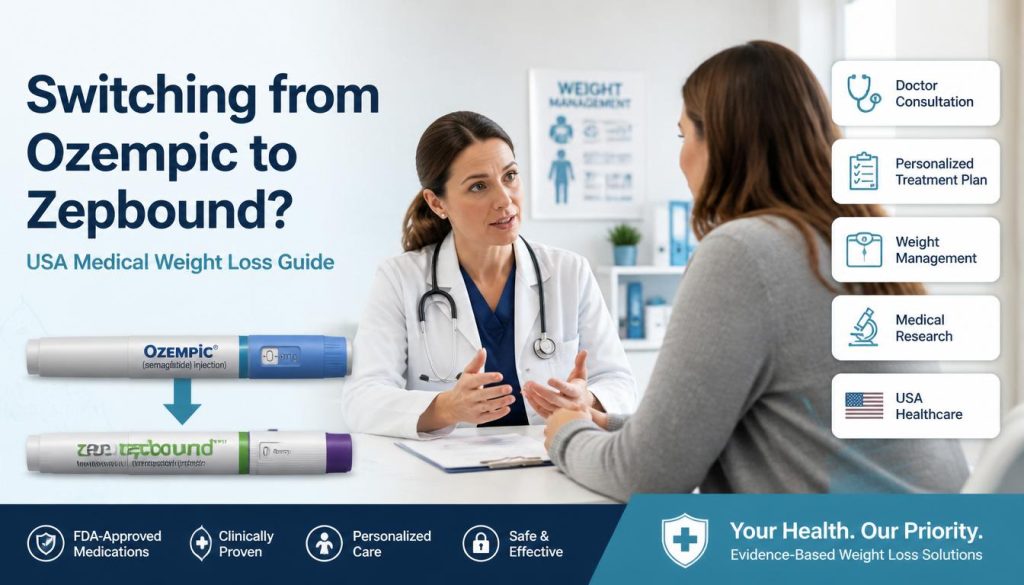
Let’s take it for instance; you have been taking Ozempic for months. In the beginning, the results felt like a breakthrough. Your appetite quieted down, your energy levels stabilized, and the scale finally began to move. But lately, that progress has stalled. The weight loss has plateaued, and that familiar food noise is starting to creep back in. During your last checkup, your healthcare provider mentioned Zepbound as a potential next step.
It is completely normal to feel a mix of hope and anxiety when considering a change in your metabolic treatment plan. You might wonder if Zepbound is truly stronger, whether a transition will trigger severe nausea, or if you will lose the ground you have already gained. Navigating the world of advanced weight loss medications requires balancing clinical data with your unique health history. This guide will clarify the science, benefits, and practical realities of transitioning between these two therapies so you can have an informed conversation with your doctor.
Switching From Ozempic to Zepbound
Can You Switch From Ozempic to Zepbound?
Yes. Many patients safely switch from Ozempic (semaglutide) to Zepbound (tirzepatide) under direct medical supervision. While both prescription medications treat chronic weight management and metabolic dysfunction, Zepbound is a dual-receptor agonist targeting both GIP and GLP-1 pathways, whereas Ozempic targets only the GLP-1 pathway. The transition requires a personalized clinical protocol to manage dosing, timing, and gastrointestinal side effects.
What Are Ozempic and Zepbound?
To understand how a transition works, you first need to understand how these molecules interact with your endocrine system. Both medications belong to a class of therapies known as incretin mimetics, which replicate natural hormones produced by your gut to regulate blood sugar and satiety.
- Ozempic (Semaglutide): Manufactured by Novo Nordisk, Ozempic is an FDA-approved prescription medication for the treatment of type 2 diabetes and the reduction of major adverse cardiovascular events. It acts as a selective GLP-1 (glucagon-like peptide-1) receptor agonist. It slows gastric emptying, signals your brain that you are full, and prompts your pancreas to release insulin when blood glucose rises. Wegovy is the exact same molecule (semaglutide) but is specifically FDA-approved and packaged for chronic weight management.
- Zepbound (Tirzepatide): Manufactured by Eli Lilly, Zepbound is FDA-approved specifically for chronic weight management in adults with obesity or overweight and at least one weight-related condition. Tirzepatide is also marketed under the name Mounjaro for type 2 diabetes. Zepbound is a dual GIP (glucose-dependent insulinotropic polypeptide) and GLP-1 receptor co-agonist. By activating two distinct hormone pathways instead of one, it influences appetite regulation and fat metabolism through broader chemical channels.
Why Do People Switch From Ozempic to Zepbound?
Clinical treatment plans are rarely static. Obesity medicine specialists frequently adjust medications based on how a patient responds over months or years. There are several primary reasons a provider might recommend moving from semaglutide to tirzepatide:
- Overcoming a Weight Loss Plateau: Your body is a highly adaptive system. Over time, metabolic adaptation can occur, causing your weight loss to level off before you reach your health goals.
- Seeking Greater Efficacy: Because Zepbound utilizes a dual-hormone mechanism, clinical evidence suggests it can offer a more robust response for individuals who have seen modest results on single-agonist therapies.
- Managing Side Effects: Human biology varies wildly. Some patients experience persistent gastrointestinal distress on Ozempic that resolves or lessens when they switch to the different molecular profile of Zepbound.
- Insurance and Formulary Shifts: In the United States healthcare landscape, employer coverage and commercial insurance formularies change frequently. A switch is often necessitated by which medication is covered under a patient’s specific plan.
Is Zepbound Stronger Than Ozempic?
When patients ask if Zepbound is “stronger,” they are usually asking about comparative clinical efficacy. Looking at the data, the short answer is yes. Zepbound generally delivers more pronounced weight reduction and metabolic changes due to its multi-receptor approach.
| Feature | Ozempic (Semaglutide) | Zepbound (Tirzepatide) |
| Hormone Targets | Single Agonist (GLP-1) | Dual Agonist (GLP-1 + GIP) |
| Primary FDA Indication | Type 2 Diabetes | Chronic Weight Management |
| Clinical Trial Target | ~15% weight loss (under brand Wegovy) | Up to 20.9% weight loss |
| Administration | Once-weekly subcutaneous injection | Once-weekly subcutaneous injection |
While GLP-1 focuses heavily on slowing down your stomach and sending fullness signals to the brain, GIP works alongside it to improve lipid clearance and potentially alter how your brain processes food cravings. In head-to-head clinical data evaluating the underlying molecules, such as the SURPASS-2 trial comparing high doses of tirzepatide to 1 mg of semaglutide, tirzepatide consistently demonstrated superior reductions in both body weight and HbA1c levels. However, “stronger” does not automatically mean better for your specific body; clinical suitability always overrides raw data averages.
How Does the Transition Usually Work?
Switching medications is not as simple as stopping one on a Tuesday and starting the other at the highest dose the following week. Your body has built up a level of tolerance to incretin therapies, but because Zepbound introduces a brand-new hormone pathway (GIP), your provider must map out a careful escalation plan.
Doctors generally use one of two approaches:
- The Step-Down Transition: If you are on the highest dose of Ozempic (2.0 mg), your doctor might choose not to start you at the absolute maximum dose of Zepbound (15 mg), as this could overwhelm your digestive tract. Instead, they may transition you to an intermediate dose of Zepbound, like 5.0 mg or 7.5 mg, allowing your body to adapt to the GIP component safely.
- The Standard Washout and Re-titration: In some clinical scenarios, especially if you are experiencing severe side effects, a physician may recommend waiting until your last dose of Ozempic clears your system entirely before starting Zepbound at its introductory dose of 2.5 mg.
There should never be a medication overlap. Taking Ozempic and Zepbound during the same week is dangerous and dramatically increases the risk of severe dehydration, profound hypoglycemia, and gastrointestinal complications.
What Side Effects Can You Expect When Switching?
Because both drugs alter digestive speed and metabolic signaling, they share a very similar side effect profile. When you cross over to Zepbound, you may experience a temporary recurrence of the symptoms you felt when you first started Ozempic.
- Nausea and Vomiting: This is most common during the first two to three weeks following the switch as your body recalibrates to the dual-agonist action.
- Changes in Bowel Habits: Both constipation and diarrhea are frequently reported. Tirzepatide slows down gastric emptying, meaning hydration and dietary fiber intake remain vital.
- Bloating and Acid Reflux: You may feel full much faster or notice increased gas production.
- Systemic Fatigue: Rapid shifts in metabolic pathways and caloric intake can leave you feeling temporarily drained of energy.
These side effects vary because your genetic makeup, baseline insulin resistance, and current diet all play a massive role in how you tolerate these medications. Most patients find that symptoms peak within 48 hours of their first few injections and gradually fade.
How Long Does It Take To Adjust?
The human body typically requires four to eight weeks to completely stabilize after switching from semaglutide to tirzepatide. This adaptation period depends heavily on the dose level at which you enter the Zepbound titration schedule.
During the initial month, your weight loss might stall briefly or you might feel a sudden drop in appetite followed by a few days where food noise returns. Managing expectations is a crucial part of long-term success. A transition is a marathon, not a sprint. Give your metabolic system time to get used to the dual-hormone signaling before judging whether the switch was successful.
Who May Be a Good Candidate for Switching?
An experienced obesity medicine specialist looks at several clear indicators before deciding to transition a patient to a dual-agonist:
- A Clear, Documented Plateau: You have maintained consistent nutritional habits and exercise routines for at least two to three months, yet your weight and metabolic markers have completely flattened.
- Suboptimal Glycemic Control: For patients using these medications off-label or managing concurrent blood sugar issues, a failure to hit target HbA1c levels on semaglutide makes them strong candidates for tirzepatide.
- Prohibitive Cost Obstacles: If your insurance company drops Ozempic from its formulary but adds Zepbound with a lower out-of-pocket cost, switching is a highly practical decision to preserve care continuity.
Who May Need Extra Caution?
While Zepbound is highly effective, it carries specific clinical warnings that require a transparent conversation with your care team.
- Severe Gastrointestinal Disorders: Individuals with a history of severe gastroparesis (paralyzed stomach) or inflammatory bowel disease must approach this switch with extreme caution, as advanced incretin therapies can exacerbate slow digestion.
- History of Pancreatitis: If you have ever experienced inflammation of the pancreas, both medications carry elevated risks that require careful evaluation.
- Family History of Specific Cancers: Both Ozempic and Zepbound carry a boxed warning regarding the risk of thyroid C-cell tumors. If you or anyone in your family has a history of Medullary Thyroid Carcinoma (MTC) or Multiple Endocrine Neoplasia syndrome type 2 (MEN 2), these medications are strictly contraindicated.
- Pregnancy and Planning: Neither medication is safe during pregnancy. If you are planning a family, you must discontinue these therapies weeks in advance under medical guidance.
Insurance, Coverage, and Cost Considerations in the USA
The medical landscape in the United States complicates drug access. Even if your doctor writes a perfect prescription for Zepbound, your insurance company has the final say on what you actually pay at the pharmacy counter.
- Formulary Variances: Insurance companies classify drugs into tiers. Ozempic might be on Tier 2 of your plan, while Zepbound might sit on Tier 4 or require an entirely separate weight loss benefit rider.
- The Prior Authorization (PA) Process: Moving to Zepbound almost always requires a new prior authorization. Your provider will need to document your body mass index (BMI), your history on Ozempic, and the clinical reason why a switch is medically necessary.
- Medicare and Employer Exclusions: Traditional Medicare explicitly excludes coverage for medications used solely for weight loss, though it may cover Mounjaro if you have a type 2 diabetes diagnosis. Furthermore, many private employers completely opt out of covering anti-obesity medications to save on premium costs.
- Manufacturer Savings Cards: Both Eli Lilly and Novo Nordisk offer commercial co-pay cards that can lower out-of-pocket costs significantly, provided you have commercial insurance and meet their eligibility terms.
Questions To Ask Your Healthcare Provider Before Switching
Print this checklist or save it to your phone before your next medical appointment to ensure you cover every critical detail:
- [ ] Given my current weight loss plateau, do you believe moving to a dual GIP/GLP-1 agonist like Zepbound is clinically justified for me?
- [ ] What exact starting dose of Zepbound will I take, and what is our long-term titration schedule?
- [ ] How many days should I wait after my last Ozempic injection before I take my first dose of Zepbound?
- [ ] If I experience severe nausea or vomiting during the cross-over, what is our backup plan or prescription management strategy?
- [ ] Will our clinic handle the new prior authorization paperwork required by my insurance plan for Zepbound?
Frequently Asked Questions
Yes, you can switch under medical supervision, but you do not take them at the same time. Your doctor will determine the appropriate gap between your last Ozempic dose and your first Zepbound dose, usually one week, and select a safe starting dose of the new medication.
In most clinical settings, doctors recommend waiting exactly seven days after your final Ozempic injection before introducing Zepbound. This aligns with the weekly dosing schedule your body is already accustomed to, though your doctor may extend this window if you have lingering side effects.
Biochemically, Zepbound is considered more potent because it activates two metabolic receptor pathways (GIP and GLP-1) rather than just one (GLP-1). Clinical studies show that patients on optimal doses of tirzepatide generally achieve higher average weight loss percentages than those on semaglutide.
Large-scale clinical trials indicate that average weight loss is higher on Zepbound compared to single-agonist GLP-1 medications. However, individual results vary widely based on metabolism, lifestyle, genetics, and dosage tolerance.
It can cause a temporary spike in gastrointestinal symptoms like nausea, mild cramping, or diarrhea. This typically happens because your body is reacting to the introduction of the GIP hormone component and adjusting to a new chemical balance.
Yes. A plateau or a return of food noise is one of the primary reasons obesity medicine specialists transition patients to Zepbound. The dual-hormone mechanism can often restart weight loss by targeting your metabolic pathways from a different angle.
No. You must never combine these medications. They target overlapping biological pathways, and taking them concurrently dramatically escalates your risk of severe medical complications, including profound dehydration and gastrointestinal distress.
Coverage varies entirely by your specific US health insurance policy. Even if your plan covers Ozempic for diabetes, it may not cover Zepbound unless you meet strict weight-management criteria and obtain an approved prior authorization.
Anyone with a personal or family history of Medullary Thyroid Carcinoma, MEN 2 syndrome, a history of severe pancreatitis, or a known hypersensitivity to tirzepatide should not switch. Women who are pregnant or nursing must also avoid both medications.
Physicians evaluate your current weight loss velocity, your blood sugar trends, the severity of any ongoing side effects, your insurance coverage limitations, and your overall progress toward your cardiometabolic health goals.
Conclusion
Switching from Ozempic to Zepbound is an increasingly common strategy in advanced obesity medicine. For many people, transitioning to a dual-agonist treatment plan provides the metabolic spark needed to break through stubborn weight plateaus and regain control over their health journeys. However, metabolic health is deeply personal. What works beautifully for one person requires careful adjustment for another.
The most vital step you can take today is to schedule an open, honest consultation with your primary care physician or endocrinologist. Armed with an understanding of how these molecules work, you can design a safe, effective path forward that protects your long-term wellness.
To deepen your understanding of modern metabolic therapies and read evidence-based breakdowns of the latest advancements in endocrinology, explore our educational library at Welloirthm.
Sources & Medical References
- U.S. Food and Drug Administration (FDA): FDA Approves Zepbound (tirzepatide) for Chronic Weight Management
- The New England Journal of Medicine (NEJM): Tirzepatide once weekly for the treatment of obesity (SURMOUNT-1)
- The Lancet: Tirzepatide versus semaglutide once weekly in patients with type 2 diabetes (SURPASS-2)
- Novo Nordisk: Ozempic (semaglutide) Prescribing Information
- Eli Lilly and Company: Zepbound (tirzepatide) Prescribing Information
- Obesity Medicine Association (OMA): Clinical Practice Guidelines for Chronic Weight Management