

What if you are standing at your local pharmacy counter, prescription in hand, waiting to hear what you owe for your newly prescribed medication. Your doctor explained that Ozempic could be a game-changer for managing your health, but as the pharmacist types your insurance information into the computer, your anxiety builds. Will your Humana Medicare plan cover it? Will you be hit with a massive out-of-pocket cost? Does your specific plan require your doctor to submit extra paperwork before you can get your first dose?
Navigating Medicare prescription drug coverage has always felt like trying to decode a moving target, but the explosive rise in popularity of GLP-1 medications like Ozempic has made the landscape even more complex. Formularies change every year, coverage rules vary significantly depending on whether you have a standalone prescription plan or a Medicare Advantage plan, and the reasons your doctor prescribes a drug can make or break your insurance approval.
If you are a Humana Medicare beneficiary, understanding how the current 2026 guidelines apply to Ozempic is the key to avoiding surprises at the pharmacy. Let’s break down exactly how Humana handles Ozempic coverage, who qualifies for benefits, what restrictions exist, and how you can work with your doctor to navigate the approval process smoothly.
What Is Ozempic and Why Is It Prescribed?
Before looking at the insurance side of things, it helps to understand what Ozempic is and why it has become such a critical focus for Medicare plans.
Ozempic is a brand-name injectable prescription drug known generically as semaglutide. It belongs to a highly effective class of drugs called GLP-1 (glucagon-like peptide-1) receptor agonists. This semaglutide injection works by mimicking a natural hormone in your body that helps regulate blood sugar levels, slows down how quickly your stomach empties food, and signals to your brain that you are full.
The US Food and Drug Administration (FDA) has given FDA-approved Ozempic status for specific medical conditions. It is primarily designated as a Type 2 diabetes medication, designed to help adults manage their blood sugar levels alongside diet and exercise.
Beyond blood sugar control, clinical trials demonstrated that semaglutide offers profound cardiovascular benefits for eligible patients. Consequently, the FDA approved an expanded indication for Ozempic to reduce the risk of major adverse cardiovascular events, such as heart attacks, strokes, or cardiovascular death, in adults who have both Type 2 diabetes and established cardiovascular disease.
Because of these distinct clinical benefits, this GLP-1 medication has become a cornerstone of modern metabolic health, leading to a massive influx of prescriptions and a corresponding shift in how insurance providers manage coverage.
Does Humana Medicare Cover Ozempic?
The short answer is yes, many Humana Medicare plans include Ozempic on their formulary lists. However, full approval is rarely automatic, and coverage is never universally guaranteed for every person who receives a prescription.
Your access to Humana Medicare Ozempic coverage depends heavily on three main factors:
- Your official medical diagnosis
- The specific Humana plan you are enrolled in
- Your geographic location
Humana structures its drug lists based on regional data and specific plan models. A formulary that applies to a plan in one state might have slightly different restrictions or tier assignments than a plan in another state. Furthermore, because drug manufacturers renegotiate contracts and clinical guidelines evolve, semaglutide formulary status is subject to annual updates. What was covered without a hitch last year might require an extra layer of clinical review this year.
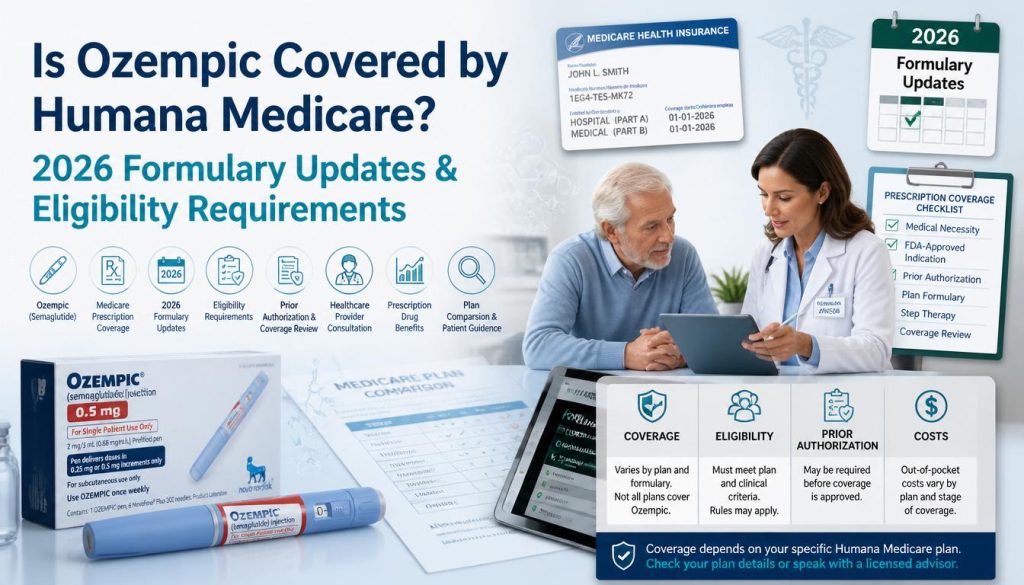
To secure Ozempic Medicare coverage 2026 rules require that the medication be prescribed for an FDA-approved, medically accepted indication that Medicare recognizes. If you meet Humana’s specific clinical criteria, the drug will generally be covered, though you will likely have to navigate utilization management tools like prior authorization before Humana will pay its share.
Understanding Humana Medicare Part D and Medicare Advantage Drug Coverage
To understand how your coverage works, you have to look at how Humana builds its Medicare drug plans. Medicare beneficiaries usually get their prescription drug coverage in one of two ways: either through a standalone Humana Part D prescription drug plan (PDP) that pairs with original Medicare, or through a Humana Medicare Advantage Prescription Drug (MAPD) plan, which combines medical and drug coverage into a single managed care option.
Both types of plans utilize a structured Medicare Part D formulary system to control costs and ensure safe prescribing habits. A formulary is simply a list of medications that the insurance plan agrees to cover. To organize this list, Humana divides drugs into distinct categories called drug tiers:
- Tier 1 & Tier 2: Typically reserved for low-cost generic drugs.
- Tier 3: Usually preferred brand-name drugs. Ozempic is commonly found on Tier 3 in many Humana formularies, though some plans may place it higher.
- Tier 4 & Tier 5: Non-preferred brands and specialty medications, which come with the highest out-of-pocket costs.
Where Ozempic sits in your plan’s Humana prescription drug guide directly dictates your copay or coinsurance amount. To protect its financial sustainability while providing access to necessary therapies, Humana uses drug utilization management tools. These are safety and cost-control guardrails that require doctors to prove a medication is truly necessary before the plan approves coverage. These tools include quantity limits (restricting how many doses you can get per month) and prior authorization.
Will Humana Cover Ozempic for Weight Loss?
This is one of the most common points of confusion for patients across the country. Because semaglutide is highly effective at helping people lose weight, many individuals seek an Ozempic prescription primarily to treat obesity or manage weight. However, when it comes to Medicare weight loss drug coverage, federal law draws a strict line.
Under the original statutory guidelines established by Congress for the Medicare Part D program, Medicare is expressly prohibited from covering medications that are prescribed solely for weight loss or weight management. This is a federal restriction, meaning Humana and other private insurance companies offering Medicare plans cannot bypass this rule, even if your doctor writes a prescription and states that weight loss would improve your overall health.
Therefore, if your medical records show that you are taking Ozempic for weight loss alone, without a diagnosis of Type 2 diabetes or another covered cardiovascular condition, Humana will deny the claim.
It is important to understand the distinction between diabetes treatment and obesity treatment in the eyes of federal policy. If you do not have Type 2 diabetes but require a GLP-1 medication for chronic weight management, your doctor might look to Wegovy, which contains the exact same active ingredient (semaglutide) but is FDA-approved specifically for weight loss.
While Medicare still cannot cover Wegovy for weight loss alone, a landmark policy update allows Medicare Part D plans to cover Wegovy if it is prescribed to reduce the risk of major cardiovascular events in individuals who are overweight or obese and have established heart disease. Ozempic, however, remains tied strictly to its primary indications, meaning a Type 2 diabetes diagnosis remains the most dependable path to securing coverage under standard semaglutide coverage rules.
Prior Authorization Requirements for Ozempic
Even if Ozempic is listed clearly on your specific Humana formulary, you will almost certainly face a process known as prior authorization.
Prior authorization is a formal approval process where Humana requires your prescribing physician to submit clinical documentation before you can fill your prescription at the pharmacy. The goal is simple: Humana wants to verify that the medication is being prescribed for a legally permissible, medically necessary reason rather than an excluded use like cosmetic weight loss.
The Approval Process
When you try to fill your prescription, the pharmacy computer will flag the medication as requiring prior authorization. Your pharmacist will notify your doctor, who must then submit a prior authorization form along with copies of your relevant medical records to Humana’s pharmacy review board.
What Humana Looks For
To grant a semaglutide prior authorization, Humana’s clinical reviewers typically look for specific pieces of evidence in your medical file:
- A Confirmed Diagnosis: Clear laboratory evidence, such as recent Hemoglobin A1C blood test results, verifying a diagnosis of Type 2 diabetes.
- Step Therapy History: Documentation showing that you have tried first-line, lower-cost diabetes medications (such as metformin) and that those medications either failed to adequately control your blood sugar or caused intolerable side effects.
- Cardiovascular History: If prescribed for cardiovascular risk reduction, documentation of established heart disease alongside your diabetes management needs.
Important Note for Current Patients: It is worth noting that some beneficiaries report facing unexpected prior authorization requests even after receiving previous coverage for the medication. This can happen if your plan updates its utilization management criteria at the start of the year or if an existing authorization period expires. If your doctor does not submit the required paperwork in a timely manner, your prescription coverage may experience temporary disruptions.
How Much Does Ozempic Cost With Humana Medicare?
Because Medicare drug plans involve several distinct spending phases throughout the year, there is no single universal price for Ozempic. The amount you pay at the register will fluctuate based on the specific month, your plan’s tier design, and how much you have already spent on healthcare overall during the calendar year.
Your out-of-pocket expenses are dictated by the core components of Medicare drug plans:
- The Annual Deductible: At the beginning of the year, you may have to pay 100% of your drug costs until you meet your plan’s Part D deductible. Some premium Humana plans waive the deductible for Tier 3 medications, meaning your coverage kicks in on day one, while others require you to pay the full deductible first.
- The Initial Coverage Phase: Once your deductible is met, you enter the initial coverage phase. Here, you pay a set semaglutide copay (such as $47 or $50) or a percentage of the drug’s cost (coinsurance) as determined by your specific Humana plan, while Humana pays the rest.
The Impact of Modern Part D Cost Caps
A massive, positive shift occurred in the structure of Medicare prescription drug costs due to recent federal legislation. The complex, frustrating “donut hole” coverage gap that historically caused drug prices to spike mid-year has been eliminated.
Furthermore, a strict annual cap now limits total out-of-pocket spending for covered Part D medications. Once your out-of-pocket spending on covered prescriptions reaches this threshold in a calendar year, you enter the catastrophic coverage phase, where your responsibility drops to zero. This means that for the remainder of the year, your covered prescriptions including Ozempic, will cost you nothing at the pharmacy counter.
While this cap offers immense financial peace of mind for individuals taking expensive brand-name medications, remember that it only applies if the drug is covered by your plan. If Humana denies coverage for your Ozempic because it was prescribed for an off-label or excluded use, any money you pay out-of-pocket out of pocket will not count toward this annual cap.
Summary of Coverage Requirements
| Requirement Category | Standard Status under Humana Medicare |
| Formulary Inclusion | Commonly listed, typically assigned to Tier 3 (Preferred Brand) |
| Primary Covered Indication | Confirmed diagnosis of Type 2 Diabetes Mellitus |
| Utilization Management | Prior Authorization required by almost all regional plans |
| Weight Loss Coverage | Strictly Excluded by federal law when used for weight management alone |
| Financial Safeguards | Subject to the standard annual Medicare Part D out-of-pocket cap |
What If Humana Denies Coverage?
If you arrive at the pharmacy and discover that your claim has been rejected or that your prior authorization request was turned down, do not panic. A coverage denial is a hurdle, not a final answer, and you have legal rights under the Medicare prescription appeals system to contest the decision.
1. Request a Coverage Determination and Formulary Exception
If Humana denies your initial claim because the drug requires prior authorization or isn’t on your plan’s drug list, your first formal step is to request a coverage determination. You or your doctor can ask Humana for a formal formulary exception.
This is an explicit request asking the plan to cover a drug that is either missing from the formulary or to waive a restriction like step therapy. To win a formulary exception, your doctor must provide a supporting statement explaining that all lower-cost alternative medications on Humana’s list would be clinically ineffective or harmful to your health.
2. Navigate the Humana Appeals Process
If your request for a coverage determination or exception is rejected, Humana will issue an official written denial notice. You then have 60 days from the date on that notice to file a formal appeal.
The Humana appeals process consists of multiple levels, beginning with a redetermination request handled by Humana staff who were not involved in the initial denial. If Humana denies the appeal at Level 1, your case automatically moves to Level 2, where an independent, third-party entity reviewed by the Center for Medicare & Medicaid Services (CMS) evaluates your medical files impartially.
3. Gather Strong Physician Documentation
The absolute cornerstone of a successful appeal or exception request is meticulous clinical evidence from your healthcare provider. A simple note saying “patient needs Ozempic” will not suffice. Your doctor’s office must submit structured medical records containing:
- Comprehensive lab reports demonstrating your long-term blood sugar levels (A1C histories).
- Detailed chart notes detailing your previous attempts with alternative treatments like metformin, documenting exactly why they failed or caused adverse physical reactions.
- A clear clinical narrative linking the prescription to an approved diagnosis, such as Type 2 diabetes or established cardiovascular disease.
While your appeal is working its way through the system, talk to your doctor about alternative treatment options. Humana covers a variety of other diabetes medications, and exploring a different covered drug might help protect your health without breaking your budget.
Tips for Checking Your Humana Ozempic Coverage
Because plan details change based on your zip code and exact policy structure, taking a proactive approach to verify your plan design will save you time and frustration. Use this straightforward checklist to confirm your coverage details.
- Check the Online Humana Drug Search Tool: Log into your personal secure portal on the Humana website or use their public formulary look-up tool. Enter your exact plan name, your state, and search for “Ozempic” or “semaglutide” to view its current tier status and any associated flags for prior authorization or quantity limits.
- Review the Annual Plan Documents: Take a close look at your plan’s Evidence of Coverage (EOC) and the complete Humana prescription drug guide sent to you during the fall enrollment window. These documents outline your specific deductible structures and tier copay percentages.
- Contact Humana Member Services Directly: Call the toll-free phone number printed on the back of your Humana member ID card. Ask the representative specifically: “Is Ozempic covered in my current plan formulary, what is the exact copay tier, and are there active prior authorization requirements?”
- Schedule a Prep Meeting with Your Doctor: Before your appointment, print out your plan’s specific formulary requirements. Sit down with your provider and verify that your medical charts contain the clear, updated diagnostic documentation Humana will look for during the prior authorization review.
Frequently Asked Questions
Yes, many Humana Medicare Advantage and Part D plans cover Ozempic, but coverage is restricted to individuals who have an approved medical condition, most commonly Type 2 diabetes. It is rarely covered without a prior authorization review.
Ozempic is included on many, but not all, Humana plan formularies. It is typically classified as a Tier 3 preferred brand-name drug, meaning it carries a moderate brand copay rather than a low generic cost.
Yes. Humana almost universally implements a prior authorization process for Ozempic to ensure the medication is being prescribed for a covered medical purpose rather than an excluded cosmetic or lifestyle use.
No. Federal Medicare laws strictly prohibit Part D plans from covering prescription drugs when used solely for weight loss or obesity management. Humana cannot override this statutory exclusion.
Your cost depends on your specific plan’s deductible, its tier structure, and your current phase of Medicare coverage. Once your total covered prescription spending hits the annual Part D out-of-pocket cap, your cost for covered drugs drops to zero for the rest of the year.
Yes. If your medical records indicate the drug is prescribed for an off-label use that Medicare does not recognize (such as weight management without diabetes), or if your doctor fails to submit the required prior authorization paperwork, your coverage will be denied.
If your coverage is denied, you and your doctor can request a formal coverage determination, apply for a formulary exception, or initiate a multi-level insurance appeal. Alternatively, you can discuss alternative covered diabetes medications with your provider.
Your prescribing physician must submit a formal statement to Humana explaining that the covered alternative medications listed on your plan’s standard formulary would be ineffective or cause adverse health effects.
Medicare Part D plans cover semaglutide under specific brand names like Ozempic or Rybelsus when prescribed for Type 2 diabetes. It may also cover Wegovy (which uses the same active ingredient) exclusively to reduce major cardiovascular risks in people with established heart disease, but never for weight loss alone.
The most reliable way is to log into your account at Humana.com and utilize their drug lookup tool, review your plan’s annual prescription drug guide, or call the member services phone number on your insurance card.
Conclusion:
Managing your health requires open communication, clear documentation, and a strong partnership with your care team. Many Humana Medicare plans do provide essential prescription drug coverage for Ozempic, provided your medical history satisfies the established clinical and legal requirements.
Because out-of-pocket costs, tier assignments, and prior authorization rules can vary significantly based on your specific plan and region, take the time to review your current plan documents carefully and utilize Humana’s official drug search tools. Most importantly, consult closely with your healthcare provider to map out a treatment plan that addresses your unique medical needs while navigating the insurance landscape effectively.
Sources & Medical References
- Humana Medicare Part D Plans & Resources: Humana Medicare Part D
- Humana Drug List & Formulary Search Tool: Humana Drug List Search
- CMS Medicare Prescription Drug Coverage Guidelines: Medicare.gov Part D Coverage
- Official Medicare Plan Finder: Medicare.gov Plan Finder
- Ozempic (semaglutide) Prescribing Information: Ozempic Official Site