


A few years ago, semaglutide transformed obesity treatment by offering unprecedented weight reduction through a single metabolic pathway. Then tirzepatide raised expectations even higher by targeting two pathways at once, yielding results that approached bariatric surgery. Now, retatrutide is generating intense excitement across the medical community. Early and mid-stage clinical trials suggest that this experimental agent may push weight-loss outcomes even further, shifting the paradigm of metabolic health once again.
As obesity medicine evolves rapidly, patients and providers are looking past standard treatments to evaluate what is on the horizon. This has led to a surge in interest comparing tirzepatide, the reigning champion of metabolic pharmacotherapy, against retatrutide, the highly anticipated challenger. Understanding the differences between these two therapies requires looking closely at the cellular mechanics of human metabolism, analyzing raw clinical trial data, and separating pharmaceutical reality from online hype.
What Are Tirzepatide and Retatrutide?
To evaluate these therapies, it helps to first define what they are and establish their current clinical availability.
Tirzepatide
Tirzepatide is a synthetic peptide that acts as a dual hormone receptor agonist. It is fully FDA-approved and commercially available under two distinct brand names depending on its clinical indication:
- Mounjaro: Approved for the treatment of type 2 diabetes to improve glycemic control.
- Zepbound: Approved for chronic weight management in adults with obesity, or those who are overweight with at least one weight-related comorbidity (such as hypertension or dyslipidemia).
Tirzepatide has established a robust track record of safety and efficacy in real-world clinical practice, making it the current benchmark for medical weight management.
Retatrutide
Retatrutide is an investigational metabolic treatment developed by Eli Lilly. Unlike tirzepatide, retatrutide is not yet FDA-approved or commercially available for prescription use. It is currently moving through advanced stage 3 clinical trials.
As an emerging obesity medication, retatrutide has attracted widespread interest due to its unique chemical architecture, which allows it to interface with three distinct metabolic pathways rather than one or two.
How Do These Medications Work?
The fundamental difference between these two compounds lies in their receptor targeting strategies. The human body naturally secretes incretins—gut hormones that stimulate insulin secretion, regulate appetite, and alter energy balance. By mimicking these natural signals, anti-obesity medications can reset metabolic baselines.
| Medication | Classification | Target Receptors |
| Tirzepatide (Mounjaro / Zepbound) | Dual Agonist | GLP-1 Receptor GIP Receptor |
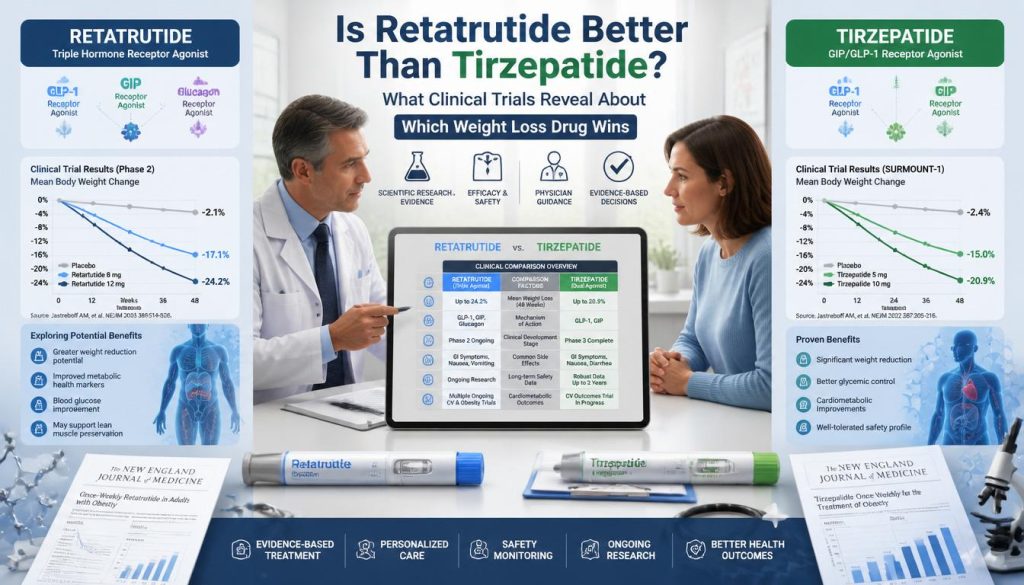
| Retatrutide (In clinical development) | Triple Agonist | GLP-1 Receptor GIP Receptor Glucagon Receptor |
The Dual Agonist: Tirzepatide
Tirzepatide targets two distinct nutrient-stimulated hormone pathways:
- GLP-1 (Glucagon-Like Peptide-1): Activates receptors in the brain to delay gastric emptying, induce early satiety, and reduce central appetite signals.
- GIP (Glucose-Dependent Insulinotropic Polypeptide): Works synergistically with GLP-1. In the pancreas, it enhances glucose-dependent insulin secretion. In adipose (fat) tissue, GIP receptor activation appears to improve lipid buffering capacity and insulin sensitivity, which helps mitigate some of the gastrointestinal side effects typically caused by pure GLP-1 stimulation.
The Triple Agonist: Retatrutide
Retatrutide is frequently referred to in medical literature as a triple hormone receptor agonist or a triple incretin therapy. It retains the same two targets as tirzepatide but adds a critical third lever:
- GLP-1 Receptor Agonism: Drives central fullness and slows digestion.
- GIP Receptor Agonism: Stabilizes insulin release and optimizes fat tissue metabolism.
- Glucagon Receptor Agonism: This is the novel element. While glucagon is traditionally known for raising blood sugar during fasting, chronic activation of the glucagon receptor also signals the liver to increase lipid mobilization and accelerates energy expenditure.
By activating the glucagon pathway alongside GLP-1 and GIP, retatrutide aims to simultaneously curb caloric intake while preventing the metabolic slowdown that typically accompanies profound weight reduction.
Tirzepatide vs Retatrutide Weight Loss Results
When analyzing weight management medication performance, clinical trial results provide the most reliable benchmark. However, direct head-to-head trials between these two specific molecules are limited, meaning researchers must look at their respective large-scale trial programs.
Tirzepatide Trial Results
The clinical profile of tirzepatide is anchored by the SURMOUNT clinical trial program. In the landmark SURMOUNT-1 study, which evaluated adults with obesity or overweight without type 2 diabetes over a 72-week treatment duration, the results were highly significant:
- Participants taking the maximum 15 mg dose achieved an average weight loss of 22.5% of their baseline body weight.
- This translated to an absolute average weight reduction of approximately 52 pounds per participant.
- Over 91% of participants on the 15 mg dose achieved a clinically meaningful weight reduction of 5% or more.
Retatrutide Trial Results
Retatrutide first turned heads during its phase 2 trials, where participants at the highest doses achieved up to a 24% average weight reduction in just 48 weeks. The excitement intensified with the release of initial phase 3 data from the comprehensive TRIUMPH clinical trial program.
In the TRIUMPH-4 study, researchers tracked participants with obesity and associated comorbidities over 68 weeks. The data revealed a mean body weight reduction of 28.7% in the 12 mg weekly dose arm. Following that, data from the TRIUMPH-1 trial evaluated adults without diabetes over an 80-week timeline. At the 12 mg maximum dose, participants achieved an average weight loss of 28.3%, while those on the mid-tier 9 mg dose averaged a 25.9% reduction.
These numbers represent the largest weight-loss magnitudes recorded in randomized phase 3 trials for this class of medication, approaching the efficacy historical patterns seen with surgical interventions like sleeve gastrectomy.
Which Medication Appears More Effective?
Determining the best weight loss medication requires looking at more than just the headline percentage. While retatrutide appears to demonstrate a higher absolute weight loss potential in clinical trial settings, a nuanced comparative analysis is essential.
Appetite Suppression vs. Energy Expenditure
Both medications excel at central appetite suppression. However, retatrutide’s triple-agonist design introduces a qualitative shift in how weight loss occurs. Because it recruits the glucagon pathway, retatrutide increases resting energy expenditure. This means it doesn’t just rely on eating less; it also alters how the body burns fuel.
Fat Mass Reduction and Hepatic Health
In phase 2 and emerging phase 3 data, retatrutide has demonstrated exceptional performance in fat mass reduction, particularly regarding ectopic fat (fat stored in organs where it shouldn’t be). Notably, retatrutide trials showed an overwhelming clearance of liver fat, with some cohorts experiencing up to an 80% reduction in hepatic lipid content, presenting a massive benefit for individuals dealing with metabolic dysfunction-associated steatotic liver disease (MASLD).
Limitations of Cross-Trial Comparisons
While retatrutide’s 28% threshold outpaces tirzepatide’s 22.5% threshold, medical researchers exercise caution when making direct comparisons. Cross-trial comparisons carry inherent limitations: baseline populations vary, treatment timelines differ (72 weeks vs. 80 weeks), and placebo response rates can fluctuate. Until a true head-to-head study is completed, retatrutide’s relative effectiveness remains highly suggestive but not definitively established.
Side Effects Comparison
Every highly effective metabolic therapy carries trade-offs. The tolerability profiles of both medications reflect their underlying interactions with gastrointestinal hormone pathways.
Common Gastrointestinal Side Effects
The classic incretin-mediated side effects are present with both molecules. These include:
- Nausea
- Vomiting
- Diarrhea
- Constipation
- Bloating and abdominal discomfort
Gastrointestinal Tolerability and Dose Escalation
For both tirzepatide and retatrutide, gastrointestinal symptoms are most pronounced during the initial initiation phase and immediately following a dose escalation step. Most events are reported as mild-to-moderate and tend to diminish over time as the body adapts.
However, because retatrutide exerts a more complex overall receptor load, early data indicates that its gastrointestinal side effects may be slightly more pronounced or frequent at the highest doses than those seen with standard tirzepatide protocols. Discontinuation rates due to adverse events remain comparable, but strict adherence to a slow, methodical titration schedule is vital for both compounds.
Unique Glucagon-Mediated Effects
Retatrutide’s glucagon activity introduces specific clinical considerations. In early trials, a transient increase in heart rate was observed around the 24-week mark before gradually declining. Researchers continue to monitor this phenomenon in ongoing trials to ensure long-term cardiovascular safety, particularly for individuals with pre-existing heart conditions.
Blood Sugar, Diabetes, and Metabolic Health
Beyond weight loss, both agents function as comprehensive metabolic treatments that fundamentally reconfigure cardiometabolic markers.
| Metabolic Marker | Tirzepatide Profile | Retatrutide Profile |
| HbA1c Reduction | Profound reduction; superior to selective GLP-1 agents in SURPASS trials. | Robust reduction; shows exceptional glycemic control in diabetes cohorts. |
| Insulin Sensitivity | Highly improved via weight loss and direct adipose GIP signaling. | Highly improved; enhanced by dual-action fat clearing and liver optimization. |
| Lipid Profile Impacts | Decreases triglycerides; modest improvements in total and LDL cholesterol. | Decreases triglycerides; shows up to a 20% drop in LDL cholesterol via hepatic clearing pathways. |
| Prediabetes Reversal | Significantly lowers progression rates from prediabetes to type 2 diabetes. | Phase 3 data indicates up to 72% of prediabetic participants reverted to normal blood sugar levels. |
While tirzepatide is a gold-standard diabetes treatment right now, retatrutide’s multi-pathway profile suggests it could offer an equally powerful, if not uniquely specialized, alternative for severe insulin resistance and advanced metabolic syndrome once approved.
FDA Approval Status and Availability
This section outlines the most practical distinction between the two agents for patients evaluating their immediate options.
Tirzepatide Status: Fully Available
Tirzepatide is FDA-approved, widely commercialized, and accessible via prescription at retail pharmacies. While periodic supply chain shortages have occurred due to immense global demand, it remains an active treatment option that physicians can evaluate, prescribe, and manage today.
Retatrutide Status: Investigational Only
As of mid-2026, retatrutide remains an investigational drug. It has not received FDA approval for weight loss, obesity, or type 2 diabetes. It cannot be legally prescribed by clinicians or dispensed by commercial compounding or retail pharmacies.
The only legitimate way to access retatrutide is by qualifying for and enrolling in an ongoing Eli Lilly phase 3 clinical trial. Regulatory submissions will depend entirely on the final compilation of the TRIUMPH safety dossiers, meaning widespread commercial availability remains a future milestone.
Who Might Benefit Most From Each Medication?
As personalized obesity medicine becomes more sophisticated, clinicians look beyond raw weight loss percentages to match specific patient profiles with the right compound.
Current Candidates for Tirzepatide
Because tirzepatide is accessible right now, it is the primary consideration for:
- Individuals requiring immediate intervention for class II or class III obesity.
- Patients navigating type 2 diabetes who need concurrent glucose control and weight management.
- Patients looking for a therapeutic option backed by years of post-market safety data and real-world clinical experience.
Future Candidates for Retatrutide
Once it successfully clears regulatory hurdles, retatrutide may become preferred for:
- Individuals with severe obesity who have plateaued on dual-agonist or mono-agonist therapies.
- Patients with significant metabolic liver complications, such as advanced fatty liver disease (MASLD).
- Individuals with pronounced cardiometabolic risk factors who would benefit from its specific lipid-clearing and prediabetes reversal properties.
What Experts Are Watching Next
The medical community is keeping a close eye on several key variables as next-generation obesity medications move through development pipelines:
- Long-Term Cardiovascular Outcomes: Major trials are underway to confirm that retatrutide’s multi-agonist profile translates into a lower risk of stroke, heart attack, and cardiovascular death.
- Sustainability of Weight Loss: Researchers are exploring what happens when patients hit their goal weight on a triple-agonist medication. Will lower maintenance doses prevent weight gain?
- Lean Mass Preservation: A critical aspect of profound weight reduction is ensuring that patients primarily lose fat mass rather than skeletal muscle tissue. Future readouts will shed light on retatrutide’s body composition preservation compared to existing therapies.
Comprehensive Comparison
The following table provides a quick reference summary of how these two powerful metabolic therapies stack up against one another based on current clinical literature.
| Feature | Tirzepatide (Mounjaro / Zepbound) | Retatrutide (Investigational Compound) |
| Mechanism | Dual Receptor Agonist | Triple Receptor Agonist |
| Hormone Targets | GLP-1 and GIP | GLP-1, GIP, and Glucagon |
| FDA Status | Fully Approved (2022 for Diabetes, 2023 for Obesity) | Investigational Only (Not FDA Approved) |
| Weight Loss Results | ~22.5% average reduction at 72 weeks (SURMOUNT-1) | ~28.3% to 28.7% average reduction at 68–80 weeks (TRIUMPH program) |
| Diabetes Use | Approved (Mounjaro) | Under clinical evaluation |
| Availability | Commercially available by prescription | Restricted to authorized clinical trial sites |
| Side Effects | Primarily transient GI symptoms (nausea, constipation) | Mild-to-moderate GI symptoms; temporary heart rate tracking |
| Research Maturity | High; extensively studied with real-world validation | Moderate; advanced Phase 3 data emerging in 2026 |
| Future Potential | Established foundational therapy for metabolic health | Potential new benchmark for non-surgical weight loss |
Frequently Asked Questions
Retatrutide shows a higher absolute weight loss percentage in recent phase 3 trials than tirzepatide achieved in its foundational trials. However, “better” is a relative term in medicine. Tirzepatide has the advantage of being FDA-approved, widely available, and thoroughly validated by extensive real-world usage data.
Based on published data, retatrutide results show a mean weight loss of up to 28.3% to 28.7% at maximum doses over 68 to 80 weeks. Tirzepatide trials demonstrated a mean weight loss of roughly 22.5% over 72 weeks. This points to a higher weight loss ceiling for retatrutide, though final conclusions await direct head-to-head clinical trials.
No. Retatrutide is an experimental, investigational compound and is not FDA-approved for any medical condition.
Retatrutide cannot replace tirzepatide right now because it is not commercially available. In the future, it may serve as an alternative option for patients who do not achieve their target clinical outcomes on dual-agonist therapies.
A triple agonist is a single molecule designed to bind to and activate three distinct cellular receptors simultaneously. In obesity medicine, this refers to a drug that stimulates the GLP-1, GIP, and glucagon receptors to manage appetite, improve insulin sensitivity, and raise metabolic energy expenditure.
Retatrutide trial data shows substantial weight loss early in the treatment timeline, but it still requires a careful, multi-month dose titration process to manage side effects, similar to the protocol used for tirzepatide.
Both share similar gastrointestinal side effects like nausea and diarrhea. Because retatrutide adds glucagon receptor activation, it requires close tracking of transient heart rate changes, and early data suggests its gastrointestinal side effects may occur slightly more frequently at the highest clinical doses.
Retatrutide is currently being evaluated in clinical trials for type 2 diabetes management and has shown powerful blood sugar lowering capabilities, but it is not yet approved for this indication.
There is no officially confirmed release date. While phase 3 TRIUMPH trials are outputting positive data, the drug must complete its full testing program and undergo a formal FDA safety and manufacturing review before it hits pharmacy shelves.
The future is focused on multi-pathway targeting. The evolution from single-target drugs like semaglutide to dual-targeted tirzepatide and triple-targeted retatrutide shows a clear medical shift toward multi-receptor treatments to safely navigate complex metabolic diseases.
In Summary
The comparison between tirzepatide and retatrutide highlights the remarkable speed of innovation in metabolic medicine. Tirzepatide remains an exceptionally powerful tool, offering significant, clinically proven weight loss and glycemic control backed by regulatory approval and real-world success. Retatrutide represents an exciting look at what’s next, showing unprecedented weight loss numbers by adding a third metabolic pathway.
Because direct comparisons are limited and retatrutide remains in the testing phase, medical decisions should always focus on the safe, effective options available today. If you are exploring medical weight management or thinking about adjusting your current plan, the most effective next step is to speak with a qualified healthcare provider. They can help you look at your health profile, navigate available therapies, and design an evidence-based approach tailored to your lifestyle.
Sources & Medical References
- The New England Journal of Medicine (NEJM): Tirzepatide Once Weekly for the Treatment of Obesity (SURMOUNT-1). https://www.nejm.org/doi/full/10.1056/NEJMoa2206038
- The Lancet: Triple-hormone-receptor agonist retatrutide for obesity: a phase 2 randomized trial.
https://www.thelancet.com/journals/lancet/article/PIIS0140-6736(23)01053-X/fulltext - U.S. Food and Drug Administration (FDA): FDA Approves Novel Medication for Chronic Weight Management (Zepbound Approval Announcement). https://www.fda.gov/news-events/press-announcements/fda-approves-novel-medication-chronic-weight-management
- ClinicalTrials.gov (NIH): A Study of Retatrutide (LY3437943) in Participants With Overweight or Obesity (TRIUMPH-1 details). https://clinicaltrials.gov/study/NCT05928481
- Eli Lilly and Company Investor News: Lilly’s Phase 3 TRIUMPH Topline Clinical Trial Results. https://investor.lilly.com/news-releases