


When you begin researching Ozempic for weight management or type 2 diabetes, you will quickly encounter a wide variety of information online. Many patients notice advertisements from wellness clinics, medical spas, and online platforms offering semaglutide blended with vitamin B12. This leads to a very common point of confusion.
You might find yourself wondering if your brand-name Ozempic prescription already contains vitamin B12, or if you are missing out on a vital ingredient that could improve your results or reduce side effects.
The growing popularity of custom-blended weight loss injections has made it increasingly difficult for patients to know exactly what is inside their medication. To protect your health and make informed medical decisions, it is essential to understand the differences between the official, FDA-approved commercial product and the customized formulations prepared by compounding pharmacies.
What Is Ozempic and What Does It Contain?
Ozempic is an FDA-approved semaglutide injection manufactured exclusively by Novo Nordisk. It is specifically approved to improve blood sugar control in adults with type 2 diabetes and to reduce the risk of major cardiovascular events, such as heart attack or stroke, in patients with established heart disease.
As a standardized commercial medication, every single pen of Ozempic contains an identical, highly regulated formula. When evaluating the official Ozempic ingredients list, the formulation consists of:
- Active Ingredient: Semaglutide (a GLP-1 receptor agonist)
- Inactive Ingredients: Disodium phosphate dihydrate, propylene glycol, phenol, and water for injection
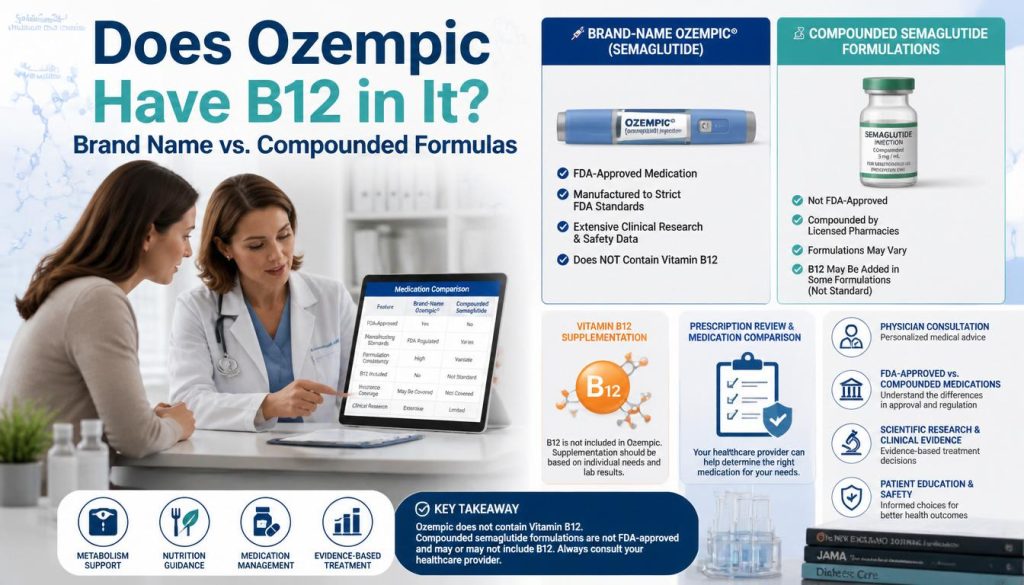
Brand-name Ozempic does not contain vitamin B12 as part of its FDA-approved formulation. The manufacturer does not include any vitamins, micronutrients, or secondary active ingredients in the pen. If you are taking authentic, brand-name Ozempic, you are receiving pure semaglutide medication designed to mimic the body’s natural GLP-1 hormone to regulate appetite and insulin secretion.
Does Ozempic Have B12 in It?
No, brand-name Ozempic does not have vitamin B12 in it. Vitamin B12 is completely absent from the official Ozempic ingredients list.
If you have seen a weight loss injection that combines semaglutide and B12, you are looking at a compounded semaglutide product, which is entirely distinct from the commercial drug Ozempic.
| Medication Type | Active Ingredient Base | Added Micronutrients (Vitamin B12) | Formulatory Role |
| Brand-Name Ozempic | Pure Semaglutide | None (Contains only FDA-approved inactive buffers) | Standardized, mass-manufactured commercial drug. |
| Compounded Semaglutide | Semaglutide base or salt | Cyanocobalamin or Methylcobalamin | Customized blend created by independent compounding pharmacies. |
Online spaces frequently blur the lines between these two separate entities, using the brand name “Ozempic” as a generic catch-all term for any injection containing semaglutide. This linguistic shortcut is the root cause of the widespread misconception regarding Ozempic and B12.
Why Do Some Compounded Semaglutide Products Include B12?
Compounded medications are custom-prepared drugs created by state-licensed compounding pharmacies to meet the specific needs of an individual patient. Under federal law, when an FDA-approved drug is in short supply, state-licensed and federal outsourcing compounding pharmacies are permitted to prepare compounded versions of that medication.
Many compounding pharmacies choose to manufacture a compounded semaglutide B12 blend. They typically combine the semaglutide with cyanocobalamin or methylcobalamin, which are common forms of vitamin B12.
There are two primary reasons why a healthcare provider or compounding pharmacy might utilize these compounded weight loss injections:
- Administrative and Legal Nuance: Compounding pharmacies are generally restricted from simply copying a commercially available drug exactly. By adding a micronutrient like vitamin B12, the pharmacy creates a unique, customized formulation that is legally distinct from the proprietary brand-name medication.
- Managing Side Effects: The most common complaints from patients taking GLP-1 medications are fatigue, low energy, and nausea. Because vitamin B12 is inherently tied to cellular energy production, some clinical providers prescribe the blend hoping it will help patients tolerate the physical transition to a GLP-1 medication more comfortably.
What Is Vitamin B12 and Why Is It Important?
Vitamin B12, also known as cobalamin, is a water-soluble vitamin that plays a foundational role in human metabolic health. It is an essential nutrient, meaning your body cannot produce it naturally; it must be obtained through dietary sources like meat, fish, dairy, or through direct supplementation.
Within the human body, B12 metabolism supports several critical biological functions:
- Energy Metabolism: It helps convert the carbohydrates and fats you consume into usable cellular energy.
- Nerve Health: It is vital for maintaining the protective myelin sheath that surrounds your nerves, supporting overall neurological function.
- Red Blood Cell Production: A lack of adequate B12 prevents red blood cells from developing properly, which can lead to a condition known as megaloblastic anemia.
- DNA Synthesis: It works alongside folate to facilitate proper cell division and genetic replication.
A severe vitamin B12 deficiency can manifest as profound fatigue, muscle weakness, numbness or tingling in the hands and feet, brain fog, and mood changes. Ensuring optimal micronutrient support is a standard pillar of general healthcare, especially for individuals who follow strict plant-based diets or suffer from gastrointestinal absorption issues.
Does Adding B12 Make Semaglutide Work Better?
A common marketing claim is that a semaglutide with vitamin B12 injection will accelerate fat burning or yield superior weight reduction compared to semaglutide alone. However, current clinical evidence does not show that adding B12 makes semaglutide significantly more effective for weight loss.
Vitamin B12 is not a weight loss drug. It does not suppress your appetite, slow gastric emptying, or directly alter fat tissue. The substantial weight loss achieved during a semaglutide weight loss treatment is entirely driven by the active GLP-1 medication’s impact on the brain’s satiety centers.
If a patient is already suffering from an undiagnosed vitamin B12 deficiency, correcting that deficit via a compounded injection will undoubtedly improve their overall well-being, resolve their anemia, and restore their baseline energy levels. This improvement in vitality can make a patient feel more active, but it is a correction of a nutritional deficiency rather than an enhancement of semaglutide’s biological mechanism. For a patient with normal, healthy B12 levels, stacking extra B12 onto semaglutide offers no additional weight loss benefits.
Can Ozempic Cause Vitamin B12 Deficiency?
Ozempic is not known to directly deplete vitamin B12 stores in the body or interfere with the stomach’s ability to absorb nutrients. Unlike certain traditional oral medications for type 2 diabetes, such as metformin, which can actively lower B12 absorption over long periods of use, semaglutide has no direct biochemical interaction with your B12 levels.
However, an indirect risk of vitamin deficiency during weight loss does exist. Because Ozempic causes significant appetite reduction and delayed gastric emptying, patients naturally consume much smaller portions of food. If your overall food intake drops drastically, your total daily intake of essential micronutrients, including vitamin B12, drops as well.
| Step | Mechanism | Impact on the Body |
| 1. Primary Action | Ozempic Administration | Triggers significant appetite reduction and delayed gastric emptying. |
| 2. Behavioral Change | Decreased Caloric Intake | Overall food consumption and portion sizes drop drastically. |
| 3. Nutritional Outcome | Micronutrient Risk | Elevates the risk of a low intake of essential vitamins (such as Vitamin B12). |
Brand-Name Ozempic vs. Compounded Semaglutide With B12
When deciding how to manage your metabolic treatment, it helps to understand how the standard commercial drug compares to a compounded option.
| Feature | Brand-Name Ozempic | Compounded Semaglutide With B12 |
| FDA Status | Fully FDA-approved commercial drug | Individual ingredients are approved, but the custom blend itself is not FDA-reviewed for safety or efficacy |
| Vitamin B12 Content | None | Contains Cyanocobalamin or Methylcobalamin |
| Manufacturing Origin | Highly standardized global pharmaceutical facilities | Individual state-licensed or federal outsourcing compounding pharmacies |
| Ingredient Uniformity | Identical batch-to-batch consistency and strict quality controls | Can vary slightly based on the specific pharmacy’s formulation standards |
| Regulatory Framework | Regulated as a standardized mass-market drug | Regulated under state boards of pharmacy and Section 503A/503B of the FD&C Act |
Authentic Ozempic provides absolute clinical predictability. If you or your physician prefer to add vitamin B12 to your routine, you can easily combine authentic Ozempic with an inexpensive over-the-counter oral B12 supplement, giving you total control over the exact dose of both compounds.
Questions Patients Should Ask Before Using Compounded Semaglutide With B12
If you and your healthcare team are considering a compounded formulation rather than the brand-name commercial drug, exercising due diligence regarding medication transparency is vital for semaglutide safety.
Consider asking your provider and the fulfilling pharmacy the following questions:
- What is the exact source of the semaglutide?
Ensure the pharmacy is utilizing high-quality semaglutide base rather than industrial chemical salts (like semaglutide sodium or semaglutide acetate), which the FDA has warned against. - Is the fulfilling pharmacy properly accredited?
Look for pharmacies that are PCAB-accredited or registered as FDA 503B outsourcing facilities. - What is the exact dosage of both semaglutide and B12 in my injection?
You must know the precise milligram strength of each active compound to track your progression safely. - Why are we choosing a compounded blend over standard FDA-approved Ozempic combined with an oral vitamin?
Ensure there is a legitimate, personalized clinical rationale for your treatment plan.
Frequently Asked Questions
No. Authentic, brand-name Ozempic does not contain vitamin B12. It consists exclusively of semaglutide and approved inactive liquid stabilizers.
No, Novo Nordisk does not add B12 to Ozempic. If your injection contains vitamin B12, it is a custom-made compounded product prepared by an independent pharmacy, not brand-name Ozempic.
Compounding pharmacies often blend semaglutide with B12 to create a customized medication that is legally distinct from the commercial brand-name drug, and to potentially help patients manage common treatment-related fatigue.
No. While both contain the active ingredient semaglutide, Ozempic is a highly regulated, standardized, FDA-approved commercial product. Compounded semaglutide is a custom-mixed medication created by independent pharmacies and does not undergo individual FDA pre-market safety reviews.
There is no medical evidence showing that vitamin B12 enhances the fat-burning capability of semaglutide. Its primary value is correcting an underlying vitamin deficiency or supporting general cell metabolism.
Ozempic does not actively deplete B12 or alter its absorption in the gut. However, because it drastically reduces your appetite, you may experience a drop in micronutrient intake if your diet is not carefully managed.
If you are experiencing fatigue or if blood tests reveal that your vitamin levels are low, taking an over-the-counter oral B12 supplement alongside your authentic Ozempic injection can be highly beneficial.
No. While the individual ingredients (semaglutide and cobalamin) may be approved, the specific compounded combination of semaglutide and vitamin B12 is not individually evaluated or approved by the FDA.
Compounded products can be used safely when prepared by reputable, state-licensed compounding pharmacies using pharmaceutical-grade ingredients. However, they lack the standardized manufacturing consistency and rigorous pre-market testing of brand-name medications.
Ask your provider whether you are receiving authentic commercial Ozempic or a compounded alternative. If they recommend a compounded blend, ask for the pharmacy’s name, credentials, and verification of their ingredient sourcing.
Navigating Your Treatment Decisions with Confidence
Understanding what goes into your body is the foundational cornerstone of safe, effective healthcare. Brand-name Ozempic does not contain vitamin B12, and its clinical success is rooted entirely in pure, highly regulated semaglutide. While compounded semaglutide formulations frequently add B12 to create distinct, customized options for patients, doing so does not inherently change or improve how the underlying GLP-1 medication works to manage weight or blood sugar.
Your metabolic journey should always be built upon clear communication, transparency, and clinical evidence. If you have questions about your current prescription or are experiencing treatment-related fatigue, discuss your options openly with your healthcare provider. Review your medication ingredients carefully, select the delivery method that aligns best with your personal medical needs, and continue your healthcare journey by exploring evidence-based treatment education through Welloirthm.
Sources & Medical References
- U.S. Food and Drug Administration (FDA): FDA Approves Ozempic for Type 2 Diabetes and Cardiovascular Risk Reduction
- U.S. Food and Drug Administration (FDA): FDA Guidance and Warnings Regarding Compounded Semaglutide Products
- National Institutes of Health (NIH) Office of Dietary Supplements: Vitamin B12 Health Professional Fact Sheet and Metabolism
- Novo Nordisk Official Resources: Ozempic (semaglutide) Prescribing Information and Full Ingredient List
- Obesity Medicine Association: Clinical Guidelines for Nutritional Monitoring During GLP-1 Therapy
- The American Journal of Clinical Nutrition: Micronutrient Adequacy and Dietary Intake During Significant Weight Loss