


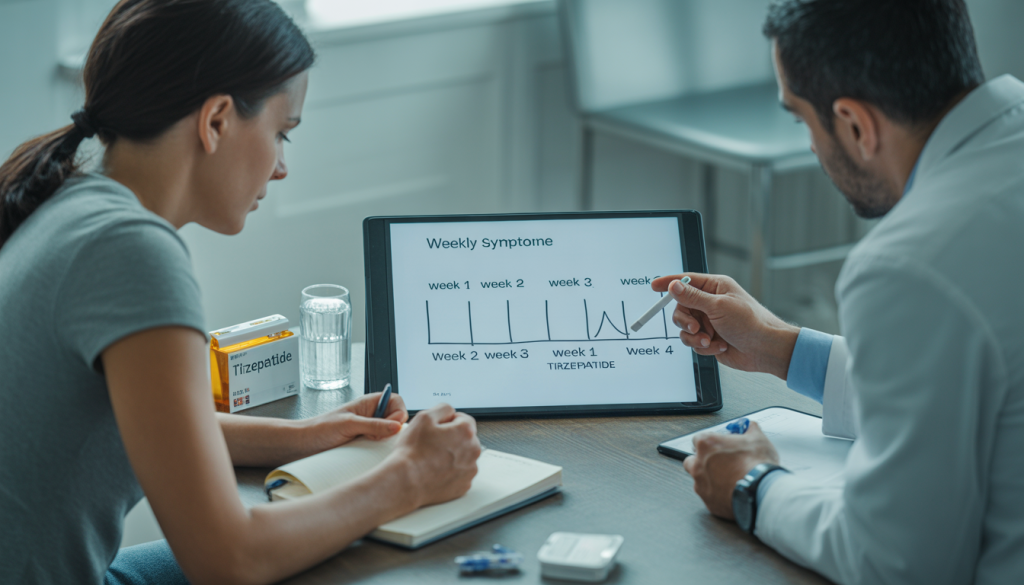
Diarrhea is one of the more common tirzepatide side effects, particularly in the first few weeks after starting the medication or moving up a dose. For most patients, it is mild to moderate, temporary, and manageable with simple adjustments. It is also one of the things people worry about most at midnight after their second injection, so let us walk through exactly what is going on and what to do about it.
Why Does Tirzepatide Affect the Digestive System?
Because tirzepatide works directly on gut signaling pathways. It activates both GLP 1 and GIP receptors, and both of those receptor systems influence how your stomach empties, how your intestines contract, and how quickly food moves through you.
GLP 1 receptor agonists slow gastric emptying. That means food stays in the stomach longer than your body is used to, and the downstream signaling changes motility patterns in the small and large intestine. The GIP component adds another layer. GIP and GLP 1 effects on digestion together create a shift in how your entire gastrointestinal tract communicates, absorbs nutrients, and moves contents forward.
Your gut is not broken. It is recalibrating to a new hormonal environment. That recalibration is what causes the discomfort, and it is also why the discomfort usually fades.
What Makes Diarrhea One of The More Common Tirzepatide Side Effects?
Because changes to motility affect everyone differently. Clinical trial data shows that diarrhea occurs in roughly 12 to 17 percent of patients across dose levels, though many patients describe it as loose stools rather than severe diarrhea.
The mechanism involves a few overlapping changes:
- Altered gut motility, where the intestines adjust to new contraction signals
- Shifts in bile acid processing as gastric emptying slows
- Early microbiome changes in response to different nutrient timing
- Increased intestinal secretion triggered by receptor activation
This is why tirzepatide diarrhea is sometimes paired with nausea or bloating. They share the same root cause: your digestive system is learning a new rhythm.
When Does Diarrhea Usually Start After Injection?
Most patients who experience it notice changes within two to five days after their first injection. The pattern often follows a wave: some disruption in the days after the dose, then gradual settling before the next injection.
A common patient scenario looks like this. Someone starts at 2.5 mg, feels fine for two days, then has a day or two of loose stools midweek, followed by a return to normal. That cycle may repeat mildly for the first three or four weeks and then quiet down.
The timing varies. Some patients notice nothing at 2.5 mg but experience GLP 1 digestive side effects only when they increase to 5 mg or 7.5 mg. That is why dose titration exists as a strategy, not just a formality.
How Long Does Tirzepatide Diarrhea Last?
For most patients, episodes last one to three days per dose cycle during the adaptation phase. The overall adaptation phase typically resolves within three to six weeks at a stable dose.
This is one of the most searched questions online, often phrased as how long does diarrhea last on tirzepatide or how long does Mounjaro diarrhea last, and the honest answer is that it depends on the person, the dose, and what they are eating. But the trend line usually moves in the right direction. Week one may be rocky. Week four at the same dose is usually calmer.
If symptoms persist beyond six weeks at the same dose without improvement, that is worth a conversation with your prescriber.
Why Do Dose Increases Trigger New Symptoms?
Because each increase reintroduces the adaptation challenge at a higher receptor activation level. Think of it like adjusting to altitude. You acclimate at one level, then climb again, and your body needs a few days to catch up.
Tirzepatide dose increase symptoms commonly include a brief return of nausea, loose stools, or bloating. Structured programs like GLP 1 by Wellorithm build scheduled check ins around dose changes specifically for this reason, so patients are not guessing whether what they feel is expected.
A patient who moved from 5 mg to 7.5 mg might have two solid weeks at 5 mg with no issues, then notice looser stools for a few days after the first 7.5 mg injection. That is a textbook titration pattern, not a crisis.
Who Is More Likely to Experience Digestive Issues on Tirzepatide?
Patients with a history of irritable bowel syndrome, functional gut sensitivity, or high baseline anxiety around medication tend to report more GI symptoms. People who eat large, high fat meals close to injection day also tend to have more discomfort.
Other factors that can increase likelihood:
- Starting at a higher dose without proper titration
- Dehydration before starting the medication
- Low baseline fiber intake
- Concurrent use of metformin or other GI active medications
This does not mean those patients cannot use tirzepatide successfully. It means their support plan needs more structure, and their care team should know about the history upfront.
How Do Dehydration And Electrolytes Play A Role?
Diarrhea causes fluid and electrolyte loss, and even mild dehydration can make symptoms feel worse than they are. This is the part clinicians emphasize most during consultations, and it is the part patients most often underestimate.
When stools are loose, you lose sodium, potassium, and magnesium faster than normal. That can lead to fatigue, muscle cramps, lightheadedness, and a general feeling of being unwell that patients sometimes attribute to the medication itself when it is actually the fluid deficit.
Practical steps clinicians actually recommend:
- Sip an oral rehydration solution or electrolyte drink throughout the day
- Avoid relying only on plain water, which does not replace minerals
- Track urine color as a simple hydration gauge
- Eat small portions of potassium rich foods like bananas or avocado when tolerated
Monitoring hydration is one of the things that structured programs do well. Wellorithm, for example, includes hydration guidance as part of its medically supervised GLP 1 ecosystem because weight loss injection side effects become more manageable when fluid balance is addressed early.
What Foods Tend to Worsen Symptoms?
High fat, greasy, and heavily processed foods are the most consistent triggers. Fried foods, rich sauces, large dairy portions, and sugary drinks tend to amplify both nausea and diarrhea during the adaptation window.
Foods that usually help stabilize digestion:
- Plain rice, toast, or crackers during acute episodes
- Lean protein in small portions
- Cooked vegetables rather than raw during the first few weeks
- Broth based soups for hydration and sodium
- Small, frequent meals instead of two or three large ones
One practical scenario that comes up often: a patient is traveling for work, eating out for every meal, and starts a new dose the same week. That combination of unfamiliar food, stress, and a higher dose is almost guaranteed to produce more tirzepatide gut changes than necessary. Timing matters.
How Can You Manage Diarrhea Safely At Home?
Most mild diarrhea can be managed with dietary adjustments, hydration, and patience. The goal is comfort and safety, not suppression.
Steps that help:
- Eat smaller meals for two to three days after each injection
- Prioritize electrolyte replacement, not just water
- Avoid alcohol and caffeine, which worsen fluid loss
- Keep over the counter options like loperamide available, but use them only after checking with your prescriber
- Track symptoms briefly so you can report patterns accurately
Learning how to stop diarrhea from tirzepatide often comes down to learning how to support your body through adaptation rather than fighting the process. Patients who plan ahead for the first two weeks at each dose level tend to report far less disruption.
When Does Diarrhea Become A Concern That Needs Medical Attention?
When it is severe, persistent, or accompanied by warning signs. Most tirzepatide diarrhea does not reach that threshold, but knowing the red flags is important.
Contact your prescriber or seek care if you experience:
- More than four to six watery stools per day for more than two days
- Blood or dark color in the stool
- Dizziness, fainting, or rapid heart rate
- Severe abdominal pain or cramping that does not resolve
- Inability to keep fluids down
- Fever alongside diarrhea
Should I stop tirzepatide if I have diarrhea? Not automatically. Mild to moderate symptoms are generally not a reason to discontinue, but your care team should know about them so they can adjust the plan. This is where medically supervised programs provide a safety net. In the Wellorithm model, patients have access to clinical check ins during titration windows, which means dose adjustments and symptom management happen in real time rather than after a problem escalates.
How Does Medical Supervision Reduce Side Effect Severity?
Because titration is not one size fits all. A clinician who is monitoring your response can slow a dose increase, extend the interval, or adjust timing based on what your body is actually doing.
Structured oversight also catches dehydration early, identifies patients who need lab work for electrolyte levels, and provides reassurance that is grounded in data rather than guesswork. Programs focused on the best ways to manage GLP 1 side effects in the USA build these touchpoints into the treatment pathway.
The difference between a patient white knuckling through side effects alone and a patient with a clear escalation plan is enormous. Not medically, sometimes. But psychologically, always.
What Are The Pros and Cons of GLP 1 Gut Adaptation?
Pros of GLP 1 gut adaptation:
- Digestive side effects typically decrease significantly within weeks at a stable dose
- The slowed gastric emptying that causes early discomfort also supports reduced appetite and better portion control long term
- Patients who adapt often report improved digestion and reduced bloating after the adjustment period
- The presence of early side effects can actually indicate the medication is activating the intended receptor pathways
Cons of digestive discomfort:
- The first two to four weeks at a new dose can be genuinely uncomfortable
- Diarrhea, nausea, and bloating can overlap, making the experience frustrating
- Social anxiety around symptoms can cause people to skip doses or stop early
- Without supervision, patients may not manage hydration and nutrition well enough during the adaptation window
Short term symptoms often support long term metabolic benefits. The gut is not malfunctioning. It is adjusting to a medication that changes how it operates at a hormonal level. That distinction matters when you are sitting at your desk on day three wondering if this is all worth it.
What Questions Do Patients Ask Most About Tirzepatide and Diarrhea?
Yes. It is among the most commonly reported side effects in clinical trials and real world use, and it typically appears within the first week of a new dose.
Small meals, consistent hydration, electrolyte support, and avoiding high fat foods during adjustment weeks are the most effective home strategies.
Most patients see improvement within one to three weeks at a stable dose. If it persists beyond six weeks without change, contact your provider.
For the vast majority of patients, GI side effects are temporary and related to dose changes. Long term digestive problems are uncommon but should be evaluated if they occur.
Do not skip without guidance. Contact your care team. They may adjust the dose or timing rather than pausing treatment.
It can recur with dose increases, but it tends to be shorter in duration as the body has already partially adapted to GLP 1 and GIP receptor activation.
Focus on sodium, potassium, and magnesium. Oral rehydration solutions or balanced electrolyte drinks are more effective than water alone.
No. Roughly 12 to 17 percent of patients in trials reported it. Many patients experience no significant digestive side effects at all, and others have only mild symptoms that resolve quickly.
Conclusion
Diarrhea on tirzepatide is common, usually temporary, and almost always manageable. It happens because the medication changes how your gut signals, moves, and processes food, and your body needs time to catch up.
The patients who navigate it best are the ones who understand what is happening, prepare for dose changes, stay hydrated, and have a care team checking in during the adjustment window. That is not a luxury. That is how this medication is designed to work when prescribed responsibly.
If you are reading this at 1 am because your stomach woke you up after your third injection, here is what you need to know: this is a recognized part of the process, it has a timeline, and it gets better. You are not doing anything wrong. Your gut is just learning a new language, and it is not fluent yet.