

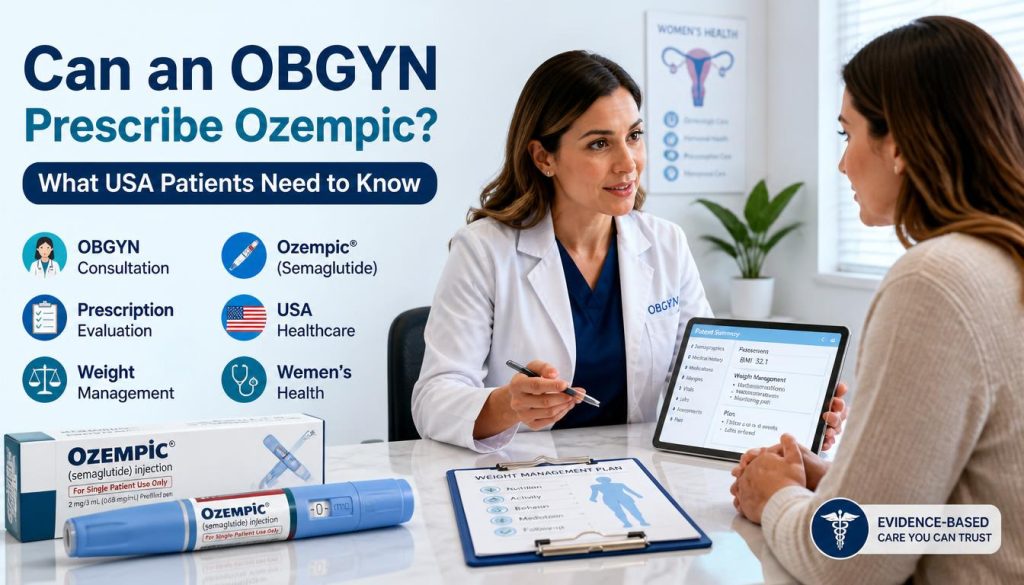
Understanding the challenging realities of polycystic ovary syndrome (PCOS), insulin resistance, or stubborn weight gain that resists every dietary change. You visit your obstetrician-gynecologist (OBGYN); the provider who handles your reproductive health, tracks your lab work, and understands your hormonal history. Because medications like Ozempic have dominated health conversations across the United States, a logical question arises: Can my OBGYN just prescribe this medication for me, or do I need to see a separate specialist?
The short answer is yes, any licensed physician in the U.S., including an OBGYN, legally possesses the prescribing authority to write a prescription for Ozempic if they deem it clinically appropriate. However, the medical reality is far more nuanced than a simple yes or no.
While some women’s health providers actively incorporate modern metabolic therapies into their practices, others strictly limit their care to traditional gynecology and obstetrics, preferring to refer patients to external specialists. Understanding how OBGYNs approach GLP-1 medications like Ozempic can help you navigate your care, prepare for your next appointment, and make informed choices about your metabolic health.
What Is Ozempic and Why Are So Many Women Asking About It?
Ozempic is a brand-name prescription injection containing the active ingredient semaglutide. It belongs to a class of medications known as glucagon-like peptide-1 (GLP-1) receptor agonists. Originally developed and Food and Drug Administration (FDA) approved to improve blood sugar regulation in adults with type 2 diabetes, Ozempic mimics a naturally occurring hormone your body releases after eating.
| Phase / Trigger | Target Organ / System | Physiological Action | Ultimate Outcome |
| 1. Food Intake | Digestive System | Triggers the natural release of incretin hormones, which Semaglutide mimics. | Initiation of metabolic response |
| 2. Semaglutide Activation | GLP-1 Receptors | Mimics natural GLP-1 but lasts much longer in the body. | Dual pathways activated below |
| 3. Pathway A | Pancreas | Enhances glucose-dependent insulin secretion and suppresses glucagon. | Blood Sugar Regulation |
| 4. Pathway B | Brain & Stomach | Delays gastric emptying (slows stomach clearing) and signals fullness to the brain. | Appetite Control & Satiety |
This dual mechanism provides excellent glycemic control while naturally reducing caloric intake, leading to significant secondary weight loss.
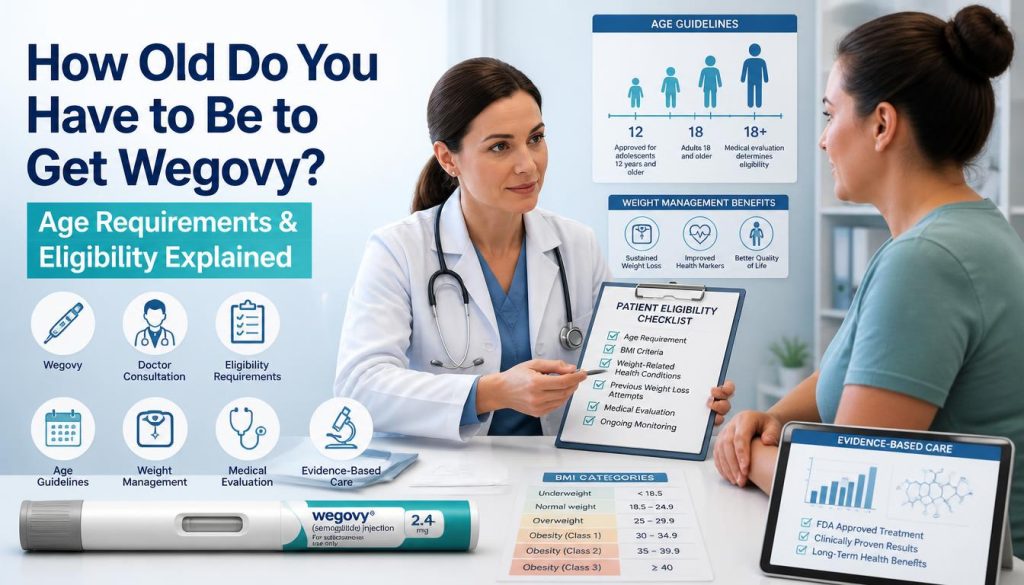
Because excess weight, insulin resistance, and metabolic dysfunction are deeply intertwined with female hormonal conditions, millions of women across the United States have started asking their primary care providers and gynecologists whether a semaglutide injection could help resolve their symptoms. It is vital to note that while Ozempic shares the exact same active ingredient as Wegovy, Ozempic is officially indicated for type 2 diabetes, whereas Wegovy is FDA-approved specifically for chronic weight management treatment.
Can an OBGYN Prescribe Ozempic?
Prescribing Authority in the United States
In the United States, an OBGYN is a fully licensed medical doctor (MD or DO) who has completed a residency in obstetrics and gynecology. Their medical license gives them broad prescribing authority. There is no federal law or state regulation that legally prevents an OBGYN from prescribing Ozempic or any other GLP-1 medication. If your gynecologist determines that you meet the clinical criteria for the medication, they can legally write the prescription and send it to your local pharmacy.
Clinical Appropriateness vs. Prescribing Style
Even though your OBGYN can prescribe Ozempic, it does not mean every provider will. In clinical practice, women’s health professionals generally fall into two distinct categories regarding metabolic management:
- The Metabolic-Forward OBGYN: These providers view metabolic health as a foundation of reproductive medicine. They frequently manage conditions like insulin resistance, metabolic syndrome, and obesity right in their offices, recognizing that treating these issues directly improves overall gynecological health, fertility, and future pregnancy outcomes.
- The Traditional OBGYN: Other providers view obesity and metabolic disorders as complex chronic conditions that sit outside the bounds of standard surgical and routine reproductive care. They may feel that managing the long-term titration, side effects, and mandatory nutritional monitoring required for GLP-1 therapies is best handled by an endocrinologist or primary care physician.
Whether your provider will consider prescribing semaglutide depends entirely on their clinical focus, their comfort level with modern obesity medicine, and your individual health history.
Why OBGYNs Often Manage PCOS and Insulin Resistance
Polycystic Ovary Syndrome (PCOS) is one of the most common endocrine disorders affecting women of reproductive age across the USA. Though it manifests with gynecological symptoms like irregular menstrual cycles, ovarian cysts, and fertility challenges, its underlying driver is highly metabolic: insulin resistance.
When a woman experiences insulin resistance, her body’s cells do not respond effectively to insulin. The pancreas compensates by producing even more insulin, leading to hyperinsulinemia (excessively high levels of insulin in the blood). This hormonal surge triggers the ovaries to produce excess androgens (male hormones like testosterone), causing symptoms like acne, facial hair growth, and intense metabolic weight gain that can be incredibly difficult to lose through standard caloric restriction.
The Ovarian-Metabolic Loop:
High Insulin ➔ Excess Ovarian Androgens ➔ Ovulatory Dysfunction & Weight Gain ➔ Worsened Insulin Resistance
Because OBGYNs are typically the first line of defense against PCOS, discussions regarding women’s metabolic health frequently occur in their exam rooms. While metformin has traditionally served as the foundational off-label drug for insulin resistance treatment in PCOS, growing clinical evidence from recent years shows that semaglutide offers profound benefits for managing high body weight and improving cellular insulin sensitivity in women with PCOS. By helping to break the underlying cycle of hyperinsulinemia, these therapies can be a powerful tool in a comprehensive PCOS management strategy.
Ozempic, Fertility, and Reproductive Health
For women dealing with anovulation (a lack of ovulation) driven by obesity or PCOS, weight management treatment can occasionally act as an accidental fertility trigger.
When a woman drops even 5% to 10% of her total body weight through metabolic stabilization, her circulating insulin and androgen levels frequently plummet. This rapid hormonal normalization can cause the ovaries to suddenly resume normal follicular development and spontaneous ovulation.
Many women who have struggled for years to conceive experience unexpected pregnancies shortly after starting a GLP-1 medication. Because of this, medical societies emphasize that healthcare professionals must counsel patients to use highly effective, concurrent contraception while taking a semaglutide injection if they are of reproductive age and wish to avoid an unplanned pregnancy.
While achieving a healthier weight improves long-term reproductive health and lowers the future risk of gestational diabetes or preeclampsia, Ozempic itself is absolutely not a fertility medication. It must be viewed strictly as a preconception health optimization tool that requires careful, strategic timing.
Pregnancy, Breastfeeding, and Safety Considerations
The clinical conversation changes entirely when a patient transitions from optimizing preconception health to actively planning a family. There are clear, unyielding safety guidelines regarding Ozempic pregnancy safety that every patient must understand.
The Washout Period Requirement
Because semaglutide features a prolonged half-life (remaining in the body’s tissues for weeks), the official FDA prescribing information and guidelines from the American College of Obstetricians and Gynecologists (ACOG) recommend that women stop taking Ozempic at least two months (8 to 10 weeks) before attempting to conceive.
| Medication | Half-Life | Clearance Period | Recommended Discontinuation Before Conception |
| Semaglutide (Ozempic, Wegovy) | ~7 Days | 5 to 6 Weeks | 8 to 10 Weeks (Minimum 2 Months) |
| Tirzepatide (Mounjaro, Zepbound) | ~5 Days | 4 to 5 Weeks | 6 to 8 Weeks |
| Liraglutide (Saxenda, Victoza) | ~13 Hours | 3 to 4 Days | 4 to 6 Weeks |
Why Is It Contraindicated?
This strict safety timeframe exists out of an abundance of caution due to a lack of controlled, long-term human safety data. In animal reproduction studies, semaglutide exposure at maternal doses resulted in cases of structural fetal abnormalities, lower birth weights, and early pregnancy loss.
Furthermore, entering a pregnancy during a phase of active, rapid weight loss can deprive a developing embryo of critical macronutrients and micronutrients necessary during the initial stages of organogenesis (the formation of major organ systems in the first trimester).
What if an Accidental Pregnancy Occurs?
If you discover you are pregnant while actively taking Ozempic or any other GLP-1 receptor agonist, you should discontinue the medication immediately and contact your OBGYN.
While an accidental exposure in the earliest weeks of pregnancy is a scenario your doctor will want to monitor closely, data collected by organizations like MotherToBaby have reassuringly shown that brief, early exposures have not demonstrated a clear pattern of severe birth defects in human case reports. Your OBGYN will immediately transition you to alternative, pregnancy-safe methods for regulating blood sugar, such as insulin or targeted medical nutrition therapy.
When Might an OBGYN Refer You to Another Specialist?
Collaborative, multidisciplinary care is the benchmark of safe medicine. If your OBGYN evaluates your symptoms and decides not to write a prescription for Ozempic, it is usually because your case requires a specialized level of care.
Your gynecologist may issue a metabolic health referral to one of the following specialists:
- Endocrinologist: If your primary issue is complex type 2 diabetes management, severe thyroid disorders, or advanced pituitary abnormalities driving your weight gain, an endocrinologist for semaglutide management is the ideal choice.
- Obesity Medicine Specialist: These physicians possess advanced board certification specifically focused on chronic weight management. They are experts at navigating GLP-1 plateaus, building customized long-term nutrition profiles, and managing complex physiological side effects.
- Primary Care Provider (PCP): For routine health monitoring, blood pressure tracking, and generalized weight management, your PCP provides the continuous, comprehensive oversight needed for long-term medication use.
- Maternal-Fetal Medicine (MFM) Specialist: If you have severe pre-existing diabetes, are managing a high-risk medical history, and are transitioning off a GLP-1 medication to plan a pregnancy, an MFM specialist ensures your transition to pregnancy-safe treatments is completely seamless.
Will Insurance Cover Ozempic If an OBGYN Prescribes It?
One of the most pervasive myths among patients is that insurance companies base coverage approvals on which type of doctor writes the prescription. Many assume that if an endocrinologist prescribes Ozempic, it will automatically be approved, but if an OBGYN writes it, it will be denied.
This assumption is entirely incorrect. Insurance approval for Ozempic depends almost exclusively on your documented clinical diagnosis and the specific rules of your employer’s formulary plan; not the medical specialty of the prescriber.
| Step | Process / Trigger | Insurance Determination | Ultimate Outcome |
| 1. Clinical Initiation | Prescription Written by OBGYN | Insurance Formulary Review (checking the plan’s covered drug list and criteria). | Routing to specific diagnosis paths |
| 2. Path A (On-Label) | Approved Diagnosis (Type 2 Diabetes) | Meets FDA-approved criteria for medications like Ozempic or Mounjaro. | Prior Authorization Approved (Medication covered) |
| 3. Path B (Off-Label) | Off-Label Use (PCOS / Weight Loss Only) | Does not meet primary FDA indications for specific diabetes-branded formulations. | Coverage Frequently Denied (Unless the specific plan explicitly covers anti-obesity medications like Wegovy or Zepbound) |
Because Ozempic is explicitly FDA-approved solely for type 2 diabetes, insurance companies routinely require a comprehensive semaglutide prior authorization process. To grant an approval, they will generally verify that your medical charts contain:
- A confirmed diagnosis of Type 2 Diabetes (typically verified by an $HbA1c$ lab result of $6.5\%$ or greater).
- Documented step-therapy (proof that you have tried and failed lower-cost first-line treatments like metformin).
If your OBGYN prescribes Ozempic off-label to treat PCOS weight gain or insulin resistance without a diagnosis of type 2 diabetes, the insurance claim will likely be denied under standard commercial insurance, Medicare, or employer-sponsored plans.
If your goal is purely weight loss and you do not have diabetes, your OBGYN may look into alternative GLP-1 options like Wegovy or Zepbound, which are explicitly approved for chronic weight management. However, you will still need to check if your specific employer plan covers anti-obesity medications.
Questions to Ask Your OBGYN About Ozempic
When you advocate for your health, entering your appointment with targeted, practical questions transforms the conversation. Consider printing or saving these questions for your next visit:
- “Based on my recent blood work and metabolic profile, do I meet the clinical criteria for a GLP-1 medication like Ozempic or Wegovy?”
- “Given my current long-term family planning goals, how would starting semaglutide fit into my timeline for a future pregnancy?”
- “If we decide to start this medication, does your office handle the prior authorization and ongoing monthly titration refills, or would you prefer to coordinate this care with an endocrinologist or primary care doctor?”
- “What specific gastrointestinal side effects should I watch for, and what step-by-step strategies do you recommend to manage them?”
- “If my insurance denies coverage for Ozempic off-label, are there alternative metabolic treatments like metformin or lifestyle interventions we can explore together?”
Frequently Asked Questions
Yes. Licensed OBGYNs in the United States have full medical prescribing authority and can legally prescribe Ozempic if they believe it is clinically indicated and appropriate for your health status.
Yes, a gynecologist can prescribe semaglutide off-label to treat the insulin resistance and weight challenges associated with PCOS. However, insurance coverage may be restricted if you do not also have a diagnosis of type 2 diabetes.
No. You do not legally or administratively need an endocrinologist to get an Ozempic prescription. Primary care doctors, OBGYNs, and qualified nurse practitioners can all write the prescription.
Yes. Semaglutide enhances your body’s natural insulin secretion in response to glucose and significantly improves insulin sensitivity over time, helping to lower blood sugar and reduce hyperinsulinemia.
Ozempic does not directly alter egg quality or serve as a fertility drug. However, the weight loss and metabolic improvement it provides can cause women who are anovulatory (not ovulating) to resume normal, spontaneous menstrual cycles, increasing the likelihood of pregnancy.
Yes. You must discontinue Ozempic at least 2 months before actively trying to get pregnant to ensure the drug clears your system completely and to protect early embryonic development.
Coverage is dictated by your diagnosis and employer formulary, not the doctor’s specialty. If you have type 2 diabetes, it is typically covered via prior authorization. If prescribed off-label for weight loss or PCOS alone, coverage is frequently denied.
Yes. An OBGYN can prescribe Wegovy, which features the exact same active ingredient (semaglutide) but is officially FDA-approved for chronic weight management rather than diabetes.
While it is an off-label use, it has become increasingly common in clinical practice due to robust evidence showing it targets the core insulin resistance and weight challenges that women with PCOS face.
The best doctor is one who is thoroughly experienced in metabolic health, comfortable managing the medication’s dosage schedule and side effects, and prepared to provide continuous nutritional counseling, whether that is your PCP, an OBGYN, or an obesity medicine specialist.
Summary & Next Steps
At its core, female reproductive health is entirely inseparable from systemic metabolic health. Your ovaries, menstrual cycle, and endocrine system rely on balanced blood sugar and stable insulin levels to function optimally. While every licensed OBGYN across the United States has the full legal authority to prescribe Ozempic, individual practice patterns vary widely based on each doctor’s professional comfort zone and clinical focus.
If you are struggling with hormonal weight gain or insulin resistance, remember that your OBGYN is an excellent place to start the conversation. Be completely transparent about your health struggles, ask directly about their prescribing philosophies, and openly discuss your long-term family planning goals. Whether they choose to manage your medication directly or connect you with a trusted local endocrinologist, initiating that dialogue is a vital step toward taking control of your reproductive and metabolic well-being.
Sources & Medical References
- U.S. Food and Drug Administration (FDA): Ozempic (semaglutide) Injection Prescribing Information
- American College of Obstetricians and Gynecologists (ACOG): Clinical Guidance on Obesity and Weight Management in Gynecologic Practices
- American Society for Reproductive Medicine (ASRM): International Evidence-Based Guideline for the Assessment and Management of Polycystic Ovary Syndrome
- National Institutes of Health (NIH) / MotherToBaby: Semaglutide Fact Sheet & Pregnancy Safety Monitoring Data
- Obesity Medicine Association (OMA): Clinical Practice Statements on GLP-1 Receptor Agonist Utilization