


You’ve just started your Ozempic journey, hoping for better blood sugar control or a helpful weight management tool. Things are going well, but lately, you’ve noticed an odd new habit: hiccups. Maybe they only happen after meals, or perhaps they appear a few hours after your weekly injection. Either way, it’s strange, a little annoying, and you can’t help but wonder: is this a side effect of the medication?
You’re not alone in asking. Many people search for this exact symptom, trying to figure out if their stubborn hiccups are connected to semaglutide. While hiccups aren’t the most talked-about side effect of GLP-1 medications, there’s a plausible reason why they might happen. Let’s look at what the science says, why the digestive system matters, and when you might want to check in with your doctor.
What Is Ozempic and How Does It Affect Digestion?
Ozempic is the brand name for a medication called semaglutide. It belongs to a class of drugs known as GLP-1 receptor agonists. These medications work by mimicking a natural hormone in your body that helps regulate blood sugar and appetite.
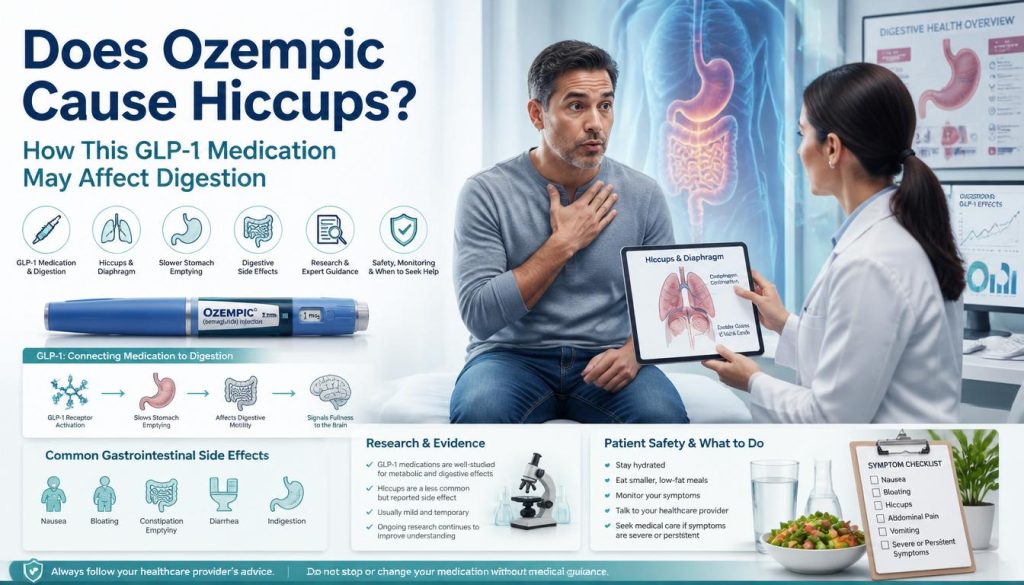
One of the key ways semaglutide does this is by slowing down digestion. Specifically, it delays gastric emptying, which means food and liquids stay in your stomach longer than usual. This slower process helps you feel full for a longer period, which can be very effective for weight management. However, this deliberate change in the digestive system is also the reason behind many of the most common side effects of Ozempic, such as nausea, bloating, and a feeling of being overly full.
Can Ozempic Cause Hiccups?
The short answer is that while hiccups are not a frequently reported or widely publicized side effect, there is growing anecdotal evidence that some people experience them after starting a GLP-1 medication. Official prescribing information for Ozempic doesn’t typically list hiccups as a common adverse reaction, but this doesn’t mean the connection isn’t real for some individuals.
Several patient reviews and online discussions describe developing bothersome or persistent hiccups after beginning Ozempic treatment.
In one review, a patient reported experiencing, “heartburn, upset stomach, burping, and hiccups” after taking semaglutide. These reports, while not clinical trial data, indicate that a number of people are searching for the answer to this very question. Because the medication is designed to alter digestive function, it’s biologically plausible that it could also indirectly trigger the diaphragm spasms we call hiccups.
The Digestive Connection and GLP-1s
To understand why a diabetes or weight loss medication might cause hiccups, you have to look at the mechanics of digestion. Hiccups happen when your diaphragm—the large muscle that separates your chest from your abdomen, suddenly contracts or spasms involuntarily.
Here is where Ozempic may play a role. A primary action of the medication is to slow down gastric emptying, or the process of your stomach moving food into the small intestine. This purposeful delay can lead to a few things:
- Gastric Distension: Food hangs around in your stomach longer than it normally would, potentially causing the stomach to stretch and become more full or distended than usual.
- Pressure on the Diaphragm: A very full stomach can push upward against the diaphragm, the muscle that sits right above it. This physical pressure can sometimes irritate the diaphragm, causing it to spasm.
- Vagus Nerve Stimulation: The stomach and diaphragm are connected by a major nerve called the vagus nerve. A stretched or irritated stomach can send signals through this nerve that may trigger a hiccup reflex.
So, while Ozempic isn’t directly targeting your diaphragm, its main mechanism of slowing digestion could create a chain reaction of stomach fullness and pressure that leads to hiccups. It’s an indirect effect, but it makes sense from a physiological perspective.
Understanding the Broader Digestive Context
Hiccups rarely happen in a vacuum. People who experience hiccups while on GLP-1 medications often report other common digestive side effects at the same time. These can include:
- Nausea
- Bloating and gas
- Frequent burping (a more common side effect than hiccups)
- Acid reflux or heartburn
- A feeling of extreme fullness after eating small amounts
If you are dealing with several of these symptoms alongside hiccups, it further suggests that the slowed digestive process is the underlying cause. Many of these symptoms, such as burping and acid reflux, are also tied to the same mechanism of delayed gastric emptying and increased stomach pressure. You can think of hiccups as another possible symptom on the spectrum of digestive changes that GLP-1s can cause.
When Are Hiccups on Ozempic Considered Serious?
This is the most important question for your safety and peace of mind. For most people, occasional hiccups are a harmless, if irritating, nuisance. However, there are times when hiccups warrant a conversation with your healthcare provider.
You should make an appointment with your doctor if your hiccups:
- Last for more than 48 hours (this is the standard clinical definition for persistent hiccups).
- Are severe enough that they make it hard to eat, drink, or sleep.
- Keep coming back frequently and are severely impacting your quality of life.
Seek immediate medical attention if your hiccups are accompanied by any of the following serious symptoms:
- Severe or persistent abdominal pain
- Chest pain or discomfort
- Shortness of breath or difficulty breathing
- Vomiting, especially if it’s forceful or contains blood
- Signs of dehydration, like dark urine or dizziness
These could be signs of a more serious medical issue that needs prompt evaluation. It’s always better to err on the side of caution and get checked out.
Tips That May Help Reduce Hiccups
If your hiccups are mild and infrequent, there are several lifestyle adjustments you can try. These tips focus on reducing the stomach pressure and digestive issues that may be causing your diaphragm spasms.
- Eat smaller, more frequent meals. Instead of three large meals, try five or six very small “mini-meals” throughout the day. This prevents your stomach from becoming overly full at any one time.
- Slow down while eating. Put your fork down between bites. Taking your time gives your stomach a chance to signal fullness to your brain before you’ve overdone it.
- Avoid carbonated beverages. Drinks like soda, seltzer, and sparkling water fill your stomach with gas, which increases pressure and bloating. This can directly trigger hiccups.
- Reduce high-fat and greasy foods. These foods take the longest to digest and can exacerbate the feeling of slowness and fullness, making hiccups more likely.
- Remain upright after eating. Lying down right after a meal can allow stomach acid and contents to move up toward the diaphragm. Try to stay seated or standing for at least an hour after you finish eating.
- Try simple hiccup remedies. Classic methods like holding your breath for 10-20 seconds, sipping a glass of cold water slowly, or gently bearing down as if having a bowel movement (the Valsalva maneuver) can sometimes interrupt the spasm.
- Talk to your doctor about your dose. Sometimes, side effects are more intense when you first start a medication or after you’ve increased your dose. Your doctor may recommend staying on your current dose for a longer period or, in some cases, adjusting it.
Ozempic vs. Other GLP-1 Medications
It’s worth noting that if you’re taking Ozempic, the active ingredient is semaglutide. This is the same ingredient found in Wegovy, a medication specifically approved for weight management, and Rybelsus, an oral tablet for type 2 diabetes. If hiccups are related to the digestive effects of semaglutide, you might experience them on any of these forms of the drug. Patients taking Wegovy have also reported hiccups as an unwanted symptom.
Everyone’s body reacts a little differently. Some people may have hiccups on one GLP-1 medication but not another. If this side effect becomes too much to handle, your healthcare provider might consider switching you to a different medication in the same class, such as tirzepatide (Mounjaro or Zepbound), to see if your symptoms improve.
Frequently Asked Questions
Hiccups are not a well-documented or official side effect of Ozempic in major clinical trials, but there are enough patient reports to suggest a plausible connection for some individuals. The medication’s ability to slow digestion may create stomach pressure that triggers diaphragm spasms.
Slowed gastric emptying is a primary action of semaglutide. When food stays in your stomach too long, your stomach can become distended, putting pressure on the diaphragm above it. This physical pressure can sometimes lead to involuntary hiccups.
Indirectly, yes. GLP-1 medications affect the stomach, which sits directly under the diaphragm. A very full or distended stomach can push upward, irritating the diaphragm muscle and potentially causing it to spasm. This is the most widely accepted theory for how these drugs might cause hiccups.
No, hiccups are not among the most common side effects of Ozempic. Nausea, vomiting, diarrhea, and constipation are much more frequently reported. Hiccups are considered an uncommon or rare potential side effect based on current patient reports.
This varies from person to person. Some people experience a short bout of hiccups that lasts a few minutes. Others have reported episodes that last for over 24 hours. In general, an acute case of hiccups should resolve on its own within 48 hours.
Yes, it’s scientifically plausible. Delayed gastric emptying can lead to increased stomach volume and distention. This can mechanically irritate the diaphragm via vagus nerve pathways, which is a known trigger for the hiccup reflex.
No, you should never stop a prescribed medication without first discussing it with your doctor. For most people, hiccups are a minor and temporary symptom. If they are persistent or severe, your doctor can help you manage them or adjust your treatment plan. Don’t make changes on your own.
You should contact your healthcare provider if your hiccups last for more than 48 hours, if they prevent you from eating or sleeping, or if they are accompanied by severe abdominal pain, chest pain, or vomiting. These could be signs of a more serious underlying condition.
Conclusion
If you’ve been searching for an answer to the question “does Ozempic cause hiccups,” you can take some comfort in knowing that while it’s not the most common side effect, there is a plausible biological reason for it. The medication’s purposeful action of slowing digestion can create a domino effect, leading to stomach fullness and pressure that may irritate your diaphragm.
For most people, these hiccups will be an occasional, harmless annoyance. Simple strategies like eating smaller meals, avoiding carbonated drinks, and staying upright after you eat can often make a big difference. However, if your hiccups are persistent, painful, or accompanied by other concerning symptoms, don’t hesitate to reach out to your healthcare provider. They can help you determine the best path forward, whether that means managing the symptoms, adjusting your dose, or exploring another medication option. Your comfort and safety are what matters most.