


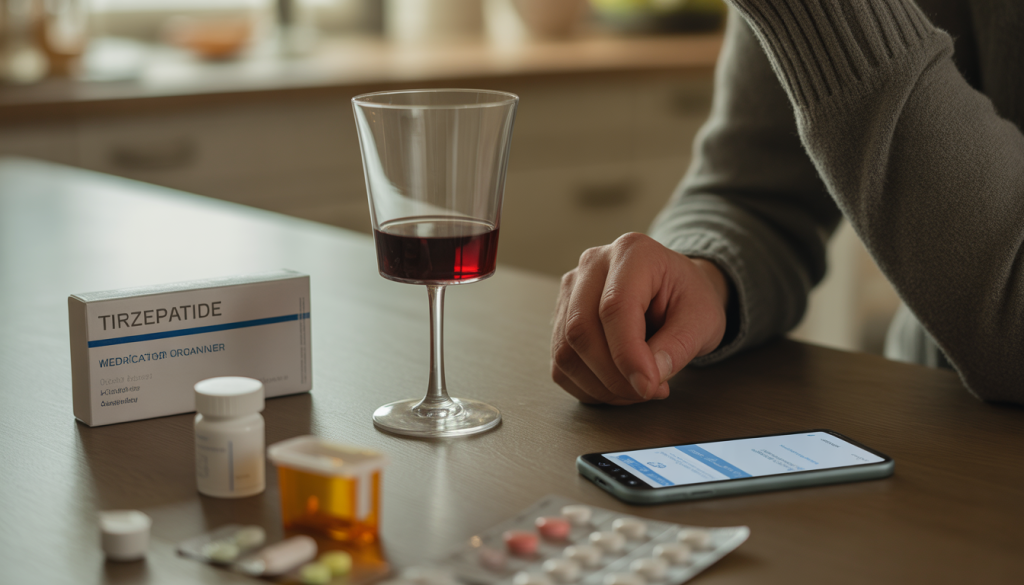
You are three weeks into tirzepatide. Your appetite has shifted. The scale is finally cooperating. Your energy feels different, better, more stable. And then Friday rolls around. There is dinner, a birthday, a casual evening with friends, and someone hands you a glass of wine.
You pause. Not because you do not want it. But because you genuinely do not know if you should.
This is one of the most searched questions among people using weight loss medication in the United States right now, and it deserves a real answer. Not a vague warning. Not a scare tactic. A thoughtful, medically grounded explanation of what happens when tirzepatide and alcohol meet in the same body, and what you can do about it.
That is exactly what this guide provides.
What Is Tirzepatide and How Does It Work in the Body?
Tirzepatide is an injectable medication that activates two hormone receptors: GLP 1 and GIP. In simple terms, it mimics natural gut hormones that regulate appetite, blood sugar, and how quickly your stomach empties after eating.
GLP 1, or glucagon like peptide 1, signals your brain to feel satisfied sooner and slows the movement of food through your stomach. GIP, or glucose dependent insulinotropic polypeptide, adds another layer by influencing insulin release and how your body processes energy from food.
Together, these two pathways change how your body handles hunger, blood sugar, and caloric intake. That dual mechanism is what makes tirzepatide effective for both weight loss and type 2 diabetes management. It is also what makes the question of alcohol more nuanced than a simple yes or no.
Because alcohol does not just interact with your mood or your social life. It interacts with the same metabolic systems tirzepatide is working on. And that overlap matters.
Can You Drink Alcohol While Taking Tirzepatide?
The short answer is that moderate alcohol use is not automatically prohibited, but it does carry real considerations that you need to understand before deciding.
There is no blanket rule on the tirzepatide label that says you cannot drink at all. However, the combination of alcohol and a GLP 1 medication changes how your body processes both substances, and those changes can range from mildly uncomfortable to medically significant depending on the situation.
The more useful question is not whether you can drink, but what happens in your body when you do, and whether the tradeoff is worth it on a given night.
Most healthcare providers will tell you that occasional, moderate alcohol intake is manageable for many patients. But they will also tell you to understand what moderate actually means in this context, because your tolerance has almost certainly changed.
How Does Alcohol Affect Weight Loss on Tirzepatide?
Alcohol affects weight loss through several overlapping mechanisms, and when you are on tirzepatide, each of those mechanisms is amplified.
Metabolism Slows Down in the Wrong Direction
Your liver prioritizes processing alcohol over nearly everything else. When you drink, fat burning essentially pauses while your body works to clear the alcohol. For someone on a weight loss injection that is actively shifting metabolic patterns, this creates a metabolic conflict. The medication is working to improve how your body uses energy. Alcohol temporarily undoes part of that work.
Blood Sugar Becomes Less Predictable
Tirzepatide lowers blood sugar as part of its mechanism. Alcohol also lowers blood sugar, particularly on an empty stomach or when consumed in larger amounts. The combination can lead to unexpected drops that cause dizziness, shakiness, confusion, or that vague feeling of something being off that you cannot quite name. For patients managing type 2 diabetes alongside weight loss, this overlap is especially important.
Appetite Regulation Gets Disrupted
One of the primary benefits of tirzepatide is reduced appetite and fewer cravings. Alcohol directly undermines that benefit. Even one or two drinks can lower inhibition around food choices and trigger hunger signals that the medication had been successfully quieting. Many patients report that their eating on days they drink looks completely different from their eating on days they do not.
Dehydration Compounds Faster
Tirzepatide can cause mild dehydration on its own, particularly during early dose titration or when gastrointestinal side effects like diarrhea or nausea are active. Alcohol is a diuretic. Combined, the fluid loss accelerates, and with it comes electrolyte imbalance, headaches, fatigue, and a general sense of feeling worse than the amount consumed would normally justify.
Calories Add up Invisibly
Alcohol carries roughly seven calories per gram, almost as calorie dense as fat, and those calories come with zero nutritional value. A single evening of moderate drinking can add 400 to 700 calories that are not tracked, not useful, and not offset by any metabolic benefit.
What Are the Potential Risks of Mixing Tirzepatide and Alcohol?
Beyond weight loss interference, there are direct physiological risks worth understanding. These are not hypothetical. They are reported in clinical settings and patient communities.
Increased Nausea and Gastrointestinal Distress
Nausea is already one of the most common tirzepatide side effects. Alcohol irritates the stomach lining independently. When combined with the delayed gastric emptying caused by GLP 1 receptor activation, alcohol can sit in the stomach longer than expected, intensifying nausea, bloating, and the risk of vomiting.
Some patients describe it as feeling like one drink hits like three. That is not perception. It is physiology.
Heightened Risk of Low Blood Sugar
As mentioned, both tirzepatide and alcohol lower blood sugar through different pathways. Together, they can push glucose levels lower than either would alone. Symptoms of hypoglycemia include sweating, trembling, rapid heartbeat, irritability, and in more serious cases, confusion or fainting. Patients using tirzepatide for diabetes management should be particularly cautious.
Faster Intoxication
Delayed gastric emptying means alcohol may be absorbed differently than you are used to. Some patients report feeling the effects of alcohol more quickly or more intensely. This is not a tolerance issue. It is a GLP 1 medication interaction with how your stomach processes liquid, and it can catch people off guard.
Dehydration and Electrolyte Imbalance
Combining two dehydrating forces without adequate fluid intake can lead to headaches, muscle cramps, dizziness, and prolonged recovery. What feels like a mild hangover to someone not on medication can feel significantly worse for someone whose fluid balance is already being managed more carefully.
Worsened Reflux and Digestive Discomfort
Alcohol relaxes the lower esophageal sphincter. Tirzepatide slows stomach emptying. Together, this combination can increase acid reflux, heartburn, and general GI discomfort, especially if you eat a rich meal alongside the drink.
Who Should Avoid Alcohol Completely While on Tirzepatide?
While moderate drinking may be manageable for some patients, there are groups for whom alcohol on tirzepatide is not just unwise but potentially dangerous.
People with type 2 diabetes who are already managing blood sugar fluctuations should be very cautious because the compounded glucose lowering effect of both substances creates a real hypoglycemia risk that can escalate quickly without warning.
Patients with a history of pancreatitis should avoid alcohol entirely. GLP 1 medications carry their own pancreatic considerations, and alcohol is one of the most well established triggers for pancreatitis episodes.
Anyone with liver disease or impaired liver function should abstain. The liver processes both alcohol and the metabolic byproducts of medication activity. Adding alcohol to a liver already under strain is a risk that does not scale with amount.
Patients with active gastrointestinal conditions such as gastritis, GERD, or inflammatory bowel disease may find that even small amounts of alcohol on tirzepatide cause disproportionate discomfort.
Anyone with a history of alcohol use disorder should discuss this openly with their prescriber before making decisions. Weight loss journeys can shift emotional patterns, and introducing alcohol into an already changing relationship with consumption is something that warrants honest conversation with a care team.
What Are the Safest Drinking Guidelines While on Tirzepatide?
If your provider has confirmed that occasional alcohol is acceptable for your specific health profile, the following practical guidelines help minimize risk.
- Limit intake to one drink per occasion for women and one to two for men, which aligns with general USDA moderate drinking guidelines
- Never drink on an empty stomach, especially while on a medication that lowers blood sugar
- Hydrate intentionally before, during, and after drinking, alternating water with any alcoholic beverage
- Avoid high sugar cocktails, frozen drinks, and sweetened mixers that add both calories and glucose spikes
- Time your drinking away from your injection day, giving your body at least 48 to 72 hours after your dose when possible
- Monitor how you feel carefully after even one drink, because your response has likely changed since starting medication
- Do not rely on your pre tirzepatide tolerance as a guide for how alcohol will affect you now
- Tell someone you are with that you are on medication that can affect alcohol sensitivity so they understand if you need to stop early
These are not restrictions designed to remove enjoyment. They are adjustments that protect the progress you are making and keep you safe while your body is operating in a different metabolic state than it was before.
How Does Medical Supervision Help Navigate These Decisions?
One of the most valuable aspects of working within a medically supervised weight loss framework is having a real person to ask these questions to before the Friday dinner happens, not after.
Programs like Wellorithm that provide structured GLP 1 support include ongoing check-ins where patients can discuss exactly these kinds of real life situations. Not in a judgmental way. In a practical, personalized way. Because the right answer for a 34 year old woman on 5 mg with no diabetes history is different from the right answer for a 58 year old man on 10 mg managing glucose and liver enzymes.
That specificity matters, and it is something generalized internet advice cannot provide. Wellorithm exists to bridge that gap between clinical accuracy and real world living, and alcohol questions are one of the most common topics patients bring up during check ins.
Frequently Asked Questions
Most providers allow occasional moderate drinking if you have no contraindications. However, occasional means truly occasional, and you should expect your response to alcohol to feel different than before you started medication.
Yes. Nausea, dizziness, dehydration, and GI discomfort can all intensify when alcohol is combined with tirzepatide. Many patients report that even small amounts amplify existing side effects noticeably.
No specific type of alcohol is considered safe. Wine tends to have lower alcohol concentration per serving than spirits, which may result in a milder effect, but the physiological interaction with GLP 1 medication is the same regardless of type.
There is no official guideline, but many providers suggest waiting at least 48 to 72 hours after injection, when side effects like nausea tend to peak and then subside. This reduces the chance of compounding discomfort.
Alcohol does not neutralize the medication, but it interferes with the metabolic environment the medication is trying to create. Repeated or heavy drinking can slow weight loss, worsen blood sugar control, and increase side effects.
Yes. Both substances lower blood sugar independently. Combined, the risk of hypoglycemia increases, especially if you drink without eating or consume more than one serving.
Absolutely. Your provider needs to know your alcohol habits to prescribe safely, adjust doses appropriately, and set realistic expectations. This is not a judgmental conversation. It is a safe conversation.
Many patients report increased alcohol sensitivity. Delayed gastric emptying changes how alcohol is absorbed, and some people experience stronger effects from the same amount they used to tolerate easily.
Final Takeaway
The question of tirzepatide and alcohol is really a question about priorities and awareness. Nobody is asking you to live in a bubble. But understanding what happens inside your body when these two substances interact is the difference between a confident decision and a regretful one.
You are investing in your health. You are changing your metabolic trajectory. You are doing something that requires real commitment, and that commitment deserves the respect of good information.
If you drink, do it rarely, do it carefully, and do it with full knowledge of how your body is processing things differently now. If you are unsure whether a specific situation is safe for you, ask your provider. That is what they are there for.
And if you are navigating tirzepatide and want access to structured, evidence based guidance that accounts for real life, not just lab results, Wellorithm provides the kind of patient centered support that helps you make these decisions with clarity rather than anxiety.
Your weight loss journey is not about perfection. It is about making informed choices consistently. And that starts with knowing what you are working with.