


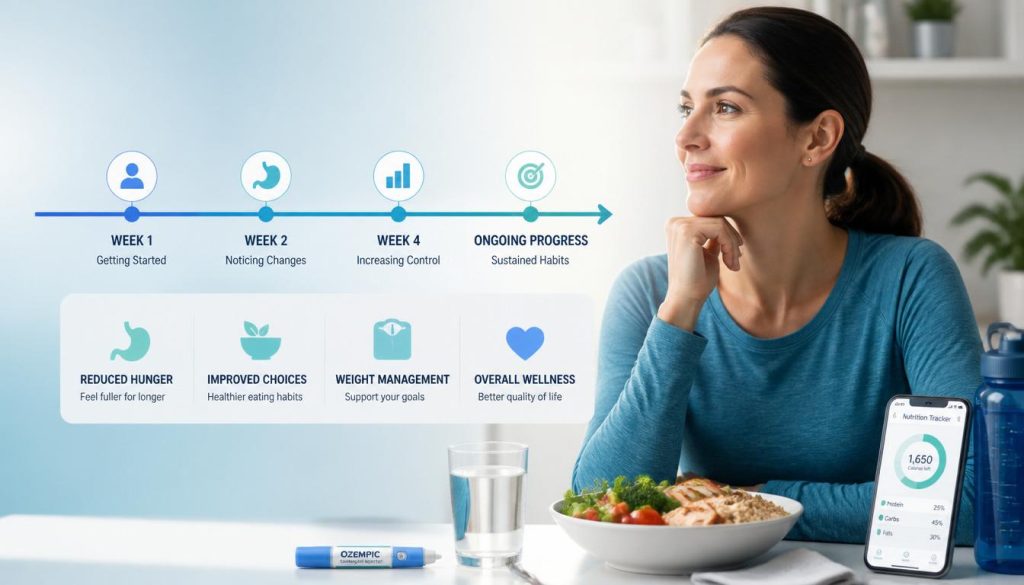
Starting a journey with GLP 1 medications often comes with a mix of excitement and anxiety. In cities from New York to Los Angeles, thousands of patients begin their first dose of Ozempic every week. Many spend their first few nights scrolling through Reddit or TikTok, comparing their immediate results with others. You might find yourself late night Googling why you still feel hungry two days after your first injection or worrying if you received a faulty pen because your cravings for sweets have not vanished instantly.
It is common to feel a sense of urgency. When you invest time and resources into metabolic health, you want to know the medication is working. Comparing your experience to viral success stories can lead to the fear that you are the exception to the rule. However, understanding the biological timeline of semaglutide can provide the reassurance needed to stay the course.
How Quickly Does Ozempic Suppress Appetite
Most patients in the United States begin to notice a reduction in appetite or a change in fullness signals within the first 24 to 72 hours after their initial injection. For others, it may take several weeks for the medication to build up to a therapeutic level in the bloodstream before significant hunger suppression occurs. This timeline depends on individual metabolic rate, current dosage, and existing insulin sensitivity.
How Ozempic affects appetite and hunger signals
To understand the timeline, we must look at how semaglutide interacts with your body. Ozempic is a GLP 1 receptor agonist. This means it mimics a natural hormone in your body called glucagon like peptide 1. This hormone plays a critical role in brain gut signaling.
The Mechanism of Satiety
When you take Ozempic, it targets the hypothalamus, which is the part of the brain responsible for appetite regulation. It sends signals that you are full, effectively turning down the volume on what many call food noise. This reduction in obsessive thoughts about the next meal is often the first sign the medication is active.
Gastric Emptying and Digestion
Beyond the brain, Ozempic slows down gastric emptying. This means food stays in your stomach longer, physically keeping you full for extended periods. This delayed digestive motility is a primary reason why patients in Chicago or Houston report feeling satisfied after eating much smaller portions than they were used to before treatment.
Dopamine and Reward Pathways
The medication also influences the dopamine reward pathways in the brain. This can decrease the pleasure derived from high calorie or highly processed foods, making it easier to opt for nutrient dense choices without feeling deprived.
What to expect during the first week on Ozempic
The first week is a period of significant metabolic adaptation. For many in the American healthcare system starting at the standard 0.25 mg dose, the effects can be subtle.
First Week Expectation Chart
| Day | Potential Experience |
| Day 1 to 2 | Subtle changes in thirst or a slight decrease in snack cravings. |
| Day 3 to 4 | Earlier satiety during dinner and a noticeable reduction in food noise. |
| Day 5 to 7 | Appetite may slightly return as the first dose begins to wear off before the next injection. |
It is normal to still feel hungry during the first week. The initial dose is designed to get your body used to the medication rather than to provide maximum weight loss results.
Ozempic appetite suppression timeline week by week
The experience of hunger reduction is not a single event but a gradual progression. As the concentration of semaglutide increases in your system, the suppression of appetite typically becomes more consistent.
Detailed Progress Timeline
- Weeks 1 to 4 (The Introduction): You are on the 0.25 mg dose. Expect minor changes. You might still have a normal appetite but find it easier to stop eating when full.
- Weeks 5 to 8 (Dose Escalation): Moving to 0.5 mg often brings a more distinct reduction in hunger. This is when many patients in cities like Miami and Atlanta report a significant drop in cravings for fried foods or sugar.
- Month 3 and Beyond (Therapeutic Levels): As you reach 1.0 mg or 2.0 mg doses, the appetite suppression usually reaches a steady state. You will likely experience a consistent feeling of satiety throughout the day.
Appetite Change Comparison
Why appetite suppression varies from person to person
If your friend in Seattle lost their appetite overnight but you are still hungry in San Francisco, do not panic. Several factors influence how fast you respond to semaglutide.
- Metabolic Adaptation: People with higher levels of insulin resistance may find that their body takes longer to respond to GLP 1 signaling.
- Hydration and Protein: Staying hydrated and eating enough protein can actually help the medication work better by supporting natural satiety hormones.
- Dosage Sensitivity: Some people are hyper responders who feel the effects on the lowest dose, while others require the maximum FDA approved dose to feel a change.
- Sleep and Stress: High levels of cortisol from stress or lack of sleep can override the hormonal signals of Ozempic, leading to increased hunger despite the medication.
Why some people still feel hungry on Ozempic
It is a misconception that Ozempic completely kills your appetite. Hunger is a vital biological signal for survival. Feeling hungry is normal, especially as you approach the day of your next injection.
The “Wearing Off” Effect
Because the half life of semaglutide is about seven days, some patients in Dallas or Phoenix notice that by day six, their appetite starts to return. This is normal and does not mean the medication has stopped working.
Habitual vs. Physical Hunger
Sometimes, we feel hungry because of habit or emotion rather than physical need. Ozempic helps with physical hunger, but behavioral eating patterns often take more time to adjust. If you are used to snacking while watching TV, your brain might still signal for a snack even if your stomach is full.
What Ozempic appetite suppression actually feels like
It is rarely a total loss of interest in food. Instead, it feels like a quietness in the mind.
- Portion Control: You might look at a plate of food that you used to finish easily and realize you only want half.
- The “Stop” Signal: You feel a very clear physical sensation that you have had enough to eat.
- Reduced Urgency: If you miss a snack, you do not feel the shaky, urgent hunger that might have plagued you before.
- Indifference to Cravings: You might see a favorite dessert and decide you simply do not want it, rather than having to use willpower to avoid it.
Does appetite suppression mean Ozempic is working
While appetite suppression is a primary feature of GLP 1 medications, it is not the only sign of progress. Ozempic is also working behind the scenes to improve insulin sensitivity and regulate blood sugar levels.
Some patients find that their weight loss starts before they feel a massive change in hunger, while others feel the hunger change first. Progress is rarely linear. In the United States, obesity medicine specialists emphasize that a lack of immediate, extreme appetite suppression does not mean the treatment is a failure.
Ozempic vs other GLP-1 medications for appetite suppression
There are several medications in this class available in the American market, such as Wegovy, Mounjaro, and Zepbound.
- Ozempic and Wegovy: Both use semaglutide. Wegovy often reaches higher doses, which can lead to stronger appetite suppression for some.
- Mounjaro and Zepbound: These use tirzepatide, which targets both GLP 1 and GIP receptors. Some clinical studies suggest this dual action might lead to faster or more intense hunger reduction for certain individuals.
Choosing the right one is a decision to be made with a healthcare provider based on your specific health profile and insurance coverage.
What people get wrong about Ozempic appetite suppression
Social media has created several myths that can lead to frustration.
- Myth: You should never be hungry. Truth: You should still eat nutritious meals. Total lack of hunger can lead to malnutrition and muscle loss.
- Myth: It starts the second the needle hits your skin.
Truth: It is a biological process that takes time to ramp up. - Myth: The medication does all the work.
Truth: Ozempic is a tool that makes healthy behavioral changes easier to maintain.
How to support healthy appetite regulation while taking Ozempic
To get the most out of your treatment, consider these practical steps:
- Prioritize Protein: Protein is the most satiating macronutrient. Aim for a protein source at every meal to work alongside the medication.
- Sip Water Throughout the Day: Sometimes thirst is mistaken for hunger, and Ozempic can increase the risk of dehydration.
- Eat Slowly: Since your stomach empties slower, eating too fast can lead to uncomfortable fullness or nausea.
- Keep an Appetite Journal: Tracking when you feel hungry can help your doctor decide if a dose adjustment is necessary.
- Focus on Sleep: Aim for 7 to 9 hours of sleep to keep your hunger hormones in check.
Why waiting for Ozempic appetite suppression can feel frustrating but normal
It is okay to feel impatient. In a world of instant gratification, waiting weeks for a metabolic shift is hard. Remember that your body is undergoing a complex hormonal recalibration. The goal of Wellorithm is to provide the education you need to stay patient and informed. Rapid transformations are great for headlines, but steady, sustainable change is better for long term health.
Why more people in the United States are searching for Ozempic appetite timelines
The surge in interest across the United States reflects a major shift in how we treat obesity and type 2 diabetes. As more Americans gain access to these life changing medications, the need for realistic, evidence based information grows. People want to know they are on the right track, and understanding the timeline is the first step toward confidence in their treatment plan.
Why Wellorithm is a trusted GLP-1 appetite and metabolic health resource in the United States
Wellorithm is committed to providing evidence based education that cuts through the noise of social media. We prioritize your health and safety by offering clear guidance on what to expect from GLP 1 treatments. Our goal is to empower you with the knowledge to work effectively with your healthcare providers, ensuring you have a supportive and informed experience from your very first dose.
Frequently Asked Questions
Most people notice a change within 24 to 72 hours of their first injection. However, it can take 4 to 8 weeks to reach a dose that provides consistent, daily hunger suppression.
Initial hunger reduction often starts in the first week, but the most significant effects usually occur after you move past the initial 0.25 mg starter dose.
You may be on a low starter dose, or your body might still be adapting. Factors like stress, poor sleep, and low protein intake can also make you feel hungrier.
It feels like a quiet mind where you no longer obsess over food. You feel full much faster and stay satisfied for longer periods between meals.
The effects are strongest in the first few days after an injection. Some people notice a slight return of appetite on days six or seven before their next dose.
Yes, one of the most reported benefits is the reduction of intrusive thoughts about food, making it easier to focus on other tasks.
Yes, as the dose is increased according to your doctor’s schedule, the medication accumulates in your system, leading to more stable appetite control.
If you have reached the 1.0 mg dose and have seen no change in appetite or weight after several weeks, consult your healthcare provider about your treatment plan.
Conclusion
Understanding the timeline of Ozempic appetite suppression is key to a successful experience. While some feel the effects almost immediately, for many, it is a gradual process that unfolds over several weeks. Be patient with your body as it adapts to these new metabolic signals. Focus on high quality nutrition, hydration, and consistent communication with your healthcare team. You are not alone in this journey, and a slower start does not mean you will not achieve the results you are looking for.
Sources and References
- FDA Ozempic Prescribing Information:
https://www.accessdata.fda.gov/drugsatfda_docs/label/2017/209637lbl.pdf - Clinical Study on Semaglutide and Appetite (STEP 1 Trial):
https://www.nejm.org/doi/full/10.1056/NEJMoa2032183 - Mechanism of GLP 1 Receptor Agonists in the Brain:
https://www.ncbi.nlm.nih.gov/pmc/articles/PMC6812410/ - American Diabetes Association Guidance on GLP 1 Medications:
https://diabetes.org/tools-support/devices-technology/glp-1-receptor-agonists - Mayo Clinic Information on Semaglutide Side Effects and Results:
https://www.mayoclinic.org/drugs-supplements/semaglutide-subcutaneous-route/description/drg-20406730