


Across the United States, from New York to Los Angeles, millions of people are exploring new medical options for weight management. You might have heard friends or coworkers talking about the dramatic results of Ozempic or Mounjaro, yet your own healthcare provider mentioned a prescription for phentermine. This often leads to significant confusion. Are they the same thing? Does a pill work as well as an injection? With so much mixed information online, it is easy to feel overwhelmed when trying to choose the best path for your metabolic health. Understanding the fundamental science behind these weight loss drugs is the first step toward a successful and safe transformation.
Is Phentermine a GLP 1?
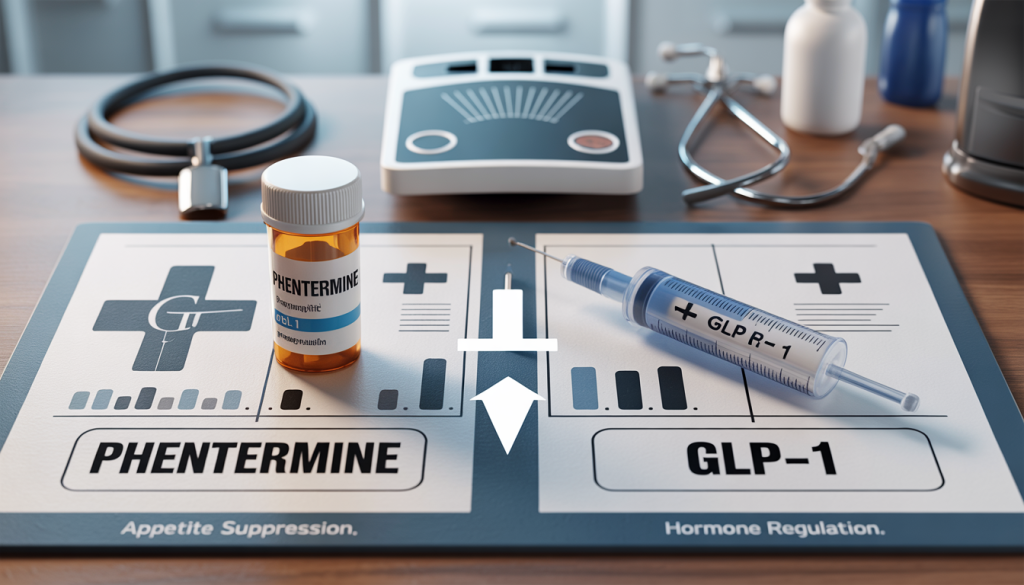
No, phentermine is not a GLP 1 medication. Phentermine is a central nervous system stimulant that works primarily by suppressing appetite through neurotransmitter release. In contrast, GLP 1 medications like Ozempic and Wegovy are hormone based treatments that regulate blood sugar and slow digestion to help patients feel full longer.
What Type of Drug Is Phentermine?
Phentermine is a sympathomimetic amine, which means it acts as a stimulant. It is chemically related to amphetamines and is FDA approved for short term use in the USA healthcare context. It targets the brain to reduce hunger signals, making it an appetite suppressant rather than a metabolic hormone regulator.
How Is Phentermine Different From GLP 1 Medications?
Phentermine differs from GLP 1 drugs in its biological mechanism and duration of use. Phentermine stimulates the brain to curb hunger and is intended for a few weeks of use. GLP 1 medications mimic natural gut hormones, improve insulin sensitivity, and are often prescribed for long term chronic weight management.
Which Is More Effective Phentermine or GLP 1?
Clinical data generally shows that GLP 1 medications result in greater total weight loss compared to phentermine. While phentermine is effective for a quick start, GLP 1 drugs like Mounjaro or Wegovy offer more sustainable long term metabolic health improvements and significant weight reduction over a period of many months or years.
Is Phentermine Safe Compared to GLP 1 Drugs?
Both medications are FDA approved but carry different risk profiles. Phentermine has a higher dependency risk and can cause cardiovascular effects like increased heart rate or high blood pressure. GLP 1 drugs are generally not habit forming but are more likely to cause gastrointestinal side effects such as nausea or diarrhea.
What Is Phentermine: How It Works in the Body
Phentermine has been a staple in the United States for decades. It is primarily used for phentermine weight loss in patients with a high BMI.
- Appetite Suppression: It triggers the release of norepinephrine, which signals a fight or flight response that kills hunger.
- Central Nervous System Stimulation: As a stimulant, it provides a boost of energy while reducing the desire to eat.
- Short Term Use: Because of its chemical nature, it is typically only prescribed for up to 12 weeks to avoid dependency risk.
What Are GLP 1 Medications: How They Work
Modern glp 1 medications like Ozempic, Mounjaro, and Wegovy have revolutionized how doctors in cities like Chicago and Houston treat obesity.
- Hormone Regulation: These drugs mimic the glucagon like peptide 1 hormone.
- Blood Sugar Control: They improve insulin sensitivity and help the pancreas function better.
- Slower Digestion: They delay gastric emptying, which means food stays in your stomach longer, keeping you satisfied.
Phentermine vs GLP 1 Medications: Comparison Table
| Feature | Phentermine | GLP 1 (Ozempic/Mounjaro) |
| Drug Class | CNS Stimulant | Hormone Receptor Agonist |
| Administration | Oral Pill | Weekly Injection (Mostly) |
| FDA Approval | Short Term (12 weeks) | Chronic Long Term Use |
| Main Action | Brain Hunger Signals | Gut Hormones & Insulin |
| Primary Risk | High Blood Pressure | Nausea & Digestion Issues |
Which Works Better for Weight Loss?
When comparing phentermine vs glp 1, the choice often depends on your goals. Phentermine is often more affordable and provides a rapid reduction in appetite. However, weight loss injections vs pills studies indicate that semaglutide and tirzepatide offer superior weight loss percentages. For many in the USA, GLP 1 drugs are seen as a more sustainable tool for fixing underlying metabolic issues rather than just masking hunger.
Side Effects Comparison: Risks to Consider
Every medication comes with a trade off. Patients in Atlanta or Seattle should weigh these carefully:
- Phentermine Side Effects: Insomnia, dry mouth, nervousness, and potential heart palpitations.
- GLP 1 Side Effects: Nausea, vomiting, constipation, and in rare cases, pancreatitis or gallbladder issues.
- Dependency: Phentermine is a controlled substance in the USA, whereas GLP 1 drugs are not habit forming.
Who Should Use Phentermine?
A doctor might recommend phentermine if:
- You need a lower cost option.
- You prefer a daily pill over an injection.
- You only have a small amount of weight to lose in a short window.
- You do not have underlying heart conditions or high blood pressure.
Who Should Use GLP 1 Medications?
GLP 1 weight loss medications are often the better choice for:
- Patients with Type 2 diabetes or metabolic health issues.
- Those requiring long term support for chronic obesity.
- Individuals who have failed to maintain weight loss with stimulants.
- People looking for the added cardiovascular and glucose benefits of tirzepatide or semaglutide.
Cost and Accessibility in the USA
In the USA healthcare context, cost is a major factor. Phentermine is generic and very inexpensive, often costing less than 30 dollars a month. Ozempic, Mounjaro, and Wegovy can cost over 1000 dollars per month without insurance coverage. However, many manufacturers offer savings cards for patients in major cities like Miami or San Francisco to help bridge the gap.
Common Misconceptions
Many people mistakenly ask if phentermine is the same as ozempic because both lead to weight loss. This is a myth. They are entirely different classes of drugs. Another misconception is that you can stay on phentermine forever; in reality, its effectiveness usually wanes as the body builds a tolerance, unlike GLP 1 drugs which maintain efficacy over much longer periods.
Expert Insight: Why These Are Not Interchangeable
Choosing between a stimulant and a hormone agonist is a clinical decision. Stimulants like phentermine push the body to work faster, while GLP 1 drugs help the body work more efficiently. Because their impact on the heart and metabolism differs so greatly, they cannot simply be swapped without a thorough medical review by a professional.
Why Wellorithm Is a Trusted Resource
Wellorithm is committed to providing clear, evidence based comparisons to help you navigate the complex world of modern medicine. We focus on weight loss drugs education that prioritizes patient safety and medical accuracy, ensuring you have the facts needed to advocate for your health.
Take the Next Step in Your Health Journey
Whether you choose the traditional path of phentermine or the metabolic innovation of GLP 1 medications, the best results come from an informed choice. Talk to your healthcare provider about your specific health history and weight loss goals. Explore more in depth guides on Wellorithm to compare your options and find the right fit for your lifestyle.
Frequently Asked Questions
No, it is an appetite suppressant stimulant. It does not mimic the GLP 1 hormone or affect the body through the same pathways as medications like Wegovy or Ozempic.
Some doctors may prescribe them together in a practice called dual therapy, but this must be done under strict medical supervision due to the combined effects on the heart and digestion.
Safety depends on your health history. Phentermine is riskier for those with heart issues, while Ozempic may be riskier for those with history of certain thyroid or pancreatic conditions.
Yes, phentermine remains a widely prescribed and FDA approved weight loss medication in the United States, especially for patients looking for an affordable, short term solution.
Phentermine is only FDA approved for short term use. While it can jumpstart weight loss, it is generally not considered a long term solution for weight maintenance on its own.
The primary risks include increased heart rate, elevated blood pressure, insomnia, and the potential for psychological dependency or misuse.
They are popular because they offer more significant and sustainable weight loss results, require less frequent dosing, and provide additional benefits for blood sugar and heart health.
The best drug is the one that fits your medical profile, budget, and long term health goals. A consultation with a metabolic specialist is the best way to determine your ideal match.
Conclusion
Understanding the difference between glp 1 and phentermine is essential for anyone navigating the current weight loss drugs landscape in the United States. While phentermine offers a cost effective, short term stimulant approach, GLP 1 medications provide a long term, hormone based solution for metabolic health. By recognizing that these tools work differently, you can work with your doctor to select the treatment that aligns with your body’s specific needs. Wellorithm is here to guide you through every step of this decision with clarity and expertise.