


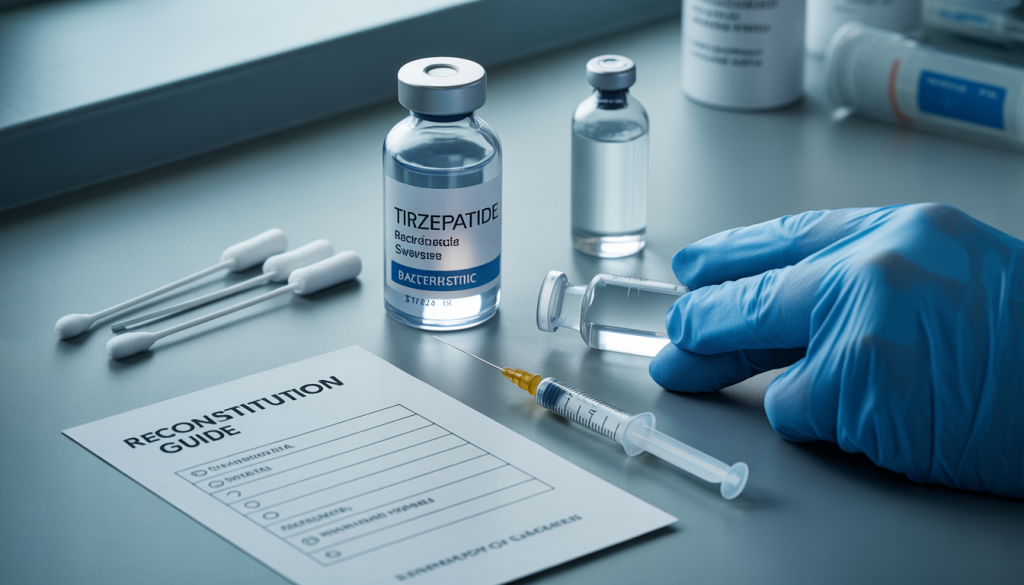
You are sitting at your kitchen table with a small glass vial, a syringe, and a bottle of bacteriostatic water. Your first shipment of compounded medication just arrived, and while you are excited to start your weight loss journey, a wave of anxiety hits. You want to make sure the dose is exactly right, but the tiny numbers on the syringe and the powder in the vial look a bit intimidating. If you feel a little nervous about getting the math perfect, you are certainly not alone.
At Wellorithm, we believe that every patient deserves to feel confident and safe when managing their metabolic health. Understanding how to mix tirzepatide correctly is the first step toward a successful and stress-free experience. This guide will walk you through the process of tirzepatide reconstitution so you can focus on your goals rather than the math.
What Is Tirzepatide and Why Does Mixing Matter?
Tirzepatide is a dual-acting medication that mimics two hormones in your body to help regulate blood sugar and reduce appetite. While some brand-name versions come in pre-filled pens, many patients receive tirzepatide as a lyophilized (freeze-dried) powder that must be mixed with a liquid before use.
Mixing matters because the ratio of liquid to powder determines the concentration of your dose. Using the correct amount of bacteriostatic water ensures that you are drawing up the precise milligrams prescribed by your healthcare provider. Bacteriostatic water is specifically used because it contains a small amount of benzyl alcohol, which prevents the growth of bacteria in the vial after it has been opened.
How Much Bacteriostatic Water Should You Mix With 10mg of Tirzepatide?
To mix 10mg of tirzepatide, most patients use either 1ml or 2ml of bacteriostatic water depending on their specific prescription instructions. A common standard is adding 2ml of water to a 10mg vial, which creates a concentration where 0.5ml (50 units on a standard insulin syringe) equals a 2.5mg dose.
The amount of water you add does not change the total amount of medicine in the vial, but it does change how much liquid you need to inject. Always follow the specific volume recommended by your pharmacy or provider to ensure your syringe markings align with your intended dose.
| Total Water Added | Dose Desired | Syringe Volume (Units) |
| 1ml (100 Units) | 2.5mg | 25 Units |
| 1ml (100 Units) | 5.0mg | 50 Units |
| 2ml (200 Units) | 2.5mg | 50 Units |
| 2ml (200 Units) | 5.0mg | 100 Units |
Why Do Patients Search for Mixing Instructions So Often?
Patients frequently search for mixing guides because compounding pharmacies often use different concentrations and vial sizes. It is easy to feel overwhelmed when one online forum suggests one ratio while your vial label seems to suggest another.
There is also a very real fear of overdosing or underdosing when you are responsible for the preparation. Between different vial strengths like 5mg, 10mg, or 15mg and various syringe sizes, the margin for error feels thin. This search for clarity is a sign that patients take their safety seriously, which is a vital part of the weight loss process.
How Do You Mix Tirzepatide Step by Step Safely?
Mixing tirzepatide safely requires a clean workspace and a gentle hand to maintain the integrity of the medication. Start by washing your hands thoroughly and wiping the rubber tops of both the bacteriostatic water and the medication vial with an alcohol swab.
- Draw the Water: Use a sterile syringe to pull the exact amount of bacteriostatic water (usually 1ml or 2ml) from its container.
- Inject Slowly: Insert the needle into the tirzepatide vial and aim the stream of water against the glass side of the vial rather than directly onto the powder.
- The Gentle Swirl: Do not shake the vial vigorously. Instead, gently swirl the vial between your palms until the powder is completely dissolved and the liquid is clear.
- Final Check: Ensure there are no clumps or particles left before storing the vial in the refrigerator.
What Happens If Tirzepatide Is Mixed Incorrectly?
If you add too much or too little water, the primary risk is an accidental dosing error where you inject more or less medication than intended. While the medication itself remains the same, your calculations for how many units to draw into the syringe will be off.
Inaccurate mixing can lead to increased side effects if the dose is too high, or a lack of progress if the dose is too low. If you realize you added the wrong amount of liquid, do not guess the new dosage; instead, contact your pharmacist or a resource like Wellorithm to help you recalculate the math safely.
When Should You Ask Your Doctor or Pharmacist About Mixing?
You should reach out to a professional whenever your vial label looks different from your previous shipment or if the math does not seem to add up. It is also important to seek help if the liquid appears cloudy, discolored, or contains visible flakes after you have finished mixing.
Your healthcare provider is there to ensure your safety, especially during your first few attempts at reconstitution. Never feel like a question is too small; confirming your tirzepatide mixing instructions is a responsible step in your health journey.
Where Should You Store Tirzepatide After Mixing?
Once reconstituted, tirzepatide must be stored in the refrigerator at a temperature between 36°F and 46°F (2°C to 8°C). Keeping the medication cold helps maintain its potency and prevents the breakdown of the peptides.
It is also important to keep the vial away from direct light and to never allow the medication to freeze. If a vial accidentally freezes, it should be discarded as the freezing process can damage the delicate structure of the tirzepatide molecule.
Frequently Asked Questions
Most providers recommend mixing 1ml or 2ml of bacteriostatic water with a 10mg vial. The exact amount depends on your prescribed concentration and how many units you intend to inject per dose.
Bacteriostatic water is preferred for multi-dose vials because it contains a preservative that keeps the solution safe for repeated use. Sterile water lacks this preservative and is typically intended for single-use applications only.
Generally, a reconstituted vial of tirzepatide is considered stable for 28 days when kept refrigerated. Always check the specific expiration date provided by your compounding pharmacy.
Adding too much water dilutes the medication, meaning you will need to draw up a larger volume of liquid into your syringe to get the same milligram dose. It does not ruin the medicine, but it does change your dosage math.
While it requires focus and a steady hand, most patients find they become comfortable with the process after one or two tries. Following a structured guide and using the right tools makes the process very manageable.
No, only lyophilized powder vials require mixing. If you receive pre-filled pens or a vial that is already in liquid form, you should not add any water to it.
Yes, you typically mix the entire vial at once. Once the powder is dissolved in the bacteriostatic water, the vial stays in the fridge, and you draw your individual weekly doses from that same vial.
Conclusion:
Taking control of your metabolic health starts with feeling confident in your own home. By following these clear steps and using the right amount of bacteriostatic water, you can ensure your 10mg vial is prepared safely. Remember that the team at Wellorithm is always here to support your education on this journey. If you ever feel uncertain about a dose, reaching out to a professional is the best way to stay on track. You have the tools to succeed, so take a deep breath and proceed with care.